

























































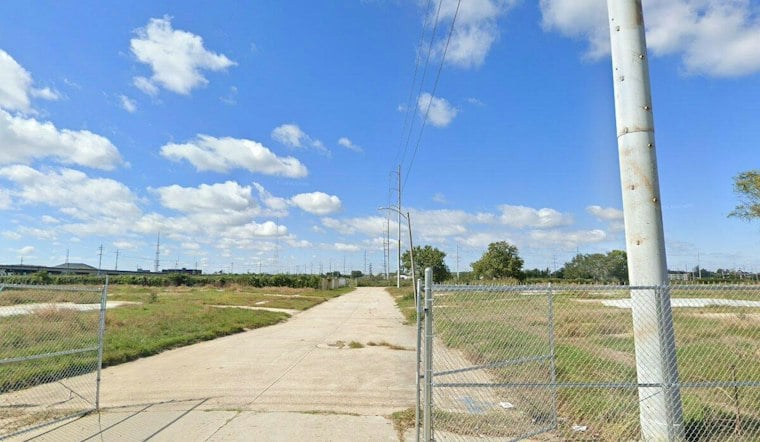
The Housing Authority of New Orleans is sitting on 250 vacant lots scattered across the city, and on Tuesday the agency presented its board with a plan to sell or redevelop every one of them within the next two to three years. Most of that land — more than 80% — is concentrated in the 9th Ward and New Orleans East, remnants of decades of demolitions, buyouts, and post-Katrina land shuffling that left the agency as an accidental landlord of dozens of empty blocks.
The scale of the undertaking, and the urgency behind it, comes down to money and math. According to NOLA.com, HANO spends more than $400,000 a year simply cutting grass on land that generates no housing and no revenue. City Council President Helena Moreno has identified reducing neighborhood blight as a priority, and the agency's new push is meant to turn that maintenance bill into actual homes.
What's Actually on the Land
An analysis by Manning Architects, commissioned to sort through HANO's holdings, found the 250 parcels break down into distinct categories. Nearly 140 are one-off lots suitable for single-family housing, while 11 are larger multi-acre properties that would need state and federal financing to redevelop for multifamily or commercial use. Roughly 100 more are considered unsuitable for housing altogether because of awkward lot shapes or locations — and a portion of those sit within the Agriculture Street Landfill Superfund site.
That Superfund designation isn't a minor footnote. HANO originally built the 237-townhouse Press Park complex on top of the landfill in the late 1960s as a low-income homeownership program, according to The Lens, before the subdivision was permanently abandoned following severe flooding during Hurricane Katrina in 2005. The site was designated an EPA Superfund zone in 1994, and federal policy now bars public housing authorities from using HUD development grants on that contaminated ground, as City Limits reports — leaving HANO to hunt for private buyers or non-residential uses for those particular parcels instead.
A Patchwork of Uses, Not Just Housing
Not every lot is destined to become a home. Monica Kelley said the city could use some of the land for stormwater management, solar farms, or parks, per the same NOLA.com account of Tuesday's board presentation. HANO says it plans to seek affordable housing builders to purchase or develop 20 of the smaller lots early next year, while also selling some properties at market rate and funneling those proceeds back into affordable housing.
Selling isn't as simple as listing the land, though. Many of the parcels were purchased with federal funds, meaning HANO needs sign-off from the Department of Housing and Urban Development before it can sell them. Federal regulations under 24 CFR Part 970 require public housing authorities to secure explicit approval from HUD's Special Applications Center before selling, transferring, or demolishing land tied to public housing funds, according to the National Low Income Housing Coalition — a Section 18 disposition process that can stretch on for months or years.
Advocates Push for Speed Amid a Housing Crunch
Andreanecia Morris said she supports HANO's effort to assess its property holdings, but she also questioned whether the agency would move quickly enough to meet the city's affordable housing demand, according to the NOLA.com report. That skepticism lands against a grim backdrop: HousingNOLA's annual evaluation found New Orleans faces an estimated deficit of 55,000 affordable housing units, while the city added just 435 new affordable housing opportunities between September 2024 and August 2025.
The rent burden underlying that shortage has only worsened since Katrina. Census data analyzed by The Data Center shows 34% of New Orleans renters were severely cost-burdened in 2024 — spending over half their income on rent — up from 24% two decades earlier, while more than 60% spent above 30% of income on housing, per Smart Cities Dive. The city's overall housing stock has also shrunk, with 2020 Census figures showing 193,840 total housing units, down nearly 10% from the 215,091 units recorded in 2000.
Financial Headwinds and a Recent Model to Follow
Complicating matters further, the state housing finance agency recently cancelled a $20 million federally funded affordable-housing production program, according to the original NOLA.com report — a cut that adds financial friction for developers eyeing HANO's larger multi-acre parcels. HANO Executive Director Marjorianna Willman said the agency will find ways to work around these challenges, and HANO says it will work with the New Orleans Redevelopment Authority and Finance New Orleans as it moves forward.
That kind of multi-agency collaboration already has a track record. In March, HANO partnered with NORA, HRI Communities, Finance New Orleans, and the Louisiana Housing Corporation to break ground on Esplanade DeLille, a 50-unit mixed-income project replacing a long-vacant 7th Ward parcel, according to NORA. The development leaned on Low-Income Housing Tax Credits, city loans, and PILOT tax agreements — a financing blueprint HANO may need to replicate across its larger holdings.
NORA itself has been running a parallel disposition push, having auctioned off 140-plus vacant lots with starting bids as low as $4,000 this month, requiring buyers to complete construction or rehab within 18 months. That effort traces back to roughly 5,000 Road Home buyout properties the state transferred to NORA between 2010 and 2012, which established the land-banking framework New Orleans agencies still lean on today. HANO has yet to present a full, board-approved plan for its remaining properties, with agency officials saying that comprehensive roadmap will come at a later date.





