

























































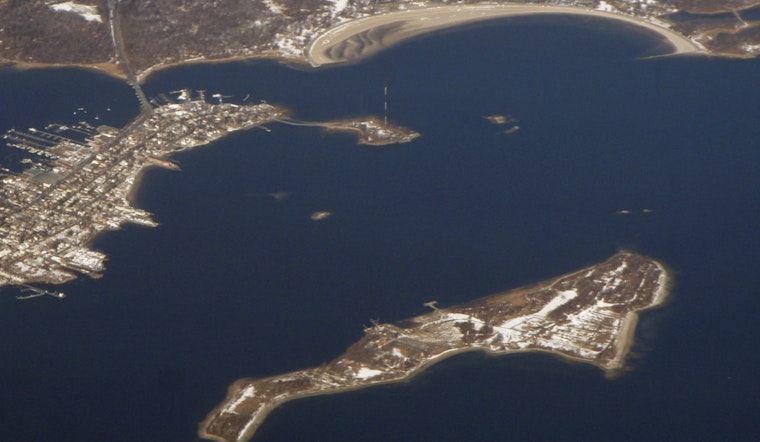
A half-mile ferry ride from City Island sits a strip of Bronx land holding more than one million burials and a mystery that has outlasted generations of New Yorkers: 33 individual graves, dug apart from the rest of the cemetery, where the identities of the people inside remain unknown to this day. Hart Island has served as New York City's public cemetery since 1869, and for the first time in its long, guarded history, Urban Park Rangers are now walking members of the public through its trenches, its ruins, and its unanswered questions.
The free public tours, offered twice a month, are the product of a 2019 City Council law that shifted management of the island away from the Department of Correction and handed it to NYC Parks, a transfer that took effect in July 2021 and ended more than 150 years of penal control over the city's burial ground, according to Hoodline's prior coverage. NYC Parks officially launched free public history tours on November 21, 2023, marking the first time in the island's 150-plus-year history that the city offered guided public access, per the agency's own announcement. As News12 Long Island reports, each tour is capped at 30 people, and when demand exceeds the available spots, participants are chosen by lottery.
Trenches, Ruins, and a Story Rangers Want Told
According to the station's report, the tours cover the island's different historical chapters, walking visitors past the large trenches where most burials were conducted and describing the range of people who ended up there: some whose families requested a public burial, others who were unclaimed or unidentified. The island holds people buried generations earlier alongside New Yorkers who died during the height of the COVID-19 pandemic, and rangers frame everyone interred there, per the same account, as neighbors from the past who were loved in life. Hart Island remains an active cemetery even as it opens to visitors, a tension city planners have acknowledged as they try to balance ongoing burials with growing public access.
People incarcerated on Hart Island historically helped with burials and cemetery maintenance, a detail the tours use to explain how the island's grim daily operations actually worked for well over a century. The public can now request a visit to a loved one's gravesite through the city's Hart Island website, a shift from the restrictive, correction-controlled decades when even grieving families struggled to get access, as Hoodline's earlier reporting on the site's history noted.
The 33 Graves Rangers Still Cannot Explain
The most haunting stop on the route is a set of 33 individual graves isolated on the island's southern end, separated from Hart Island's larger burial trenches. Records do not explain why these graves were set apart, but per Urban Park Rangers, fear and stigma surrounding AIDS may have played a role in isolating them. The people buried there died from AIDS-related complications, and their identities remain unknown. According to The Hart Island Project, at least 31 adults and one infant who died of AIDS-related complications during the mid-1980s epidemic were interred in individual, 14-foot-deep graves at that southern end, a burial method the nonprofit ties to intense social stigma, fear of contagion, and embalming refusals by private funeral homes at the time. News12's report adds a detail that underscores just how personal this corner of the island is: the farthest individual grave holds the first child known to have died in New York City from an AIDS-related illness.
The Hart Island Project, a nonprofit founded in 2011 by artist Melinda Hunt, maintains a searchable online database covering most burials from 1977 to the present and runs the Traveling Cloud Museum to help families locate interred relatives and push for burial transparency. That database is one of the few tools available to families trying to piece together who is actually buried in the 33 isolated graves, even as the underlying question of why they were separated stays unresolved.
A Black Businessman's Dream, Buried Alongside the Rest
The southern end of the island carries another layer of history predating the AIDS-era graves. Solomon Riley, a Black businessman from Harlem, dreamed of building an amusement park on Hart Island that would have given Black New Yorkers a place to escape racism and segregation at a time when they were barred from other beaches. Riley bought four acres on the island's southern tip for $35,000 in 1924 and built a boardwalk, dance hall, and boardinghouses there, according to Untapped New York. The city acquired the property through condemnation for $144,000 in 1925, blocking Riley's resort before it could take hold.
Before it became parkland, Hart Island cycled through a striking list of institutional uses dating back to 1869, serving at various points as a Civil War draft camp, a yellow fever quarantine site, a psychiatric hospital, a tuberculosis ward, and, from 1967 to 1976, a residential drug rehabilitation program run by Phoenix House, according to the New York Public Library. That layered past is part of what the tours are trying to surface for a public that, until recently, had almost no way to see it firsthand.
Growing Demand Is Reshaping the Island's Future
During the program's first year, between November 2023 and November 2024, NYC Parks hosted more than 650 visitors across public and student walks, a turnout that pushed the agency to expand tour routes to the southern tip of the island where the 33 graves and the Riley site sit. That demand is now feeding into a much larger vision: in July 2025, NYC Parks unveiled a 20-year concept plan proposing a welcome center, upgraded restrooms, more accessible walkways, a reflection space inside a converted chapel, and coastal defenses against sea level rise, as Hoodline reported at the time. A 2022 city study published by the New York City Council found that unused land on the island could provide 7,000 to 10,000 additional burial spaces, extending the cemetery's active capacity by 8 to 12 years, or up to 69 years if ruined structures are cleared.
Hart Island's dual identity as both a working cemetery and an emerging historic park is not without precedent for turning up personal stories. Among the more than one million people buried there is Disney child actor Bobby Driscoll, interred in 1968 after dying unidentified, and cold case victim Sheila Ramsey, who was buried as a Jane Doe in 1990 before genetic genealogy identified her, as Hoodline detailed in an earlier story on her identification. For now, though, the identities behind the 33 isolated graves remain unknown, and the tours built to explain Hart Island's past cannot yet answer the question that lingers longest at its southern edge. Upcoming public tours are listed through NYC Parks for anyone hoping to walk the ground themselves.





