

























































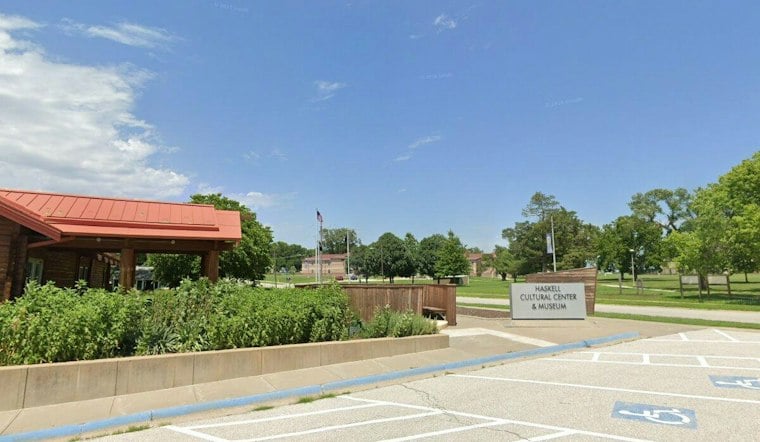
Haskell Indian Nations University in Lawrence spent Friday and Saturday celebrating a century-old landmark that Native people across the country literally paid for: Memorial Stadium and the arch that stands beside it. The campus held a bison harvest and a powwow as part of a weekend built around honoring the structure's 100th anniversary, drawing students, alumni and community members to mark the occasion together.
The celebration, held on the Haskell campus in Lawrence, Kansas on Sept. 18-19, 2026, brought together a mix of cultural and community programming, according to Haskell Indian Nations University. The university's announcement described the weekend as including a powwow and a community bison feed, framing the event as a tribute to the stadium that has anchored the campus for a century.
As reported by KSHB 41 Kansas City, Haskell opened its bison harvest to the public and invited the greater Lawrence community to share a meal and learn alongside campus members. The station's report notes the community bison feed was planned for noon, with powwows scheduled for 1 p.m. and 6 p.m.
A Stadium Paid for by Indian Country
Memorial Stadium has stood at the heart of Haskell for 100 years, and its origin story is unusual for a college football venue: the construction was funded entirely by donations from Native people across the country, per the university's account. Haskell students themselves contributed money and labor to help build the stadium, according to the same source. The vision for the project began with Frank McDonald, Haskell Institute's football coach during the 1920s.
The stadium's arch carries its own history. It was made possible through donations from two Quapaw women, Agnes Quapaw-Hoffman and Alice Beaver-Hallam, and it serves as a lasting tribute to 415 Haskell students and alumni who served in World War I, Haskell's announcement states. Olympians Buster Charles and Billy Mills both competed at Memorial Stadium during their time as Haskell students, a detail the university highlighted in describing the venue's athletic legacy.
Accounts of the stadium's place in history diverge on one point. Haskell's own materials describe it as the first lighted stadium west of the Mississippi River, while the University Daily Kansan reported that the project grew into what became the first lighted stadium in the Midwest. The Kansan's preview also detailed a fuller schedule for the weekend, including a community bison harvest on Sept. 18 followed by Haskell film screenings, stickball, a Haskell royalty reunion, another community bison feed and two powwows.
Students Reflect on What the Celebration Means
For students on campus, the weekend was framed as more than a football anniversary. Grace Eagle, a Haskell student affiliated with the Oglala Lakota and Muscogee Creek, said the celebration reminds people of their strength, resilience and the role education has played in their success, according to KSHB's report.
Cole Holcomb, a sophomore affiliated with the Cherokee Nation, participated in the bison harvest and told the station his primary role was to learn from the people who brought the bison and created the opportunity to learn. Holcomb said Native culture involves honoring each other and honoring food, a sentiment that echoed through the weekend's programming.
Mary Munson traveled from Wamego, Kansas, to Lawrence for the celebration and witnessed her first bison harvest at the event. Munson, who was adopted at age six, said she is continuing to learn about Native Americans and their history, per the same KSHB account.
A Campus Built on Cross-Tribal Learning
Haskell Indian Nations University welcomes Native students from across the country, and the campus is described in the station's report as offering something beyond a degree: an education shaped by learning from others across Indian Country. The centennial celebration, tying together the stadium's origins, the arch's wartime tribute and the harvest and powwow traditions, gave that mission a concrete, weekend-long form in Lawrence.





