

























































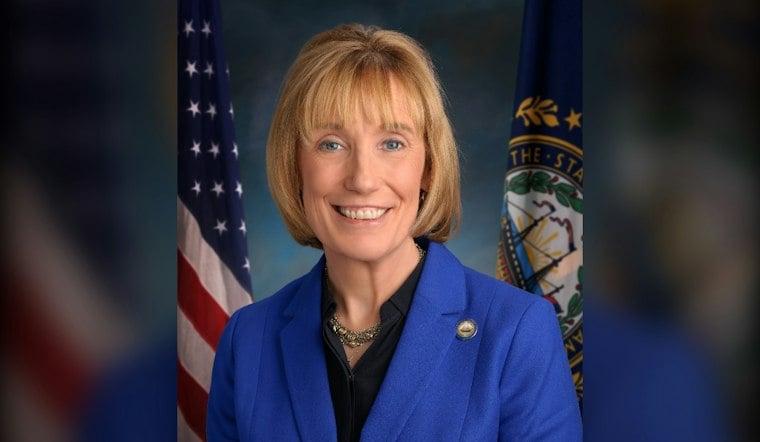
U.S. Sen. Maggie Hassan has reintroduced bipartisan legislation aimed at banning PFAS chemicals from food wrappers and packaging, reviving a fight she first waged nearly five years ago against the so-called forever chemicals lining fast-food bags, popcorn sleeves and takeout boxes across New Hampshire and the country.
Hassan, a U.S. senator representing New Hampshire, announced the reintroduction from Manchester, according to WMUR. Per the station's report, PFAS chemicals are used in food wrappers specifically to repel grease, oil and water. PFAS can also persist once they end up in the environment or the human body. WMUR also reports that PFAS chemicals have been linked to serious health issues, including cancer.
This is not Hassan's first attempt at the fix. She proposed similar legislation in 2021, a bill identified in congressional records as the Keep Food Containers Safe from PFAS Act of 2021, sponsored by Hassan and introduced that November, according to congress.gov. That earlier push stalled without becoming law, setting up this week's renewed effort.
Why Food Wrappers Became a Target
PFAS, short for per- and polyfluoroalkyl substances, are prized industrially because they resist heat, grease and water — the exact traits that make them useful in fast-food wrappers and cookware, but also what makes them so hard to break down once released. The chemicals are used to keep food from sticking to packaging or cookware, among other applications, according to the National Institute of Environmental Health Sciences.
Around the time of Hassan's original 2021 bill, several major restaurant chains signaled they were moving away from the chemicals on their own. Burger King and Chick-fil-A each announced in 2021 that they would voluntarily phase out PFAS chemicals from their packaging, and Starbucks made a similar announcement that same year.
States Are Moving Faster Than Congress
While Hassan's federal bill has yet to cross the finish line, state legislatures have not waited. Eighty-two PFAS-related bills touching on food, water, firefighting foam and waste were introduced across 22 states in January 2026 alone, according to the National Law Review. Analysts tracking the trend describe PFAS as the chemical class drawing the most aggressive state-level regulatory action of any pollutant category, per the Non Toxic Lab's state chemical bans tracker.
Maine's ban on intentionally added PFAS in food packaging took effect January 1, 2026, while Minnesota's food-packaging restriction, part of its HF 2310 law, has been in force since January 2025, the tracker shows. Washington and New York have restricted PFAS in food packaging since 2023, and Vermont, Connecticut, Maryland, Rhode Island, Colorado, Oregon and Hawaii have all passed similar restrictions, according to the same source. Massachusetts, meanwhile, has a bill pending that would bar the sale of food packaging and certain consumer products containing intentionally added PFAS starting in 2029, the National Law Review reports.
Connecticut is also rolling out a broader regulatory layer: new PFAS labeling and reporting requirements take effect there July 1, 2026, covering 12 product categories including cookware, cosmetics, dental floss, children's products and upholstered furniture, according to Legal 500.
Against that backdrop of scattered state action, Hassan's bill would apply the same restriction nationwide rather than leaving food packaging safety to depend on which state a product is sold in.





