

























































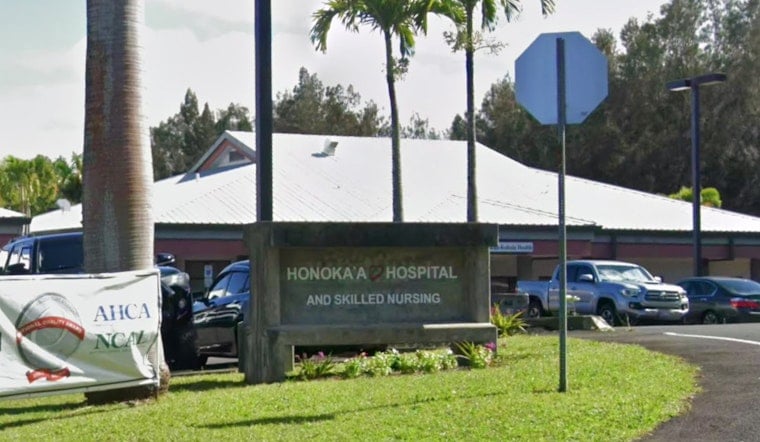
Hawaii's COVID-19 positivity rate has climbed to 9% statewide, with Kauai posting the highest rate in the islands at 13.3% and Honolulu close behind at 10%, according to the Hawaii Department of Health. The uptick coincides with an outbreak at Honoka'a Hospital on the Big Island, where roughly 35 long-term care patients and 17 staff members tested positive for the virus in August.
The outbreak at the 77-bed critical access facility began in mid-August, according to the Honolulu Star-Advertiser, and roughly five residents were still testing positive as of early September. Elena Cabatu, speaking for the hospital, said no serious illnesses have resulted from the outbreak among affected patients. That description echoes what administrator Denise Mackey told Big Island Now in late August, when she said patients were experiencing mild flu-like symptoms and that “no one is incredibly sick,” even though the outbreak affected nearly half of the facility's long-term care residents. Honoka'a Hospital, part of the Hawaii Health Systems Corporation, is following CDC protocols as it manages the cluster.
Statewide Numbers Point to a Broader Summer Surge
Beyond the Big Island outbreak, Hawaii is averaging 18 new COVID-19 cases and 24 hospitalizations per day, with two patients per day landing in intensive care, per the state health department's figures cited in the Star-Advertiser's reporting. The U.S. CDC classified Hawaii's wastewater viral activity level as high as of mid-August, based on data from 10 monitoring sites across the islands.
The local numbers track with a national pattern. Federal surveillance data from late August showed COVID-19 infections growing or likely growing in 47 states, with national test positivity topping 3% for the first time since March, according to Pasadena Testing, which also reported that emergency department visits were rising fastest in the Western region. Driving the surge is a JN.1-lineage recombinant Omicron strain known as XFG, along with sublineages such as XFG.1.1, nicknamed “Stratus.” The XFG family is a hybrid of two Omicron subvariants and had become the dominant strain nationally by late August, accounting for an estimated 25% to 40% of U.S. cases.
New Vaccines Target the XFG Variant, But Full Approval Narrows
The U.S. Food and Drug Administration approved updated 2026-2027 COVID-19 vaccines from Moderna, Pfizer and Novavax-Sanofi targeting the XFG variant, Reuters reported. But as detailed by Forbes, the FDA narrowed full regulatory approval this year to adults 65 and older and people with underlying high-risk health conditions, a departure from the broader universal booster campaigns of prior seasons. Infectious disease experts recommend the updated shot for anyone eligible, given that it specifically targets the currently dominant XFG variants.
The Hawaii Department of Health has laid out its own recommendations, urging vaccination for all residents six months and older, adults over 65, infants ages six to 23 months, residents of long-term care facilities, and people with household contacts at high risk for severe COVID-19. The department especially recommends the shot for health care workers with increased occupational risk and for people who have never been vaccinated against the coronavirus. State guidelines identify blood disorders like sickle cell disease, immunosuppressive conditions, chronic lung diseases, and metabolic conditions such as diabetes as high-risk factors, according to the Hawaii State Department of Health.
Hawaii Stays Aligned With West Coast Neighbors on Senior Boosters
Hawaii's approach continues to track guidance from the West Coast Health Alliance, a coalition that includes the Hawaii Department of Health alongside health agencies in California, Oregon and Washington. As Hoodline reported in May, the alliance recommended that all adults 65 and older receive a second dose of the updated vaccine at least six months after their first shot, aiming to bolster protection ahead of seasonal respiratory surges.
This is not the first time Hawaii has seen a late-summer viral uptick. The state recorded a similar rise in COVID-19 activity in August 2025, when climbing test positivity and hospitalizations pushed the state's viral activity indicator to the yellow “medium” level while flu and RSV activity stayed low, a pattern flagged in an earlier report. Public health monitoring on the Big Island isn't limited to COVID-19, either: the Hawaii Department of Health announced this week that an August 24 wastewater sample from the Hilo treatment plant tested positive for dengue virus, a disease that is not endemic to Hawaii and whose cases are typically tied to overseas travel.
The current surge also arrives amid continued scrutiny of national vaccine policy. Dr. Kirk Milhoan, a Maui pediatric cardiologist known for advocating unproven COVID-19 treatments such as ivermectin, was appointed last year to the federal Advisory Committee on Immunization Practices during a Department of Health and Human Services panel reorganization. Separately, pandemic-era fraud prosecutions in Hawaii continue to wind through federal court; Oahu resident Justin Craige Likout pleaded guilty on August 25 to bank fraud and identity theft after illegally obtaining $458,597 in Paycheck Protection Program and COVID relief funds using fake businesses and aliases.





