

























































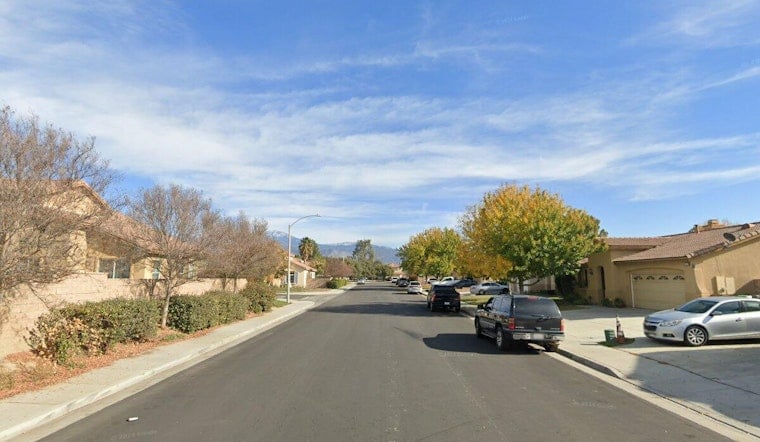
A construction worker suffered serious injuries Tuesday afternoon after a 15-foot-deep trench collapsed around him while he worked on underground piping near Faith Drive and Meridian Street in unincorporated Hemet. A fellow worker pulled him free before paramedics even reached the scene, and he was rushed by ground ambulance to a local trauma center.
The collapse happened at around 12:50 p.m., according to a report from Cal Fire and the Riverside County Fire Department published by Murrieta Patch. Emergency crews descended on the area of Faith Drive and Meridian Street after the initial dispatch, arriving to find the injured worker already out of the trench. Fire department spokesperson Tara Fernandez confirmed that a coworker had manually extricated the victim from the 15-foot hole before first responders arrived, and the county fire agency's own update on the incident, posted under the hashtag #MeridianIC, described bystanders freeing the patient from the trench prior to crews reaching the scene.
A Pre-Planned Road Project Turns Dangerous
The trench sat within a stretch of Faith Drive between Meridian Street and Mercy Court that the County of Riverside Transportation Department had scheduled for a full closure from August 24 through September 4 for public infrastructure work. That closure window places the underground piping project squarely within authorized county roadwork, though it does not answer questions about how the excavation was engineered or supervised on the day it failed.
At 15 feet, the trench was three times deeper than the 5-foot threshold at which California law requires employers to pull a Cal/OSHA permit and install protective cave-in systems such as shoring, sloping, or shielding, per the California Department of Industrial Relations. State rules under Title 8 Section 1541 also require a designated “competent person” to inspect a trench daily before anyone enters it and to ensure a safe exit, like a ladder, sits within 25 lateral feet of any worker in a trench 4 feet or deeper. Whether those protections were in place at the Faith Drive site, and whether Cal/OSHA has opened a formal inspection into the contractor or the injured worker's employer, remains unknown.
Why Trench Work Carries Such High Stakes
The danger in an unshored trench comes down to sheer weight: federal Occupational Safety and Health Administration standards note that a single cubic yard of soil can weigh between 2,500 and 3,000 pounds, roughly the weight of a compact car, and that weight climbs further when soil is wet or has been disturbed by heavy machinery. OSHA guidance from April 2025 found that cave-ins cause about three out of four trenching fatalities, and that the overall fatality rate for excavation work runs more than double that of general construction. According to the Occupational Safety and Health Administration, trench collapses, or cave-ins, pose the greatest risk to workers’ lives.
State regulators have been sounding alarms on this exact hazard. Cal/OSHA reported in June that it issued roughly 90 trench safety citations tied to worker injuries and deaths between 2021 and 2025, while it was actively investigating multiple fatal trench collapses elsewhere in California this year, according to the California Department of Industrial Relations. California law also requires employers and responding emergency agencies to notify Cal/OSHA immediately whenever a workplace accident results in serious injury or hospitalization, a reporting trigger that would apply to Tuesday's collapse.
The Cal Fire and Riverside County Fire Department, which responded to the Hemet trench collapse, runs a sprawling emergency operation across the county — the agency logged 3,684 medical calls and more than 141,000 total emergency incidents year-to-date in the week ending August 30. The identity of the injured worker and his employer has not been released, and it is not yet known whether the trench had the shoring or shielding state law requires.





