

























































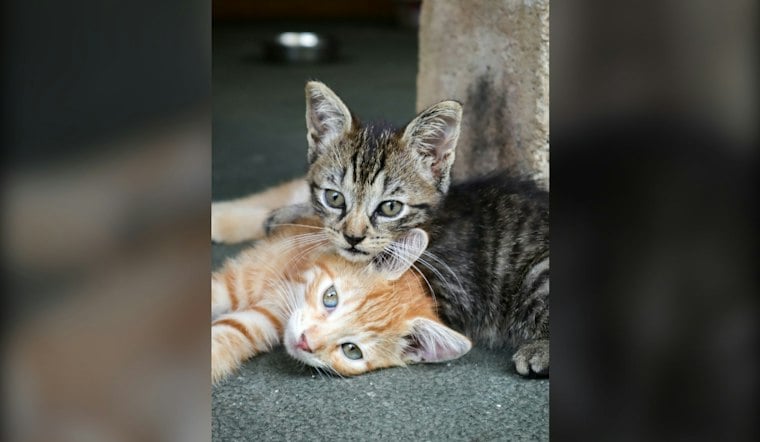
Hempfield Township's Board of Supervisors voted 4-1 on Monday to pass a new ordinance that holds people responsible for regularly feeding stray cats, a measure that could bring civil penalties of $50 to $600 per violation. The vote caps nearly a year of complaints from residents of the Greenridge housing development, where residents say untended feline colonies have torn up gardens, damaged furniture, and left feces scattered around yards.
The measure amends Chapter 37, “Animals,” of the township code, a section that Township Solicitor Scott Avolio noted had previously contained few specific provisions governing stray or feral cats, according to TribLIVE. As reported by CBS Pittsburgh, the new ordinance defines an owner as anyone who constantly feeds, shelters, or houses a stray cat, and it prohibits caring for strays in a way that endangers public health. Officials began drafting the amendment in late summer after months of complaints from residents of the Greenridge housing development in West Hempfield, where one resident's outdoor feeding was reportedly swelling the local cat population, per the same TribLIVE account.
One resident who spoke to CBS Pittsburgh said the cats destroyed gardens and furniture and that feces were everywhere, but stopped short of wanting the animals harmed. That resident said the cats are feral and that people made the area comfortable for them, adding that anyone who invites the cats in should accept responsibility for being a good neighbor rather than let the problem fester.
A Deterrent, Not a Trapping Program
Board Chairman R. Douglas Weimer said in preliminary discussions that the amendment was meant as a deterrent, intended to push residents who harbor or feed strays toward accepting full legal ownership of the animals, the township's report notes. Supervisor Becky Durbin, the only board member who voted for the ordinance and responded to CBS Pittsburgh's outreach, said it is designed to hold people responsible when the cat colonies they are sustaining start affecting their neighbors.
Durbin also said the ordinance does not require the township to capture or remove the cats itself. Instead, the station's report notes, Hempfield Township will partner with outside groups willing to rescue the animals, which may offer trap-neuter-release services or find the cats proper homes. Durbin stressed that the township will not simply hand out a fine and walk away from the situation.
Not every supervisor was on board. George Reese opposed the resolution during the September 28 vote and proposed tabling the ordinance for 60 days so the board could hear and evaluate assistance already being offered by rescue groups, according to CBS Pittsburgh's account of the meeting.
Rescue Groups Push Back on Feeding Penalties
During the public hearing, Dr. Becky Morrow, medical director of New Kensington-based rescue Frankie's Friends Humane, opposed the feeding penalties and offered to bring a mobile surgical unit to Hempfield to provide low-cost Trap-Neuter-Return spay and neuter services, according to TribLIVE's coverage of the hearing. Morrow's proposal centered on offering TNR services, while the ordinance imposes penalties on people who feed strays.
Hempfield's ordinance addresses stray-cat concerns at the local level. Pennsylvania municipalities hold explicit statutory authority under Title 11, Section 12410 to pass local ordinances regulating free-roaming pets and feral animals, per WeConservePA. State law itself sets no statewide spay-and-neuter mandate, while feeding rules are addressed locally, as Stray Cat News explains.
How Enforcement Will Work
Hempfield Township, the largest suburb by population in the Pittsburgh metropolitan area at 76.8 square miles and more than 41,500 residents according to the U.S. Census Bureau, is governed by a Board of Supervisors. Standard code enforcement there begins with a five-day voluntary compliance notice before escalating to non-traffic citations and, if unresolved, formal prosecution before a Magisterial District Judge, according to the Hempfield Township community development office.
How strictly code enforcement officers will inspect informal feeding setups in private yards remains an open question, as does whether the township will formally contract with low-cost spay and neuter clinics. It's also unclear whether Reese's proposal to table the ordinance for 60 days so the board could hear and evaluate assistance already being offered by rescue groups will resurface once enforcement of the new ordinance actually begins.





