

























































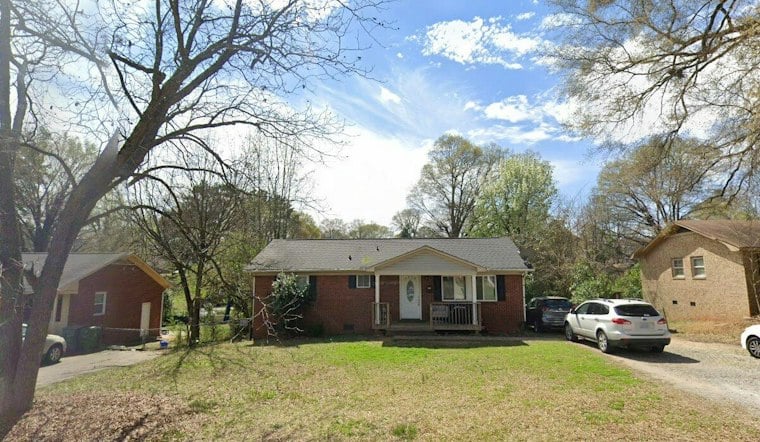
Residents of Charlotte's Hidden Valley neighborhood are preparing to go to court over a proposed triplex, arguing that decades-old deed restrictions require the area to stay single-family only. The Hidden Valley Community Association and the Historic Black Neighborhood Coalition plan to announce the legal action at a press conference set for Saturday, Oct. 3.
The groups say they plan to use the deed restrictions to challenge the proposed triplex, arguing that the documents limit residential development in the area to single-family homes, according to The Charlotte Post. The press conference is scheduled for Parkwood Institutional CME Church on Tom Hunter Road.
A Neighborhood Weighing Growth Against Its Roots
Hidden Valley is one of Charlotte's largest single-family developments, bordered by West Sugar Creek Road and North Tryon Street, per the same outlet's earlier reporting. The neighborhood was established in 1960 as a middle-class white community, and Black residents began moving in by the 1970s — a shift tied to the era's expanding fair housing protections, the news organization has reported.
Marjorie Parker said the effort is not a rejection of redevelopment, but a call for it to account for existing residents and homeowner commitments. Bobby Drakeford connected the dispute to the importance of protecting Hidden Valley’s Black heritage, the report notes.
Deed Restrictions Emerge as a Legal Battleground Citywide
The dispute lands amid Charlotte's Unified Development Ordinance, which since 2023 has allowed duplexes, triplexes and quadplexes in far more places across the city than before, according to WFAE. Citywide, a total of 8,537 duplexes, triplexes and quadplexes had been submitted or approved since the rule took effect on June 1, 2023, the station reports. The ordinance was intended to make it easier to build so-called missing-middle housing by cutting down on the need for rezoning petitions, though some residents have worried the added density could damage neighborhood character or strain traffic and schools, per the same station's reporting.
Lansdowne offers a recent comparison, though it is a separate neighborhood dispute. The Charlotte Ledger reported on May 1, 2024, that South Charlotte neighbors sued to block a triplex. WFAE described the case as the first such lawsuit since the 2023 rule changes took effect. Lansdowne residents argued that deed restrictions barred structures other than single-family homes; the developer’s attorneys said in court filings that the restrictions had expired decades earlier. Residents disputed that claim, saying the restrictions had been renewed around 1989.
A Separate Court Ruling Offers Context
The Lansdowne litigation is distinct from a North Carolina Supreme Court ruling that WFAE reported found certain decades-old restrictions on building heights and multifamily homes invalid. The ruling arose from separate cases involving Charlotte and Asheville residents, not from either the Lansdowne dispute or Hidden Valley’s planned suit.
Development Pressure Tied to Light Rail Access
Part of what's driving interest in Hidden Valley is location. The neighborhood has attracted growing developer interest in recent years thanks to its proximity to Charlotte's light rail line, the news outlet reported in 2024. That same reporting noted that Hidden Valley's Asian Corner Mall had already been replaced with apartments, though at least one resident said the change hadn't brought more business to the area.
Estimates of the neighborhood's size vary across sources. The Charlotte Post reports Hidden Valley has approximately 4,500 homes, while the Charlotte Ledger has put the figure at about 4,600, and a City of Charlotte neighborhood directory lists roughly 4,000 homes for the Hidden Valley Community Association. Whatever the precise count, the coming legal fight will test whether old paper restrictions can still hold the line against a rewritten zoning map — a question Charlotte neighborhoods from Lansdowne to Myers Park and Eastover, where residents have hired a lobbyist to seek changes to state law on deed restrictions, are increasingly asking.





