

























































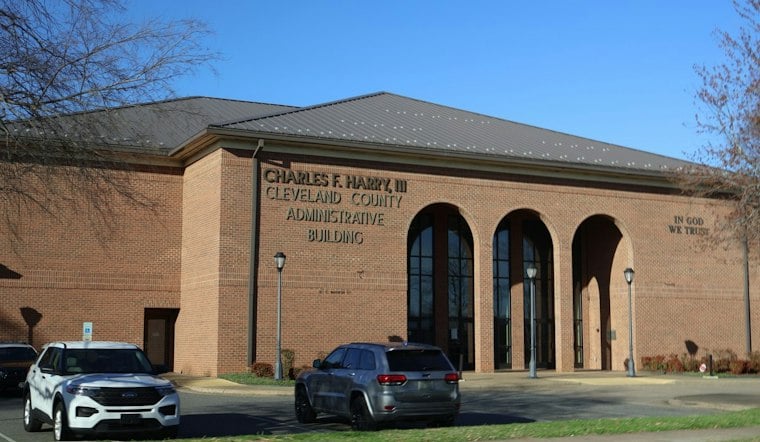
Cleveland County commissioners have voted to let large-scale battery storage facilities set up shop in the county's industrial zones, a change pushed forward after Duke Energy petitioned for it. The vote wasn't unanimous — Commissioner Johnny Hutchins cast the lone dissenting vote, pointing to his own background working with lithium as a reason for his hesitation.
The amendment updates Cleveland County's Unified Development Ordinance, the code that, per Cleveland County, governs land-use decisions made by the county's Planning Office and applies both to unincorporated areas and to municipalities that have adopted county zoning. As reported by the Shelby Star, Cleveland County Planning Director Chris Martin said Duke Energy petitioned to add the battery storage use to the ordinance, setting the stage for commissioners to take up the question.
Hutchins was the only commissioner to vote against the change, according to the same report. He said he has experience working with lithium, a detail he raised in explaining his opposition, though the extent of that background wasn't detailed further in the available reporting.
Industrial Zones Are Where North Carolina Projects Tend to Land
Cleveland County's move fits a pattern seen across the state. Industrial zones are the most common districts where North Carolina counties permit renewable energy projects, followed by agricultural, commercial, and residential zones, per the clean-energy policy tracker DSIRE Insight. The same tracker found that as of a March 2026 update, 81 North Carolina counties addressed solar in their zoning ordinances, but only 14 had taken up battery energy storage specifically.
Of those 14 counties, seven folded storage regulations into their existing solar ordinance requirements rather than treating it as its own category, the DSIRE Insight analysis found. A separate 2025 study by the NC Clean Energy Technology Center went further, reporting that no North Carolina counties had explicit provisions written specifically for standalone energy storage in their zoning codes. That study noted storage typically rides along inside solar ordinances and tends to get only cursory treatment there.
Not Every County Is Handling It the Same Way
Lincoln County stands out as the one North Carolina county that defines energy storage as its own separate primary land use rather than bundling it with solar, according to DSIRE Insight. Elsewhere, the Town of Knightdale took a lighter-touch approach, permitting a Duke Energy battery storage system on an existing substation parcel already zoned manufacturing and industrial, allowing the project to be reviewed and approved administratively without a broader ordinance fight.
Other states are drawing their own lines. In Virginia, Washington County supervisors unanimously approved a zoning ordinance, effective immediately, restricting utility-scale battery facilities to manufacturing zones, according to SuperTalk 92.9. Developers there must also secure a special-exception vote from the board before building. In California, San Diego County officials have been working on the county's first zoning rules for large battery storage systems in unincorporated areas, a push that followed intense local opposition to a proposed project near Boulevard — the Starlight Solar project, which would pair roughly 588 acres of solar panels with a 217-megawatt battery system — over fears tied to fire risk and battery placement, the San Diego Union-Tribune reported.
Why Duke Energy Is Pushing for More Storage Capacity
The push into Cleveland County lines up with Duke Energy's broader buildout plans. The company's 2025 Carolinas Resource Plan recommended energy storage capacity additions beginning this year, with nameplate capacity reaching 6,500 megawatts by 2035 and 9,450 megawatts by 2040, according to DSIRE Insight's analysis. Nationally, battery storage has been expanding quickly — the U.S. power system had 43.6 gigawatts of operational battery storage capacity by the end of 2025, per the U.S. Energy Information Administration.
This isn't the first time Cleveland County commissioners have amended the Unified Development Ordinance's industrial-use provisions. Back in November 2024, the board unanimously approved a separate UDO amendment adding non-residential building construction as a permitted use in the Heavy Industrial zoning district, county meeting records show. This time around, the vote wasn't unanimous, with Hutchins standing alone in opposition as the county opens the door to the battery storage facilities Duke Energy sought.



