

























































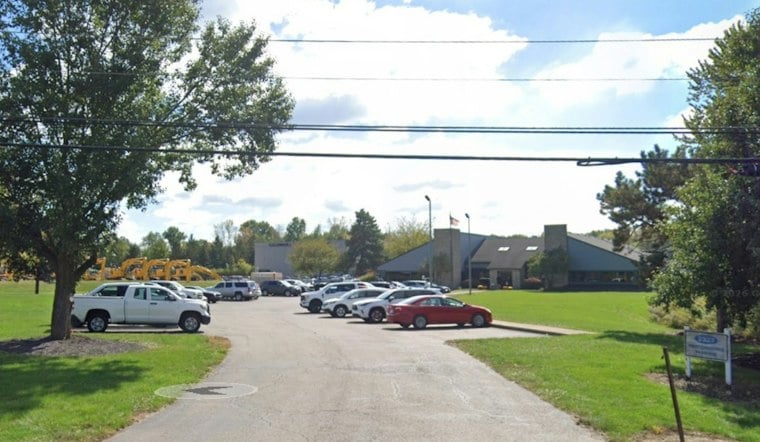
A strong, burning chemical smell has been drifting into a Hilliard-area neighborhood for years, and residents say it's happening multiple times a week — even though the asphalt plant blamed for the odor isn't breaking any rules. Janeen Sylvester, who lives nearby, says she frequently smells the strong chemical odor and that it has triggered significant asthma attacks and headaches.
The odor has been traced to RAP Management, a Columbus-based asphalt manufacturing plant located about three miles from the affected neighborhood, according to NBC4 WCMH-TV. RAP Management opened its Walcutt Road facility in 2023 and produces recycled asphalt. The company installed North America's first Ammann high-recycling batch plant, a Swiss-made system capable of producing asphalt mixes with 55% to 60% recycled asphalt pavement content — nearly triple the national industry average, according to Columbus Equipment Company.
NBC4's Better Call 4 investigative team found that the plant is not violating regulations, despite residents having reported the chemical smell to the Ohio EPA for years. Ohio EPA complaint records date back to 2024, and neighbors have reported the odor repeatedly, per those records. Residents say the smell peaks into a strong burning chemical odor multiple times a week, and they worry there could be health impacts even when emissions do not exceed state regulations.
A Neighbor Turns Data Tracker
Joe Keys has taken it upon himself to document the problem. He built a website that shows wind records and how they appear to correlate with odors reported in the neighborhood, and he says routine asphalt burning is the neighborhood's biggest detractor. Keys says his own children feel unwell on days when the plant smell is strong.
Local online forums reflect a similar pattern stretching back further than the official complaint record — residents in Northwest Columbus and Hilliard have described noxious chemical and asphalt odors since at least 2023, with smells often peaking overnight and in early morning hours, according to posts on Reddit. Calm winds and atmospheric temperature inversions can trap emissions near ground level during those hours, preventing the smell from dispersing.
Why Regulators Say Nothing Is Being Violated
RAP Management facility emissions are below thresholds established in Ohio law, according to Ohio EPA. The agency has not conducted an air-toxics modeling analysis for the facility, and it was not required to, because Ohio's evaluation protocols only mandate dispersion modeling — tools like AERSCREEN or AERMOD — for new or modified sources that burn heavy fuel oil, use slag aggregate, or exceed specific emission thresholds.
Kristie Ellickson said Ohio is not required to conduct the air-toxics modeling analysis under current rules, but added that the state could still choose to conduct a more in-depth emissions study to determine whether there is elevated risk, or run the air-toxics modeling analysis specifically to protect human health and the environment. Ellickson also said asphalt plants emit pollutants related to higher cancer risk. The Union of Concerned Scientists, where Ellickson's assessment comes from, is an independent nonprofit that uses science to shape public policy.
Those pollutants are consistent with what asphalt manufacturing is known to produce. According to U.S. Environmental Protection Agency guidance on hot mix asphalt plants, drying aggregate and heating liquid asphalt generates volatile organic compounds, polycyclic aromatic hydrocarbons such as benzo(a)pyrene, formaldehyde, carbon monoxide, and sulfur dioxide — compounds known for low odor thresholds and toxicological concern.
A 2020 study available through NIH's PubMed Central found that hydrocarbons were dominant contributors to secondary organic aerosol production from asphalt-related emissions, accounting for 73 ± 12% on average. The U.S. Environmental Protection Agency published a 288-page Stakeholders Opinions Report as part of a program to characterize air emissions from hot-mix asphalt plants.
State Odor Law Applies Even Below Permit Limits
Ohio law does not require emissions to exceed numeric permit caps for an odor to count as a violation. Under Ohio Administrative Code 3745-15-07, the state prohibits the release of odors, fumes, or vapors in quantities that endanger public health, safety, or welfare, or that cause unreasonable injury to property — classifying such emissions as an illegal public air pollution nuisance regardless of whether a facility stays under its equipment mass limits.
That rule carries new weight for residents. In February 2025, the U.S. Environmental Protection Agency reinstated Ohio's Air Nuisance Rule into the federally enforceable State Implementation Plan, a move detailed by the law firm Bricker Graydon. The reinstatement means private citizens can now file federal lawsuits under Clean Air Act citizen suit provisions if state or local regulators fail to act against industrial odors, opening a legal pathway beyond administrative complaints alone.
A Permit Renewal Looms in November
RAP Management's air permit expires in November 2026, and as of Tuesday, Ohio EPA had not yet received the company's renewal application. When that renewal decision is eventually issued, Ohio law gives affected residents a limited window to challenge it: under Ohio Revised Code Section 3745.04, anyone adversely affected by an Ohio EPA final permit decision has 30 days to file a formal appeal with the state's Environmental Review Appeals Commission.
For now, neighbors say they simply want answers — what they are breathing, and whether the odor can be reduced. RAP Management has responded that it operates in compliance with applicable Ohio EPA permits and says it is committed to maintaining that compliance.
A Company Also Tied to State Recycling Goals
The tension in the neighborhood sits alongside RAP Management's standing as a favored partner in state and regional recycling efforts. In 2021 and 2022, the Ohio Department of Transportation worked with the company on a 4.6-mile paving test section on State Route 664, evaluating 55% recycled asphalt mixes against standard 20% recycled mixes under Balanced Mix Design performance standards, according to the Jurgensen Companies. The Solid Waste Authority of Central Ohio has also awarded the firm grant funding and featured it in regional initiatives aimed at diverting hundreds of millions of pounds of construction and road milling debris from the Franklin County Sanitary Landfill, per Resource Recycling.
That backing underscores the bind facing regulators and neighbors alike: a plant credited with advancing landfill diversion and recycled-pavement technology is also the source of an odor that residents say has become a routine, and at times debilitating, part of life near Hilliard.





