

























































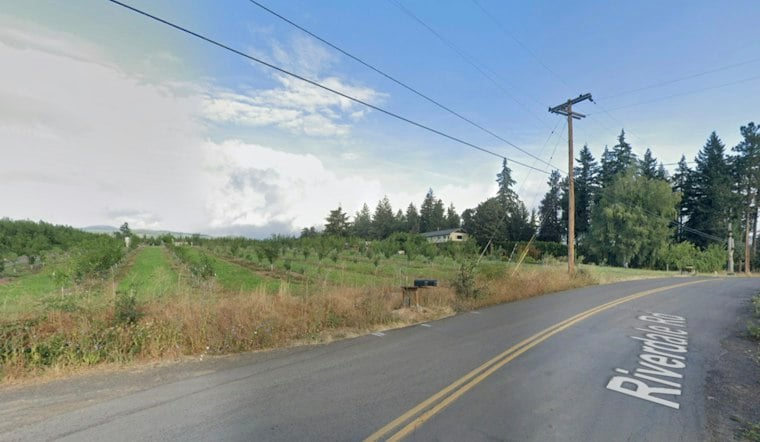
Jason Sandahl is 56 years old, farms hundreds of acres of pears across Hood River Valley, and says his operation is already sitting at the break-even point. Last year he lost almost 1 million pounds of Bosc pears, and the savings he built over 15 years evaporated in just the past three. Now he is weighing whether to walk away from fruit farming entirely if things don't turn around within the next couple of years.
Sandahl's predicament sits at the center of a mounting crisis across Oregon's pear country, according to reporting by The Oregonian/OregonLive. Abandoned and neglected orchards are spreading pear pests and diseases to neighboring farms, and the newspaper's reporting, authored by Gosia Wozniacka, describes an industry nearing a breaking point. Idle orchards have increased in recent years, driven by high irrigation, pesticide, fertilizer and labor costs colliding with stubbornly low fruit prices.
A Grower Caught Between Debt and Disease
Sandahl bought his father's 24-acre orchard in 2008, and has since taken on nine leases totaling 150 acres while also managing four smaller farms for aging farmers who can no longer run them themselves. He even bought an additional 26-acre orchard, betting on the business even as the numbers turned against him. He receives just 23 cents per pound for his pears, and believes an abandoned orchard next door has worsened pear psylla and other pest pressure on his own land, according to Sandahl.
He's not alone in that suspicion. Jeffrey McNerney, who grows 300 acres of pears and 200 acres of apples, cherries and blueberries across Odell, Dee, Parkdale and Pine Grove, says codling moth migrated from a neighboring neglected pear orchard onto his apple trees, per McNerney's account. Unharvested orchards are known to harbor codling moth, the fire blight pathogen, pear scab and pear psylla — pests capable of devastating an entire valley's crop.
The Worst Psylla Outbreak in Decades
Hood River pear growers experienced one of their worst-ever seasons in 2025, and the timing was brutal: Columbia River Gorge growers faced the worst pear psylla outbreak in nearly 50 years that year, a crisis aggravated by extreme heat and reduced snowpack, according to Capital Press. Dry conditions prevented rainwater from naturally washing psylla honeydew off the trees, letting the excretions form black sooty mold on fruit that lingered in cold storage into early 2026. Pear psylla makes pears unmarketable outright, and roughly one-quarter of the Hood River pear crop ended up in landfills as a result.
The financial math behind that wreckage is stark. Hood River Valley farmers spent about $300 per bin to produce the 2025 crop but received net returns of only $0 to $150 per bin from packing houses after storage and marketing fees, Capital Press reported. Growers typically don't learn the final price until months after delivering their fruit, leaving them exposed to losses they can't plan around. Abandoned orchards only compound the damage, further reducing already low pear prices industry-wide.
A Market Already Flooded
The price collapse didn't happen in isolation. U.S. pear exports have fallen by roughly half, while prices have remained stuck around $2 per pound on average since 2008 — even as costs have climbed. The math got worse in mid-2025, when Del Monte Foods permanently closed its fruit processing cannery and two warehouses in Yakima, Washington, cutting 51 full-time and 448 seasonal jobs and forcing tens of thousands of tons of Bartlett processing pears into an already saturated fresh market, according to a report cited by Washington House Republicans.
Federal officials tried to soften the blow. The USDA executed an emergency $20 million out-of-cycle Section 32 purchase of more than 500,000 boxes of Northwest pears in late 2025 and early 2026 to absorb the glut, according to the Ag Information Network of the West. Oregon and Washington together produce 85% of all fresh pears and 77% of total U.S. pear production, with Oregon alone generating 200,000 tons valued at $120 million across 14,600 bearing acres in 2024, per the Northwest Horticultural Council.
Kotek Seeks Federal Disaster Relief
Governor Tina Kotek has sought federal disaster relief for Oregon's pear industry, formally requesting a Secretarial Disaster Designation from USDA Secretary Brooke Rollins for Hood River, Wasco, and contiguous counties, citing an estimated $40 million to $45 million in regional financial damage and grower revenues cut nearly in half, according to Oregon.gov. It echoes a similar designation Hoodline reported the USDA granted Okanogan County growers in Washington after spring freeze damage, though that designation followed weather disaster rather than pest and market collapse.
Enforcement Gaps Leave Orchards to Rot
Oregon law already requires fruit tree owners in designated pest control areas to manage infestations — under Oregon Administrative Rule 603-052-0260, the entirety of Hood River County is designated a pest control area targeting codling moth, pear psylla and fire blight. Hood River County Ordinance #263 goes further, empowering county authorities to order tree destruction or crop removal at an owner's expense. But enforcement of those orchard pest rules has been effectively nonexistent over the past decade, and the county currently has no funding for orchard inspections, pesticide-record monitoring or tree removal.
Removing a neglected pear orchard can cost tens of thousands of dollars, a price tag well beyond what many aging or financially strained owners can absorb. Ashley Thompson, the Oregon State University Extension Service's tree fruit horticulturalist for Wasco and Hood River counties, has shared the locations of about 15 abandoned orchards in the Hood River area with the state. She hopes the Oregon Department of Agriculture will engage with derelict growers, and that legislators in Salem will fund orchard pest control checks and tree removal. The state agency reportedly only learned the abandoned orchard problem was widespread a few months before the story published. Thompson has said scientists have not conclusively determined how much abandoned orchards contribute to pear psylla populations overall.
Allison Williams said the county needs increased enforcement and potential remediation, but Hood River County lacks the expertise and funding to address neglected orchards on its own. Nearly two-thirds of Hood River County's agricultural producers were age 55 or older in 2022, a demographic reality that compounds the enforcement problem as fewer younger farmers are positioned to take over struggling operations.
Land Values Rise Even as Farming Struggles
Paradoxically, the land underneath these struggling orchards keeps getting more valuable. Hood River and Wasco county orchard land has jumped from about $12,000 per acre around 2000 to roughly $35,000 to $40,000 per acre in recent years, with some small orchards selling for as much as $50,000 per acre. Oregon farm real estate value rose about 23% between 2017 and 2022, well above the roughly 7% national increase over the same period. Affluent remote workers, second-home owners and lifestyle buyers are driving higher land and home prices across the Gorge, even as the Columbia River Gorge National Scenic Area constrains growth through land-use protections and the region faces a housing shortage.
Dan Bigelow, an Oregon State University agricultural economist, said abandoned orchards signal severe economic pressure on pear growers rather than simple neglect. More than 40% of principal farm operators nationwide hold other jobs outside the farm, a pattern reflected in Sandahl's own history — he once held an off-farm job as a USDA consultant to make ends meet. Smaller pear farms are especially economically unsustainable, and the trend of rising idle orchards isn't confined to Oregon: California and Washington have experienced a similar rise in abandoned pear acreage.
For now, Hood River Valley pear growers are harvesting 2026's crop under the same pressures that battered them a year earlier — collapsing prices, spreading pests, and a patchwork of unenforced rules meant to stop exactly this kind of decline. Sandahl says he is watching closely to see whether the next couple of years make continued farming possible at all.



