

























































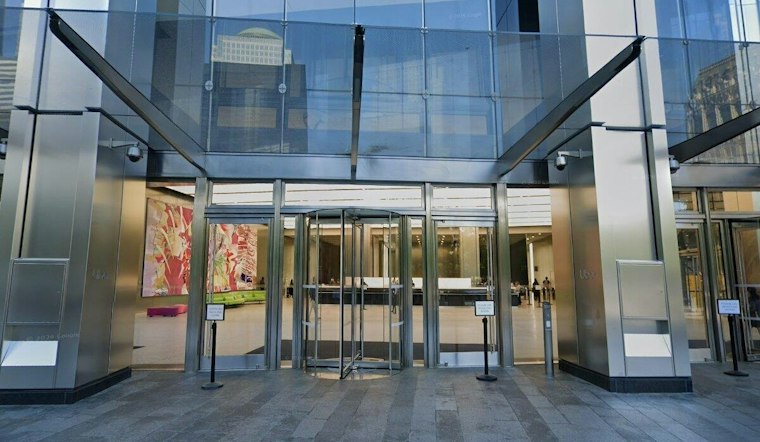
A gallery on the 69th floor of 3 World Trade Center is displaying surrealist paintings by Hope Buzzelli, whose father survived the 2001 collapse of the North Tower. NBC New York reported on the exhibition and the family history connected to it.
The exhibition and the artist
Buzzelli, who is nearly 25, has worked in art restoration and has participated in more than a dozen exhibitions in New York, according to NBC New York. Her dreamlike aquatic scenes use ballpoint pen and colored pencil. The display is in a building that opened in June 2018; 3 World Trade Center is an 80-story, 1,079-foot tower next to the National September 11 Memorial plaza. The World Trade Center’s official site says the building has five retail levels, including the ground floor, two below-grade levels and two above-ground levels: World Trade Center.
The history behind the view
Her father, Pasquale Buzzelli, was a Port Authority engineer whose office was on the North Tower’s 64th floor. He was descending through a stairwell when the 110-story building collapsed and survived in the wreckage near the 22nd floor. NBC New York’s earlier account said firefighters rescued him and that he was treated for a broken ankle before returning home: NBC New York.
The wider legacy of the site
The exhibition is part of a redeveloped World Trade Center complex whose planning history predates the current show. In a March 8, 2004 review, the New York City Planning Commission described the World Trade Center General Project Plan as a framework for future planning and design at the site: New York City Planning Commission.
A commercial setting within the rebuilt site
The redevelopment was organized as a broader Lower Manhattan rebuilding effort. According to the World Trade Center’s official history, the Lower Manhattan Development Corporation was created in November 2001 to plan reconstruction and distribute nearly $10 billion in federal rebuilding and revitalization funds: World Trade Center history. Architect Rogers Stirk Harbour + Partners describes 3 World Trade Center as a commercial tower bounded by Greenwich, Church, Dey and Cortlandt streets and positioned opposite the World Trade Center Memorial and Cultural Center: Rogers Stirk Harbour + Partners. That distinction places the exhibition in the site's office-and-retail environment rather than in the memorial or museum spaces nearby.
The health impact of 9/11 exposure also extends far beyond the original rescue. According to a CDC-authored study, nearly 3000 people were killed and an estimated 400 000 individuals were exposed to toxin-containing dust, fire fumes and debris from damaged and collapsed buildings after the attacks: CDC-authored study. A separate CDC-authored World Trade Center Health Program study reports that aerodigestive disorders accounted for 54% of certified conditions among program members enrolled through 2020: World Trade Center Health Program study.
The rescue involved Stairwell B, part of the North Tower’s central structure that remained partly intact through part of the collapse. Mike Lyons, one of the responders who helped reach Buzzelli, later died from lung cancer linked to exposure to 9/11 dust, according to NBC New York’s account of the family’s story: NBC New York. The exhibition’s setting therefore connects a contemporary commercial tower with the site's history and the continuing health consequences associated with the disaster.




