

























































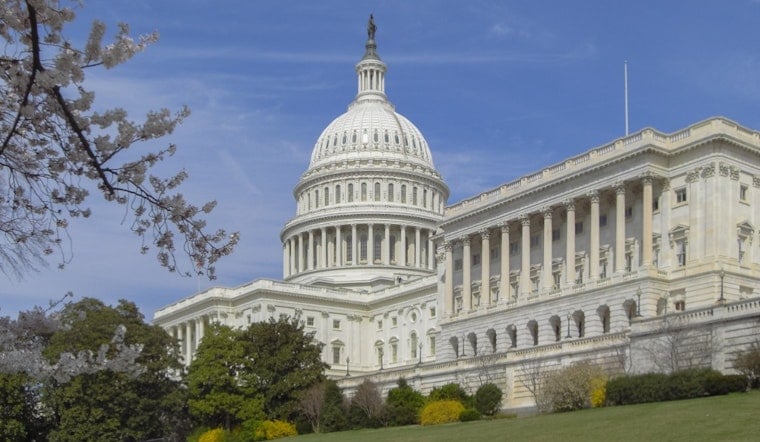
The U.S. House of Representatives voted Thursday to block federal funding for colleges and universities that participate in commercial boycotts of Israel, a measure that would put billions in student aid on the line over campus activism tied to the Israeli-Palestinian conflict. H.R. 4795 passed by a 237-169 margin, with 203 Republicans and 33 Democrats voting in favor and one independent representative joining them in support.
The bill, known as the Protect Economic and Academic Freedom Act, would amend the Higher Education Act of 1965 to require colleges to certify annually to the U.S. Secretary of Education, by July 31 of each year, that they do not participate in covered boycotts of Israel, according to the bill text published on GovInfo. Schools that fail to certify would become ineligible for Title IV student aid and Title VI international study grants — funding streams used for student aid and study-abroad programs. Federal Student Aid provides federal loans, grants, and work-study funds to students. As reported by the Baltimore Jewish Times, institutions receiving covered funds would also need to certify that students are not unreasonably obstructed from participating in academic programs in Israel.
A Bipartisan Split on Both Sides
The vote scrambled the usual party lines. Two House Republicans, Reps. Thomas Massie of Kentucky and Warren Davidson of Ohio, broke with their party to vote against the bill alongside 167 Democrats, while 27 representatives did not vote at all, per VINnews. On the other side, 32 Democrats joined bill co-sponsor Rep. Josh Gottheimer of New Jersey in supporting the measure, including Debbie Wasserman Schultz and Lois Frankel of Florida, Jared Moskowitz of Florida, Greg Landsman of Ohio, Brad Schneider of Illinois, Eugene Vindman of Virginia, and Kim Schrier of Washington.
Gottheimer, who co-sponsored the bill with Rep. Virginia Foxx of North Carolina, called it “an important step forward in ensuring academic freedom for all students,” and said he plans to push the Senate to take up the bill shortly, according to the Baltimore Jewish Times. Foxx said the act “takes a strong stand against the BDS movement on college campuses across the nation” and argued the legislation “severs possible taxpayer support for BDS and academic boycotts of Israel,” the outlet reported.
Nadler Leads Opposition, Calls Bill a First Amendment Violation
Rep. Jerry Nadler of New York, who urged colleagues to vote against the bill, described it as “a direct and gross violation of the First Amendment” and “the latest assault by the Trump administration on academic institutions,” per the Baltimore Jewish Times. Nadler said he would “protect Americans' right to speech with which he disagrees,” arguing that people engaging in BDS have a First Amendment right to do so.
House Minority Leader Hakeem Jeffries also came out against the bill Thursday, calling it a “poorly written” measure that would allow executive overreach against higher education institutions rather than effectively combating antisemitism, according to The Times of Israel. The ACLU, in a letter to Congress cited by lawmakers ahead of the vote, argued that classifying political boycotts of Israeli government policy as “non-expressive commercial conduct” violates the First Amendment, according to a letter posted on Rep. Nadler's House website.
The Legal Fight Over ‘Nonexpressive Conduct’
The bill's legal foundation rests on a 2022 ruling from the U.S. Court of Appeals for the Eighth Circuit, which classified economic boycotts as nonexpressive commercial conduct rather than protected speech. In Arkansas Times LP v. Waldrip, the court ruled en banc that state laws restricting government contractors from boycotting Israel regulate conduct, not speech — a decision the U.S. Supreme Court denied review of on February 21, 2023, according to The First Amendment Encyclopedia. The decision is part of the broader legal debate over H.R. 4795, even as the Foundation for Individual Rights and Expression maintains that individual students and faculty possess a constitutionally protected First Amendment right to advocate for BDS, per FIRE.
Policy analysts note that the bill's text, which defines prohibited commercial boycotts as refusals to deal with entities organized under or regulated by Israeli law without a valid business reason, extends non-boycott mandates to businesses operating in West Bank settlements, according to Responsible Statecraft. Opponents argue that blurring the Green Line in this way forces universities into supporting commercial operations in disputed territories. J Street, which opposed the bill, said penalizing universities for opposing activities that further annexation would set a dangerous precedent, and argued the bill would infringe on constitutionally protected free speech and academic freedom, per the Baltimore Jewish Times.
Backers Say Boycotts Harm Students and Research
Supporters of the bill argue that academic boycotts of Israel harm American students and scholars, weaken U.S.-Israel research collaboration, and lend credibility to a discriminatory campaign singling out Israel. The Anti-Defamation League welcomed the bill's passage, describing BDS activities as a tool used to delegitimize Israel and demonize Jews and other students connected to the Jewish state, the Baltimore Jewish Times reported. The Combat Antisemitism Movement, which says it aims to fight Jew hatred, sent a support letter to all U.S. House members ahead of the vote.
The debate over BDS — which aims to put economic pressure on Israel by barring purchases of Israeli products and suspending trade agreements — has played out on college campuses. A Congressional Budget Office estimate addresses the bill's potential effects on federal spending, revenues, and the deficit, per the Congressional Budget Office.
A Decade of Failed Attempts, and an Uncertain Senate
Federal efforts to restrict funding over Israel boycotts have included earlier anti-BDS measures, and H.R. 4795 passed the full House. It follows years of state-level action; as of 2026, 38 states have enacted anti-BDS legislation, executive orders, or resolutions restricting state contracts or public investments tied to Israel boycotts, per Responsible Statecraft — a trend that has also included an Arizona challenge involving the state's own anti-BDS statute.
Despite clearing the Republican-led House, the bill's fate in the Senate remains highly uncertain given widespread opposition among congressional Democrats, according to The Jerusalem Post. Few, if any, U.S. universities have formally adopted institutional boycotts of Israel, and critics argue that the bill could affect how universities respond to student-driven divestment campaigns.




