

























































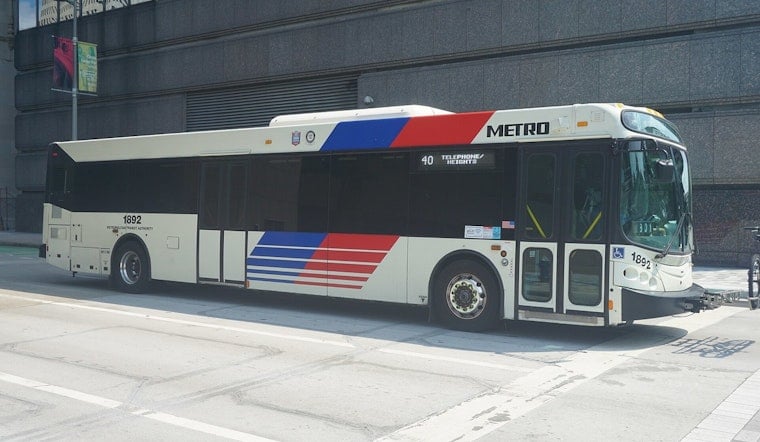
Houston METRO has scrapped a plan to cut rail and bus service hours in its coming fiscal year budget, choosing instead to eliminate 177 positions and restructure agency debt after transit advocates pushed back hard against the initial proposal. The reversal means riders will keep their current service levels when the new fiscal year begins on October 1, even as the agency continues funneling tens of millions of dollars toward road repaving rather than transit operations.
METRO's initial $1.7 billion proposed budget, released on August 28, had projected cutting rail service hours by 5% and bus service hours by 1.6% while draining $146 million from the agency's cash reserves, according to the Houston Chronicle. That proposal marked what would have been METRO's first overall spending reduction since the COVID-19 pandemic, and it landed poorly with riders and advocates who said it did not reflect their priorities.
Transit advocates criticized the initial budget proposal, and the backlash appears to have worked. METRO officials said the revised plan raises the agency's operating budget by $15 million, to $1.015 billion, while avoiding the service cuts entirely. METRO board member George Fotinos said the agency is taking any budget reduction affecting service off the table.
Layoffs and Debt Restructuring Replace Service Cuts
Instead of trimming bus and rail hours, METRO eliminated 177 positions, mostly administrative and non-union roles, and expects to save $7 million through staff reductions and an early-retirement incentive. The agency also cut $40 million from its five-year capital plan and delayed lower-priority projects, including improvements to its administration building, per the same Chronicle report.
To close the remaining gap, METRO is restructuring its debt by lowering payments over the next four years while increasing the interest it pays over time. That restructuring is projected to cost $2.7 million. Fotinos said the move could invite scrutiny from credit rating agencies, an acknowledgment that the fix carries its own long-term financial risk even as it spares riders from immediate cuts.
Advocates Still Question the Road Money
Even with service preserved, the deeper fight over how METRO spends its money hasn't gone away. The agency will transfer $228 million to local governments in its service area for road repairs as part of its voter-approved General Mobility Program, a formula created in 1988 and reapproved by voters in 2012 that legally redirects a quarter of METRO's 1-cent sales tax revenue away from transit operations and toward member municipalities' street maintenance, according to Community Impact. On top of that transfer, METRO plans to allocate an additional $40 million to repaving roads primarily within Houston city limits.
Transit advocate Robin Holzer said that additional $40 million in asphalt spending could instead fund a 6% increase in bus service, arguing that riders want more service, not less. Roberto Treviño questioned whether the revised plan leaves METRO enough money to maintain its fleet and facilities over the long term, saying the agency cannot be directed to maintain operations without proper funding for a state of good repair.
METRO officials, for their part, said future transit route and frequency decisions are handled through a separate process throughout the year, and that the budget itself does not determine future transit routes or frequency changes. The METRO board plans to adopt its annual budget on September 24.
A Pattern of Pivoting Away From Big Transit Bets
The budget fight fits a broader pattern that has defined METRO's direction since Mayor John Whitmire appointed Elizabeth Gonzalez Brock as board chair in February 2024. Under her leadership, the agency has indefinitely shelved major voter-approved capital projects from the 2019 METRONext plan, including the $2.2 billion University Corridor Bus Rapid Transit project that two-thirds of Harris County voters had approved, according to Houston Landing. A year earlier, in September 2025, METRO's board approved a $2 billion budget that funded 160 new replacement buses but drew public pushback for pausing high-capacity rail lines while keeping bus frequency flat.
The stakes of the tug-of-war between road spending and transit service extend beyond METRO's balance sheet. A March 2026 study by the Texas A&M Transportation Institute found the average Houston commuter loses 77 hours per year sitting in traffic and spends roughly $1,819 annually in wasted fuel and vehicle delay costs, as reported by Click2Houston. Transit advocates and Houston City Council members have also urged METRO to make its planned FIFA World Cup 2026 bus and rail service expansions permanent, warning that budget cuts could undermine the region's transit readiness ahead of the tournament, according to Axios Houston.
Houston's budget standoff also echoes tension playing out statewide. Texas transit agencies faced heightened political pressure in 2025, including state legislative proposals that would have forced Dallas Area Rapid Transit to divert a quarter of its sales tax revenue to local road projects, a move DART officials warned would trigger $234 million in budget shortfalls and severe service cuts, as Hoodline previously reported.
For now, Houston METRO riders won't see their bus or rail hours cut when the new fiscal year begins. But with $228 million still flowing to road repairs annually and advocates like Treviño warning about the agency's long-term state of good repair, the budget METRO's board is set to adopt on September 24 settles this year's fight without resolving the underlying question of how much of a sales-tax-funded transit agency's money should go to pavement instead of buses and trains.





.jpg)