

























































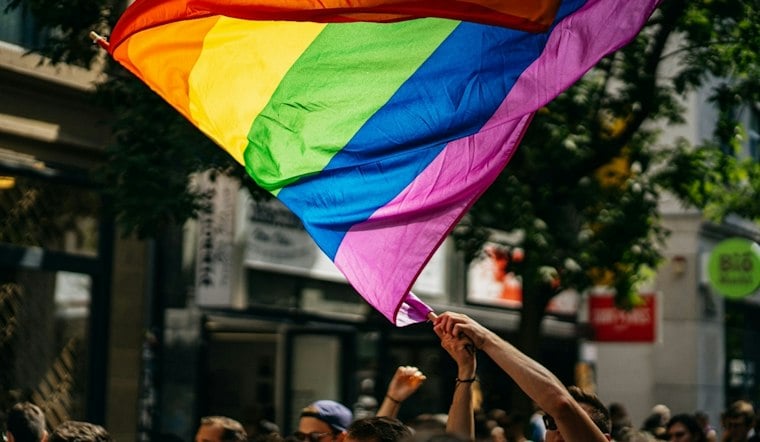
The Greater Houston LGBTQ+ Chamber of Commerce is turning 10 this year, and its leaders are marking the milestone at the same moment a new report suggests many LGBTQ+ Texans feel stuck between politics and pocketbooks. The chamber launched on February 24, 2016, and now says it counts more than 560 members representing hundreds of businesses and thousands of employees across Greater Houston.
According to the chamber, that decade of growth has built what its website calls a vibrant network where LGBTQ+ and allied businesses, professionals, corporate partners, nonprofits, civic leaders and community organizations thrive together, as detailed on the Greater Houston LGBTQ+ Chamber of Commerce's anniversary page. The organization was co-founded by Tammi Wallace and Gary Wood, and Wallace now serves as its president and CEO. A separate profile from CW39 describes the chamber as a nearly 600-member business ecosystem supported by more than 40 corporate, nonprofit and public-sector partners — a slightly different membership count than the chamber's own 560-plus figure, with the gap between the two numbers left unexplained in either account.
A Decade of Building an Economic Network
Wallace's chamber says its mission includes elevating LGBTQ+ and allied entrepreneurs and professionals, work that CW39 frames as advancing LGBTQ+ economic equity in its profile of Wallace as one of its Remarkable Women. Wallace also served on the City of Houston's first LGBTQ+ Advisory Board, per that same report. The station notes the chamber is preparing to celebrate its 10th anniversary in 2026, the same milestone the organization highlights on its own site.
That anniversary arrives as a new Axios report examines why many LGBTQ+ residents stay put in Texas even amid a politically complicated climate. As reported by Axios, reporters Shafaq Patel and Russell Contreras write that leaving Texas is financially or practically impossible for many LGBTQ+ residents, with affordability and work keeping some people in places that are politically complicated but economically viable.
Roots, Rebuilding and the Case for Staying
Wallace told Axios that leaving simply is not an option for some LGBTQ+ Texans, explaining that a move would mean rebuilding community and support systems from scratch. She attributed the state's staying power to economic opportunity, affordability and community in Houston specifically, and said she hopes Texas can become a better place to live, work and raise families. Axios frames this as part of a broader pattern in which LGBTQ+ Americans move to cheaper, fast-growing metros where jobs, housing and politics collide, even as safety and affordability create tension for many in that community.
Per the Axios analysis, LGBTQ+ Texans who stay in Houston often do so because they are rooted there, contributing to the regional economy as business owners, workers, job creators and taxpayers. The outlet cites Williams Institute estimates, based on Gallup survey data, that the Houston metro is home to roughly 169,000 LGBTQ+ adults, making up about 3.5% of the metro's adult population — a smaller share than in San Diego and Los Angeles, which Axios reports have larger percentages of adults who identify as LGBTQ than Houston.
The Affordability Math Behind the Decision
Money factors heavily into that calculation. Axios reports that homebuyers needed to earn $150,364 annually in 2024 to afford the median-priced home in states with LGBTQ housing protections, according to its analysis of Redfin data — about 46.8% more income than is required in states like Texas that lack such protections. The outlet notes that Redfin data shows homes for sale in the Houston metro are affordable to 16.7% of people earning the local median household income, compared with less than 2% of homes for sale in both San Diego and Los Angeles.
Axios also points out that San Francisco and Boston offer stronger LGBTQ legal protections but come with significantly higher housing costs, underscoring the trade-off many families weigh. The outlet cites Williams Institute findings that LGBTQ+ Americans have lower homeownership rates than non-LGBTQ Americans, and notes that federal surveys have failed to consistently collect sexual orientation and gender identity data — a gap that leaves LGBTQ migration patterns largely undocumented, according to Axios.
What the Chamber's Milestone Signals
Set against that backdrop, the Greater Houston LGBTQ+ Chamber of Commerce's 10th anniversary reads as more than a birthday party. Whether the membership stands at just over 560 or closer to 600, as the two available accounts describe it, the organization's own framing emphasizes an economic network built over a decade rather than a political statement. For Wallace, the calculus described to Axios — staying rooted in Houston despite a complicated political climate — appears to be the same logic driving the chamber's decade of expansion.





