

























































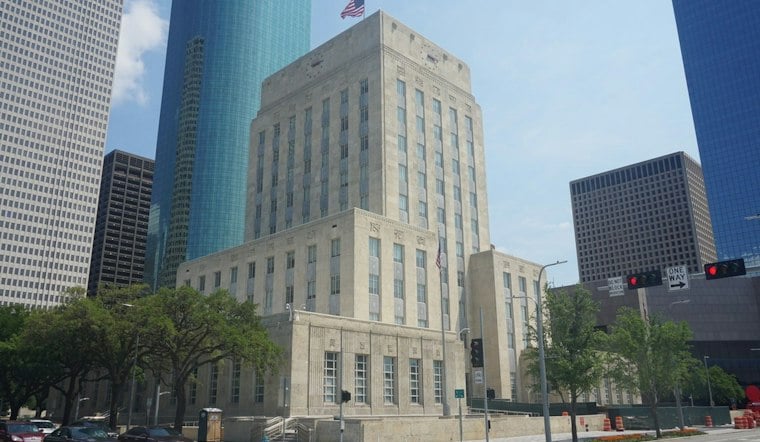
Houston City Council could vote as soon as Wednesday on whether to apply for a piece of a $300 million federal grant program that prioritizes immigration law enforcement operations and requires coordination with state and federal law enforcement partners. The decision lands in the middle of an ongoing fight over how closely Houston police should cooperate with federal immigration agents, a fight that has already produced lawsuits, a threatened funding cutoff from the state, and a tense showdown inside City Hall.
The grant in question is the Department of Justice's Model Cities Initiative, which the agency launched in June 2026 with a slogan of “Make America Safe Again,” offering competitive awards to two to four U.S. cities with populations over 100,000 that commit to a whole-of-city approach to public safety, according to Houston Public Media. Deputy Attorney General Todd Blanche has said the initiative will help the administration “strengthen law enforcement partners and restore the rule of law,” and that the government is using its authority to ensure Americans' safety. The program can fund officer hiring and retention, equipment and technology, victim services, and youth crime prevention, but immigration law enforcement operations are among the Justice Department's stated priorities for the money, and the initiative requires joint coordination among mayors, sheriffs, and prosecutors to qualify, according to the Department of Justice.
Mayor John Whitmire's spokesperson said the city is reviewing whether to apply, and the mayor's office is seeking clarification on the grant's conditions and guidelines, the outlet reports. Houston has not disclosed how much money it would seek or how it would spend an award if one came through. Governor Greg Abbott has argued the grant guidelines require cooperation with ICE, and Chris Chu de León said Councilmember Alejandra Salinas's office still has outstanding questions about the immigration-related requirements tied to the funding.
A Year of Pressure Over HPD and ICE
The grant question doesn't arrive in a vacuum. Houston police officers are currently required to contact ICE when they encounter people with civil immigration warrants, a policy that has fueled a reform push from some council members and at least one lawsuit from a man who was deported. In one 2026 case, Houston police detained people for up to three hours, per the reporting.
Salinas had spearheaded an effort to prohibit HPD officers from waiting around for ICE to arrive, an ordinance the council amended 13-4 on April 22, removing language limiting detention, according to a summary of the amendment published by Texas Scorecard. Abbott had threatened to pull more than $110 million in state public safety funding from Houston after the council initially passed the restriction, warning it created a crisis for police, fire, and 2026 FIFA World Cup security preparations, according to a statement from the City of Houston. Texas Attorney General Ken Paxton separately sued Houston officials that same month, asking a state court to declare the city's limits on ICE cooperation illegal under state sanctuary city statutes, arguing the restrictions violated Senate Bill 4 from 2017, according to the Office of the Texas Attorney General.
Underlying all of it is a newer version of Senate Bill 4, which Texas began enforcing in late May after a federal appeals court lifted a stay. That law empowers local and state officers to arrest people suspected of entering the country illegally and lets state judges order deportations, per FOX 7 Austin. Civil immigration warrants themselves are administrative notices issued by immigration officials rather than judicial warrants signed by a judge, and federal authorities expanded the national database used during traffic stops by roughly 700,000 such warrants in 2025.
Litigation and Unanswered Questions Inside City Hall
The human cost of the policy has already reached federal court. A deported Honduran national filed a class-action lawsuit against Houston in August, alleging HPD officers violated his Fourth Amendment rights by holding him for more than two hours during a traffic stop solely to await ICE custody. According to KHOU, the man had no criminal record and was deported just ten days after the June 17 stop.
Council members and city attorneys clashed again in late August after HPD Chief Noe Diaz skipped a committee hearing where legal staff restricted questioning about 103 reported police interactions with ICE. The station's report noted Councilmember Salinas publicly criticized the legal department's instructions barring officers from answering questions because of pending litigation. That friction echoes an earlier flashpoint involving ICE raids.
Concerns about the chilling effect on crime reporting have also surfaced. An immigrant witness who called 911 to report an active shooter in a Houston parking lot was taken into ICE custody in August and remained detained weeks later, and civil rights attorneys noted that neither HPD nor local prosecutors interviewed him after federal agents took him, according to the Houston Chronicle. Separate reporting cited fewer than 300 HPD contacts with ICE over 16 months and 19 transfers during April through June.
The Justice Department did not respond to questions about the grant, according to the Houston Public Media report that first surfaced Wednesday's potential council vote. Whether Houston ultimately applies, and what conditions it would accept to chase a share of the $300 million, remains an open question the council is expected to take up directly this week.





