

























































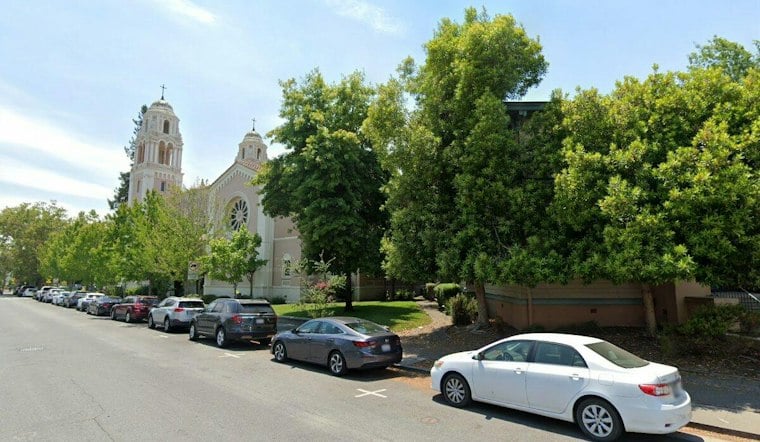
Petaluma's Día de los Muertos celebration will again bring candlelight, music and thousands of visitors downtown this fall. Its origins, however, reach back more than two decades, when a grieving mother named Margie Helm learned that someone had placed a photograph of her late son on an altar at St. Vincent de Paul Church during a small observance.
The Press Democrat reports that Helm later worked with Abraham Solar, St. Vincent's director of Hispanic ministry, to expand the observance beyond the parish. Organizers now describe the result as the largest event of its kind in the North Bay. Gloria McCallister, one of the event's main organizers, was born and raised in Mexico, came to the United States at 17 and has lived in Petaluma since 1990, according to The Press Democrat.
McCallister's own connection to the celebration deepened this year. Her husband of 45 years, Michael McCallister, died earlier in 2026, according to the report — a loss that sits alongside the tradition's central purpose of honoring ancestors and the past, and of helping people, as the article notes, form their present by remembering those who came before them.
A Tradition Rooted in Ancient Ritual
Día de los Muertos combines millennia-old Indigenous traditions with post-colonial religious rites in what is now Mexico and Central America. It is celebrated today by millions of people across the Spanish-speaking world, according to the Press Democrat's report. Petaluma organizers emphasize that the holiday is distinct from Halloween, a distinction that has become more visible as the local celebration has grown.
The Petaluma gathering centers on a candlelight procession from St. Vincent de Paul Church toward the Petaluma History Museum, where a main altar sits on Fourth Street. Participants bring photographs, poems and other remembrances for ofrendas, or altars, and many wear calavera makeup inspired by La Catrina, the skeletal figure associated with the holiday. Israel Escudero will create and oversee this year's main altar, drawing on his collection of artifacts from Mexico, according to the report. Community members may add photographs or memories of their own loved ones.
Volunteers, Altars and a Growing Cast
Margo Gallagher has volunteered with the event for about 20 years, the Press Democrat reports, and the organizing group has recently welcomed new members Nora Wilkins and Tim Wilkins alongside longtime organizers Helm and Solar. Beyond the main altar, separate displays will be set up by Petaluma Blacks for Community Development and the Petaluma River Park Foundation, reflecting the celebration's spread across community organizations well beyond its parish origins.
Performances this year will include Mexican folk dancing from Ballet Paquiyollotzin, directed by Juan González, along with a performance from Mateo Guzmán. Traditional altars will also feature alfeñiques — decorated sugar-paste figures that represent sweet memories, per the outlet's account. Organizers have created a donation website for the free community event, with contributions accepted through eldiadelosmuertospetaluma.org.
From a Single Night to a Month of Events
The 2026 celebration is scheduled to unfold across several weeks. It begins Oct. 4 with a health fair, continues with an artists reception on Oct. 10 and a poetry of remembrance recital on Oct. 17, and concludes Oct. 24 with the candlelight procession and closing event, according to the Press Democrat's report. Organizers estimate that about 4,000 people attended in 2025 and expect a larger turnout this year.
That growth echoes a pattern visible for nearly two decades. Back in 2007, organizers told the Press Democrat that the festivities, then in their seventh year, had expanded as more venues and businesses joined in, with the number of sites hosting altars and art more than doubling from the year before. “We are very excited this celebration is extending beyond the Latino community,” organizers said at the time. By 2016, the celebration had grown into a monthlong affair anchored by a church ceremony, a mole-tasting fundraiser and a downtown procession that, per the outlet's 2016 report, had become the largest Día de los Muertos gathering in Sonoma County, typically drawing more than a thousand spectators. That year's procession, organized by Solar, wound from the Petaluma River along Water Street and Western Avenue before turning onto Kentucky Street toward the museum, with a community altar displaying photographs, ceramic skulls and marigolds along the way.
Speaking Up Amid Immigration Fears
McCallister told the Petaluma City Council in July that nationwide ICE deployments were affecting cultural celebrations, according to the Press Democrat. The outlet also reported that some immigrant families avoided Petaluma's 2025 celebration because they feared separation from their families. Similar concerns affected other Bay Area events. In Sonoma, the Sonoma Community Center canceled its usual celebration last year and held a scaled-back ofrenda, or altar lighting, according to ABC7 News; in past years, the center's back patio had filled with as many as 600 people. As CBS News reported, some Bay Area groups canceled events amid concerns about immigration raids while others continued, including organizers at Peralta Hacienda Historical Park in Oakland, who monitored for suspicious activity. R.I.S.E. Youth canceled its celebration at Berkeley High School after community members said they did not feel safe attending.
How Other Bay Area Events Changed
The documented responses have varied by location and timing. Organizers canceled a Día de los Muertos event at Berkeley High School scheduled for Oct. 25 after community members said they did not feel safe attending, the San Francisco Chronicle reported. In a separate early-October decision in Sonoma, the Sonoma Community Center canceled its large annual celebration and planned only an altar-lighting ceremony. Petaluma, by contrast, has announced a multiweek 2026 program that will culminate in a downtown procession on Oct. 24.
For Petaluma's organizers, the celebration remains rooted in the same purpose it has carried since Helm first learned her son's photo had found a place on that parish altar: a public act of remembrance that, as the tradition holds, helps the living carry their ancestors forward into the present.




