

























































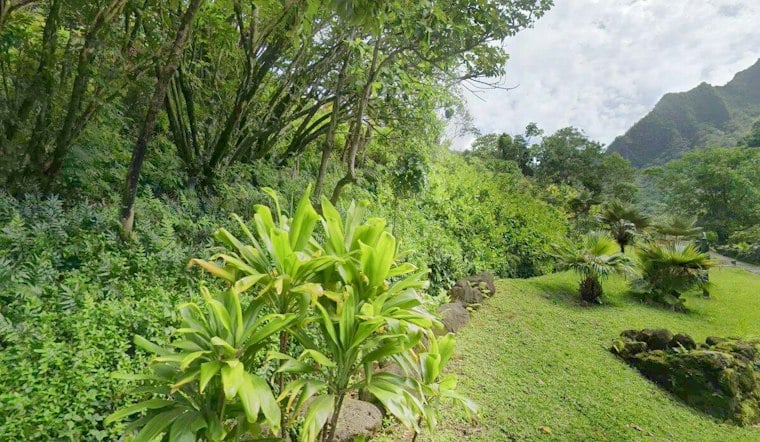
Recovery crews are assessing extensive damage at three National Tropical Botanical Garden sites on Kauaʻi after Hurricane Lowell toppled trees, flooded the historic Allerton House and killed 25 rare native Loulu palms. At Lāwaʻi Gardens, debris covers the grounds; roughly two feet of sand and coastal floodwater entered Allerton House, damaging several walls. Administrative buildings above the valley also sustained damage, and the garden has suspended public tours while staff assess the site.
The 25 palms represented roughly 700 Loulu specimens in the garden's collection, according to Kauai Now. Loulu, in the Pritchardia genus, is Hawaiʻi's only native palm species, and the National Tropical Botanical Garden holds most of the living Loulu collection anywhere. The single-storm loss also exceeded the five palms the garden had lost to Coconut Rhinoceros Beetle infestations over the previous two years, the report said.
A Storm That Rivaled Historic Devastation
Hurricane Lowell twice reached Category 5 intensity over the Central Pacific before wind shear weakened it to a Category 2 storm by the time it struck Kauaʻi directly around Labor Day, according to Wikipedia. It was the first Category 5 hurricane in the Central Pacific basin since Hurricane Walaka in 2018, and Wikipedia reports total damage across Hawaiʻi at more than $500 million, with at least three deaths reported — making Lowell the first hurricane to directly strike Kauaʻi County since Hurricane Iniki in 1992.
Iniki's legacy still lingers at the gardens in an unusual way: that 1992 storm scattered domestic and wild chickens across Kauaʻi, giving the island its now-famous free-roaming chicken population, per Kauai Now's reporting. Iniki also wiped out roughly a quarter of Kauaʻi's endangered plant species, according to the Los Angeles Times. Lāwaʻi Gardens recorded winds approaching 50 mph on the island's south shore during Lowell, while Limahuli Garden and Preserve on the north shore took in more than 17 inches of rain.
Limahuli's Isolated Recovery
Limahuli Garden and Preserve, which covers nearly 1,000 acres, reported that homes and businesses in the surrounding community were destroyed by the storm. The Limaola Cultural Arts Center, irrigation systems, roads and other infrastructure sustained damage, and landslides struck the upper preserve, where the garden conducts ecological restoration and invasive-species control work, Kauai Now reported.
Recovery there is complicated by the same power outages plaguing much of rural Kauaʻi. Kauaʻi Island Utility Cooperative had restored electricity to 97% of its members islandwide by September 20, but remote communities including Wainiha, Hāʻena and Kōkeʻe remained at zero percent power, according to Kauai Now. The co-op has worked to replace snapped poles and clear vegetation debris. Limahuli remains affected by local traffic restrictions beyond Wainiha, and access roads serving the gardens will not reopen until neighboring communities can accommodate visitor traffic again.
Concerns Beyond the Storm Damage
The hurricane has also heightened concerns about invasive species spreading through the transport of damaged plants, an added complication for a collection already under pressure. The Coconut Rhinoceros Beetle, which bores into palm crowns and has already killed five of the garden's Loulu palms in the past two years, is classified by the Hawaiʻi Department of Land and Natural Resources as an injurious wildlife pest subject to official control programs.
A Broader Conservation Challenge
The storm losses occurred against a difficult conservation backdrop. Hawaiʻi Legislature testimony on coconut rhinoceros beetle control discusses the pest's impacts and response programs. The Hawaiʻi Invasive Species Council likewise says many Loulu species are threatened, especially on Oʻahu. That context makes Lowell one acute setback in a collection facing longer-term invasive-species pressure as well. The documented concerns do not establish a ranking of every threat to Pritchardia, but they show that beetle damage and the already threatened status of many Loulu species remain central conservation issues beyond the hurricane itself.
The ecological stakes extend beyond the beetle. Habitat loss and the introduction of non-native animals contributed to the extinction of several bird species that had co-evolved alongside the palms — a reminder of how narrow the margin already was before Lowell struck.
Staff Safe, Recovery Underway
National Tropical Botanical Garden employees were reported safe and accounted for, and Lāwaʻi Gardens staff are now assessing plants and taking cuttings where necessary to preserve genetic material. Recovery teams are working to recover, clean and store historical objects carried off by the storm surge, while crews stabilize irrigation systems and clear pathways, Kauai Now reported.
Janet Mayfield, president and CEO of the National Tropical Botanical Garden, said earlier storm preparation and flood mitigation efforts helped harden the garden's infrastructure before Lowell hit. Before the storm, the garden welcomed nearly 4,000 visitors a month. Garden director Tobias Kohler struck a patient tone about the path back, telling Kauai Now, “We're pretty resilient. When it's the right time for everybody, we'll open.”
Tourism Pause Ripples Through the Island
The garden expects an update on reopening this Friday and, per staff, plans to reopen within the next few weeks — though the timeline depends on how quickly surrounding communities and roadways recover. That caution echoes a broader message from state officials: the Hawaiʻi Tourism Authority has issued formal travel advisories urging prospective visitors to reschedule Kauaʻi trips or rebook to neighboring islands, according to SuaraGarut.ID, as local officials look to keep roads clear for utility and municipal crews.
That pause has squeezed local businesses that depend on visitor traffic. Food vendor The Musubi Truck laid off up to half its staff and closed locations as demand dried up, KSAT reported. The garden's donation appeal, meanwhile, states that contributions will support employees, cleanup, and repairs, along with the restoration of plant collections — including the rare palms still standing in the wreckage.





