

























































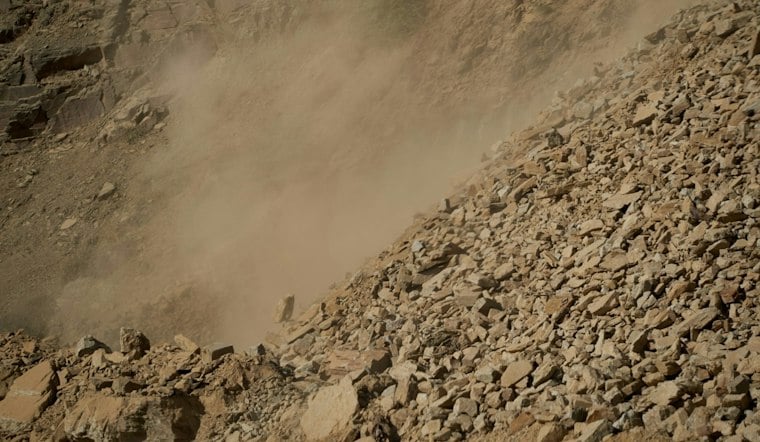
A large rockslide tore loose near the Agate Street beach access in Laguna Beach as hurricane-driven swells pounded the Orange County coastline, dirtying the water below and forcing an immediate closure of the popular stairway viewpoint. No injuries were reported, but the slide wiped out a sizable chunk of the seaside bluff directly beneath the vantage point, prompting fire and marine safety crews to rope off the area while the city calls in a geologist to assess what is left of the cliff.
The slide struck on Tuesday, according to the New York Post, as the remnants of Hurricane Polo battered California's coastline with strong waves that pummeled the cliffs near Laguna Beach. The city confirmed the rockslide occurred directly below the stairway that leads to the beach access, and said emergency crews shut down the area and requested the geological survey, according to the City of Laguna Beach. Officials urged people to stay out of the area and follow all posted closures, per the Post's report.
Polo, which had weakened into a tropical storm while tracking through Mexico, never made direct landfall in Los Angeles, but its swells still reached Southern California beaches with enough force to reshape the coastline. The storm made landfall in Baja California Sur with 110 mph winds before losing steam, and its remnants pushed rain into the Southwest, where officials warned of potentially life-threatening flash flooding and concerns about a potential dam failure prompted evacuations in New Mexico, according to the Associated Press. Polo's remains were expected to continue toward New Mexico and Texas, the Post reported.
Why the Bluffs Were Already Weak
Laguna Beach, roughly 50 miles southeast of downtown Los Angeles, was not dealing with an isolated event. Just weeks before Polo arrived, Hurricane Marie had already generated intense wave action along Southern California, and Orange County officials declared a local state of emergency for severe coastal erosion on September 17, according to New Santa Ana. That earlier battering left cliffs along the coast destabilized well before Polo's swells ever arrived.
Compounding the problem, the National Weather Service noted that Polo's swells coincided with late-morning astronomical high tides near 7.0 feet, roughly a foot higher than normal because El Niño-warmed ocean waters have raised the region's baseline sea level, the Los Angeles Times reported. That extra height meant waves were slamming into cliff bases with far more energy than a typical swell event, according to the same report from the Los Angeles Times. High tide was expected to run lower on Wednesday than the previous day, but was still likely to remain above 7.0 feet, and the National Weather Service bulletin said surf from Polo had already peaked and would drop fairly quickly through Wednesday, though strong rip currents could linger. A coastal flood advisory remained in effect for Orange and San Diego counties until 5 p.m. Wednesday even after the agency ended its earlier high surf and coastal flooding warning.
Neighboring Cities Braced for the Same Swells
Laguna Beach was not alone in scrambling to protect its shoreline. Long Beach crews deployed 3,000-pound sandbags along damaged seawalls, while Newport Beach workers reinforced sand berms and moved sand near the Balboa Pier in the days leading up to Polo's arrival, according to NBC Palm Springs. Both Long Beach and Newport Beach poured significant manpower and resources into shoring up coastal defenses before the storm, the Post noted.
The city has also set an October 1 deadline for hillside property owners to repair private V-ditches, with citywide storm drain clearing scheduled for completion by October 15, per the City of Laguna Beach's announcement.
A Bigger Climate Picture Behind the Slide
The Agate Street slide comes as California prepares for a potentially historic El Niño winter. Governor Gavin Newsom proclaimed a statewide state of emergency earlier in September, directing state agencies to pre-position flood-fight supplies and mobilize the California National Guard ahead of a winter expected to bring potentially destructive storms, flooding, landslides and coastal erosion, according to the Office of Governor Gavin Newsom.
The warm water driving all this storm activity has also scrambled local marine life. Unusually warm El Niño temperatures combined with Polo's tropical swells brought rare species to Southern California waters, including a pod of orcas spotted off Newport Beach along with hammerhead sharks and blue marlins, according to ABC7.
For now, the city geologist's survey of the Agate Street bluff remains the next step, with officials reiterating their call for beachgoers to steer clear of the closed area.


