

























































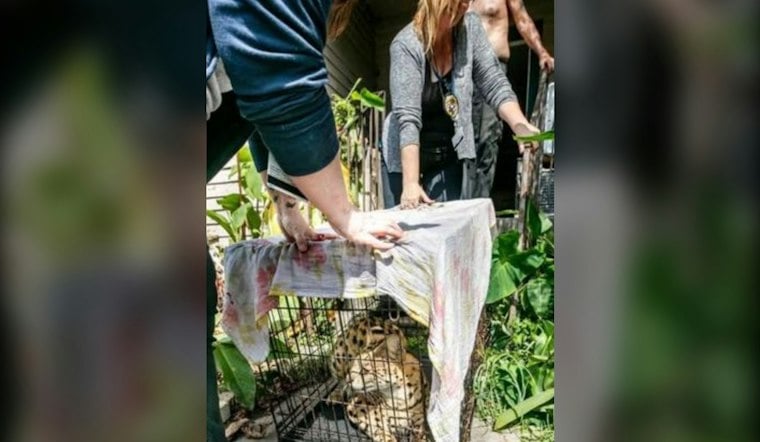
A serval that had been illegally kept in a fenced backyard enclosure on Allo Avenue in Marrero is now in the custody of Jefferson Parish officials, who captured the wild African cat on Tuesday. The animal will stay temporarily at Audubon Zoo while officials work out a permanent placement.
According to NOLA.com, Jefferson Parish firefighters were first called to the Allo Avenue property to extinguish a fire, and that call is what led to the discovery of the serval in the backyard enclosure. Michelle Brignac, director of Jefferson Protection & Animal Welfare Services, and Victoria Clark, the agency's humane department head, coaxed the cat into a cage and subdued it, per the same report. Officials said the serval was born in captivity, and per JPAWS, legal possession of a serval requires an exotic animal permit.
A Cat Built for the African Savanna, Not a Louisiana Yard
Servals are native to sub-Saharan Africa, where they live near thickly planted streams and rivers across the savannas of central and southern Africa, according to the San Diego Zoo. Adult servals weigh between 15 and 40 pounds and are solitary for most of the year, marking their territory by scent-spraying trees and bushes with urine. The zoo also notes that a serval can jump more than 9 feet straight up to snatch a bird out of the air, an ability built for hunting in the wild, not for life in a backyard pen.
JPAWS warned that servals do not make good pets. The agency said the animals typically become aggressive as they reach maturity, may go through walls and doors, can damage furniture, and cannot be fully house-trained. Servals also need space and stimulation to avoid chronic stress, the agency noted, all factors that make captivity in a residential enclosure especially fraught.
A Similar Case Played Out in Oregon
The Marrero capture echoes a case in Oregon in 2020, where an escaped serval spent more than a month roaming West Linn, Tualatin and Wilsonville before it was hit by a car and finally caught, according to WildCat Ridge Sanctuary. That animal suffered a broken back leg, a displaced hip, a fractured pelvis and road rash, the sanctuary reported. Oregon authorities had already been in contact with the owners about the illegal ownership before the capture attempt, and the owners ultimately surrendered the cat to the sanctuary rather than face confiscation, costs, a fine and possible jail time.
The cited report does not mention injuries in the Marrero case. Officials have not said what led the serval's owner to keep the animal in the backyard enclosure, but the outcome mirrors the broader pattern JPAWS describes: wild cats bred or kept as exotic pets often end up needing intervention once their size, territorial instincts or aggression become unmanageable for an owner. Serval populations overall have declined, though the San Diego Zoo notes most servals are not considered endangered.
For now, the Marrero serval remains under Audubon Zoo's care while Jefferson Parish officials plan its permanent placement. JPAWS, which enforces laws designed to protect the public from aggressive animals and reduce the spread of diseases including rabies and ringworm, has not detailed further steps in the case.





