

























































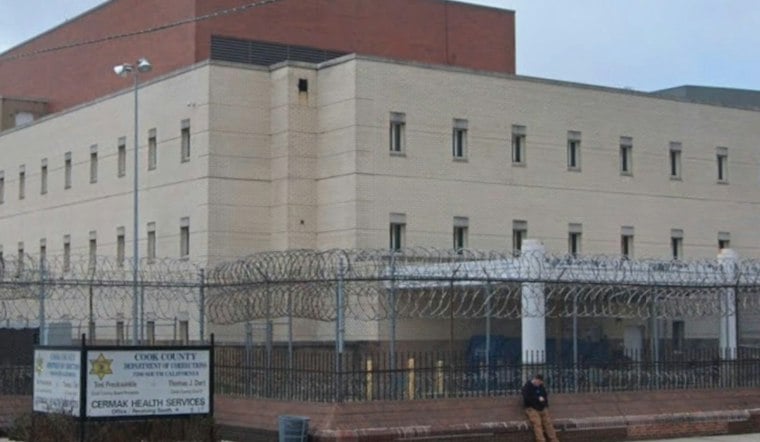
Illinois county jails are required to report extraordinary or unusual occurrences—including deaths, escapes, riots and forced medication—to the state’s Jail and Detention Standards Unit under Section 720.130 of Title 20 of the Illinois Administrative Code. An Illinois Answers Project investigation found that county jails had submitted thousands of such reports while state regulators had reviewed almost none, according to the project’s reporting.
A reporting duty is not the same as state review
The regulation establishes what jails must report, but the existence of a reporting requirement does not by itself show how quickly submissions are reviewed or whether they lead to corrective action. That distinction is central to the current findings: the reported volume of submissions and the limited review described by the investigation concern the state’s oversight process, while the underlying incident records have not been independently analyzed by this publication.
The state’s formal oversight structure is broader than the incident-report process. The Illinois Department of Corrections says its Jail and Detention Standards Unit must inspect every county jail annually for compliance with state standards and may conduct follow-ups after unusual occurrences. The unit also says it can refer facilities in serious noncompliance to the Illinois Attorney General’s Office for a court petition requiring compliance, according to IDOC.
Death records create a separate test of the system
A separate NPR Illinois report said an Illinois Answers Project analysis identified 63 deaths connected to people held in Illinois county jails that were missing from official state records. The figure is attributed to that analysis; this publication has not independently reviewed the project’s underlying records or methodology.
Illinois’ own reporting framework helps explain why a discrepancy can arise. The state’s FY 2025 Deaths in Custody Reporting Act implementation plan describes two overlapping channels: one routes reports through the Illinois State Police before data is submitted to the Illinois Criminal Justice Information Authority, while another requires law-enforcement agencies and prisons to report directly to ICJIA. The plan also says ICJIA has audited its deaths-in-custody database quarterly since July 2024, checking for missing fields, reviewing media reports and seeking missing or updated reports from agencies, according to the federal implementation plan.
Those audits provide a mechanism for finding and correcting omissions, but they do not establish how many records were missing before the audits began or whether every jail-related death has been captured. The reported 63-death discrepancy therefore points to a records gap while leaving open questions about definitions, timing and the agencies involved in individual cases.
Inspection reports show how compliance is documented
Recent inspection records provide a government-documented view of individual compliance problems without, by themselves, establishing a statewide trend. For example, an IDOC compliance monitoring report for the Kankakee County Jail in 2025 found that one or more required visual checks of juveniles were not conducted every 15 minutes or less during the period reviewed, according to the inspection report.
The finding is narrower than the broader concerns described in the recent investigation. It documents a specific inspection-period violation at one facility; it does not show how common the problem is across Illinois or prove that it caused any death or other reported incident.
Illinois has used formal escalation before
The state’s enforcement authority is not merely theoretical. In a June 5, 2018 report, IDOC said it had referred the Edgar County Jail to the Illinois Attorney General’s Office after repeated inspections dating to 2011 documented continuing violations, according to the department’s inspection report.
That historical example shows one available escalation path, but it does not answer whether current incident reports are being reviewed consistently or whether present-day violations are producing comparable referrals. The current reporting leaves those questions unresolved.
What the records establish—and what they do not
Taken together, the available records show several layers of oversight: jails must report unusual occurrences; IDOC must inspect annually and can pursue serious noncompliance; and ICJIA has a process for auditing deaths-in-custody data. The Illinois Answers findings raise questions about how those layers function in practice, particularly whether reported incidents are systematically reviewed and whether deaths are consistently recorded.
But the current evidence does not establish a single cause for the reporting gaps, show that every unrecorded death resulted from the same failure, or demonstrate a statewide increase in inspection violations. Resolving those questions would require access to the underlying incident and death records, explanations from the responsible agencies and a comparison of inspection and reporting outcomes over time.





