

























































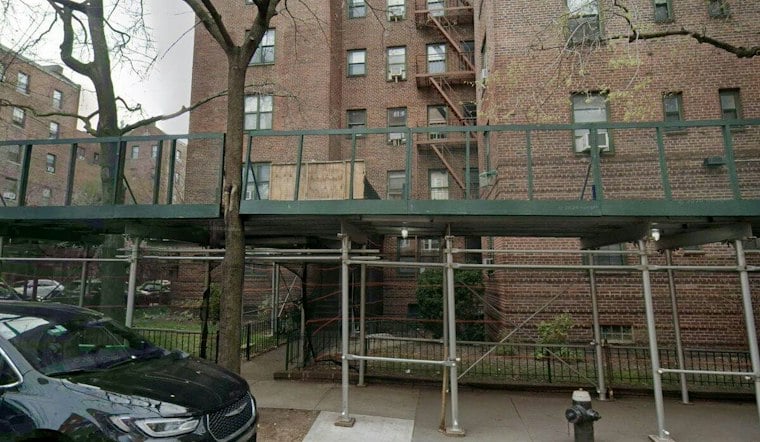
Romeo Einstein Acuna, 49, was found stabbed to death inside his home at 78-11 35th Avenue in Jackson Heights on September 24, 2002, at approximately 8:40 pm, and nearly 24 years later, his killing remains unsolved. Queens prosecutors are once again asking the public for help identifying whoever is responsible.
The renewed appeal came in a post from Queens DA Katz
, the official account for Queens District Attorney Melinda Katz, urging anyone with information about Acuna's death to come forward. The post put it plainly: “It is never too late for justice.” Anyone with information is asked to call NYPD Crime Stoppers at 1-800-577-TIPS or submit a tip through the online form at crimestoppers.nypdonline.org, or through the CS-NYC app. Tips are confidential.
According to a Cold Case Unit transcript on the case, Acuna was killed inside his home at Dunolly Gardens, a six-story, 59-unit cooperative apartment complex built in 1939 and designed by architect Andrew J. Thomas, per StreetEasy. The building occupies a block-wide residential footprint in Jackson Heights, the kind of quiet co-op setting that makes a killing inside its walls all the more jarring for longtime neighbors.
A False Confession That Delayed Justice for Years
What makes Acuna's case especially fraught is the investigative history surrounding it. In January 2007, New York City prosecutors dropped murder charges against 31-year-old Lourdes Torres after DNA test results excluded her and instead implicated two men in Acuna's stabbing, according to the Innocence Project. Torres had given a confession during an 18-hour interrogation that was later proven false, and she spent more than four years in jail on Rikers Island before she was cleared.
That history helps explain why this case has lingered for nearly a quarter-century without resolution, and why it now falls under a unit built specifically to revisit cases like it. Queens District Attorney Melinda Katz established the borough's first dedicated Cold Case Unit in March 2020 to re-examine roughly 2,200 unsolved homicides in Queens County, according to the Queens District Attorney's Office. The unit works in coordination with the NYPD Cold Case Squad.
Why So Many Cases Remain Open
That backlog of roughly 2,200 unsolved killings traces largely to three decades of elevated violent crime in Queens between 1970 and the late 1990s, a period that peaked at 341 homicides in 1992, per the same office. Since then, the picture has changed dramatically: the Queens District Attorney's 2023 Annual Report found homicides in the borough dropped by 39% and shootings fell by 34%, outpacing a 12% citywide decline in homicides.
To chip away at the remaining cold cases, the unit leans on modern forensic tools that didn't exist when Acuna was killed. The Cold Case Unit uses advanced techniques including familial DNA searching and a specialized Forensic Science Specialist position to re-evaluate physical evidence from old crime scenes, according to the Queens Daily Eagle. In 2024, the unit received $500,000 in federal grant funding secured by Representative Grace Meng to expand advanced DNA testing and forensic investigative resources for unsolved cases, supporting forensic genealogy and database comparisons.
Recent Progress on Cases From the Same Era
The unit's broader outreach has expanded too. In October 2025, Queens held its first boroughwide Missing Persons Day with the NYC Office of Chief Medical Examiner, collecting family DNA samples and developing leads for more than 47 unidentified homicide victims in the borough, as reported by CBS News.
The unit has also shown it can bring decades-old cases to court. In January 2026, the Cold Case Unit indicted a 59-year-old man on second-degree murder charges for the 1998 strangulation death of an unidentified woman in an Astoria motel, a case from roughly the same era as Acuna's killing. That defendant faces up to 25 years to life in prison if convicted, according to the Queens District Attorney's Office.
For now, Acuna's case remains open, and investigators are counting on the public to help close it. NYPD Crime Stoppers offers anonymous tipsters cash rewards of up to $3,500 for information leading to an arrest and indictment in violent felony cases, including homicides, according to the New York City Police Foundation. Tips can be submitted confidentially by phone or online without ever appearing in court.





