

























































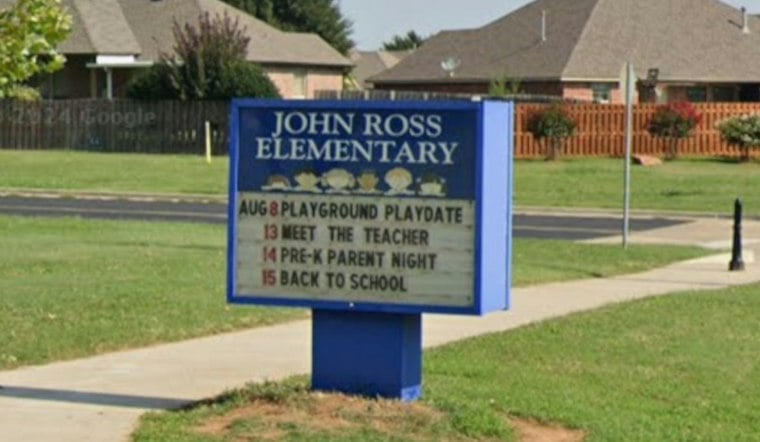
Records from Edmond Public Schools show that a July water intrusion at John Ross Elementary was followed by repeated mold testing, remediation invoices nearing $78,000 and questions about what families were told before students returned. The documents provide a timeline of testing, cleanup and occupancy decisions, but leave unresolved questions about the completeness of the project file and the district's communication.
The water entered the building July 15 during roof construction, according to KOKH. Edmond Public Schools attributed the intrusion to the roofing project, and district work orders showed that an air-conditioning unit had been shut off while the work continued. The roofing work was part of improvements associated with the 2022 bond package, which voters approved with $2.9 million allocated for classroom additions, storm shelters and other facility work at John Ross, according to Ballotpedia.
EPS said testing on Aug. 6 identified mold. Quest Industrial Hygiene & Environmental Services sampled air in three rooms and a hallway and reported trace chaetomium in two rooms and the corridor, according to FOX 25 (KOKH). The station also reported that a John Ross staff member supplied photographs that appeared to show mold inside a classroom cabinet.
One Classroom Kept Failing Its Own Retest
The records show a changing test result in Classroom C119, next to the PALS room identified by the district as C118. Quest's Aug. 10 retest found the room outside its normal indoor-environment standard and recorded more chaetomium than earlier samples, prompting EPS to order additional cleaning. A final Quest sample collected Aug. 13 was within the normal indoor-environment range, and the district approved the room for occupancy after receiving verbal confirmation that day. Quest's written report was dated Aug. 19, while Pace Analytical performed the laboratory analysis. Blackmon Mooring carried out the remediation; its invoices totaled nearly $78,000 by Aug. 21 and described the charges as progress billing, leaving open the possibility of additional costs.
Amber Gates, a John Ross parent and school volunteer, said she sought answers before classes began and remained concerned about the information available to families. She told the station that, during a meeting with the principal, she heard that he had not personally seen data showing the school was safe for occupancy. That account concerns the information Gates says was available at the school; it does not establish that the district lacked testing or professional advice.
A Mother Presses For Answers, Not Blame
Gates said families received no schoolwide email or notice about the intrusion, remediation or testing. EPS has said it does not typically notify families about summer construction issues resolved before the school year, while its operations team spoke with multiple parents who asked about the incident and shared summary information as it became available. Gates said her concern is with district-level communication, not with John Ross teachers, staff or the principal.
Gates also noticed a strong odor while volunteering in the PALS room, one she described as horrific. The station has not independently determined the source of that odor, and EPS has said there is no current issue. A qualified environmental professional determined the building was suitable for occupancy before the school year began, and the district says indoor-air-quality testing was completed both before and after remediation.
Records Request Hits A $15,490 Wall
Gates' records request also became part of the dispute. EPS estimated that a broad request covering more than 7,700 emails would cost $15,490, based on more than 190 hours of review at $80 an hour. The district quoted $140 for a narrower, more technical request and offered to meet with Gates to clarify the questions and identify responsive records.
The size of that estimate runs up against Oklahoma's own open-records law. Under 51 O.S. § 24A.5, public bodies are barred from charging search fees when release of records serves the public interest, a category that explicitly includes requests from news media, scholars, or taxpayers checking whether officials are doing their jobs, according to Oklahoma state guidance on the statute.
Certified Assessor Flags Gaps In The Paperwork
Melissa Coon, a certified mold assessor, reviewed the available documentation and said the room testing appeared to have been conducted properly. She also identified gaps in the project file, including the absence of room-by-room documentation and photographs showing materials removed or cleaned. The records did not specify the standard used to determine the remediation scope for each area or include documented psychrometric monitoring, which tracks moisture during drying.
EPS confirmed that the project had no written remediation protocol, per FOX 25 (KOKH). Blackmon Mooring logs recorded moisture readings of 98% to 100% in most affected-area drywall on July 15. Restoration guidance generally treats heavily saturated porous materials such as gypsum drywall as requiring removal rather than surface cleaning, while federal school mold-remediation guidance calls for structural drying within 24 to 48 hours after water exposure. Chaetomium, the mold detected at John Ross, is associated with chronic water damage and can release allergenic spores and irritate the respiratory system, according to guidance compiled by the CDC.
What Oklahoma guidance requires
Oklahoma's official environmental-abatement framework does not create a mandatory mold-response program for school districts. According to the Oklahoma Office of Management and Enterprise Services, its non-mandatory State Environmental Abatement Program is a procurement option for public agencies, including school districts, seeking mold-remediation and related environmental services. The program description does not identify a separate state enforcement authority for individual school mold decisions or a requirement that districts notify families about water intrusion or mold, so the records available here do not establish who would review or enforce the district's John Ross response.
What federal guidance recommends
The U.S. Environmental Protection Agency's school indoor-air-quality guide recommends communicating about indoor-air problems with students, staff, parents and the community, according to the EPA. The guide is a recommendation for managing indoor-air concerns, not a state rule identified in the records reviewed for this article.
Coon said the available records leave too many unanswered questions to determine with certainty whether the entire remediation was handled properly. She also said ongoing humidity monitoring would be advisable going forward, since moisture is necessary for mold to grow, but EPS has no plan for additional monitoring or testing at this time.
Part Of A Bigger Pattern At Edmond Schools
Gates says the response falls short of the district's Edmond Excellence standard. Her complaint comes amid other facility concerns, including July reports of HVAC failures at Edmond's Mitch Park pool that caused repeated daily closures, according to Hoodline. Edmond Public Schools, Oklahoma's third-largest district with nearly 26,000 students across 30 campuses, opened Post Oak Elementary in August under Superintendent Josh Delich while questions about John Ross remained. John Ross serves about 646 pre-kindergarten through fifth-grade students under Principal Shelby Rigsby.




