

























































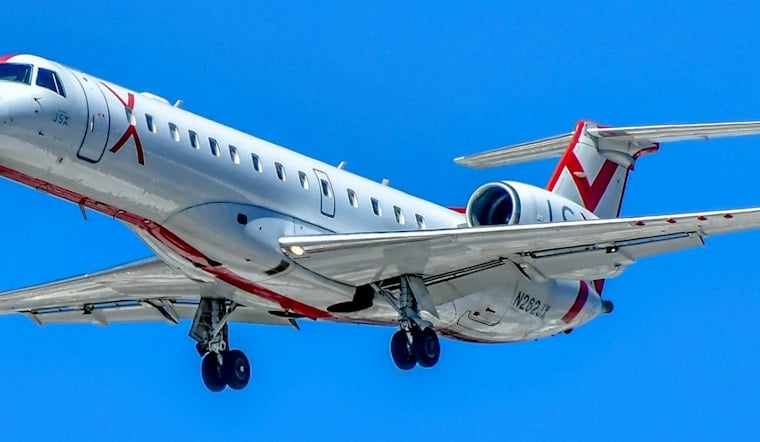
Dallas-based JSX has signed a deposit-backed agreement to purchase 50 Heart Aerospace ES-36 hybrid-electric aircraft, with purchase rights for 50 more, betting on a 36-seat plane that has not yet left the ground. Heart Aerospace unveiled the new production aircraft alongside the deal, positioning it as the successor to the smaller ES-30 that JSX had previously agreed to buy.
A Deposit Now, A Plane Later
The agreement, reported by the Dallas Express, converts JSX's 2023 letter of intent for the ES-30 into a deposit-backed purchase commitment and secures early delivery positions for the airline. The ES-36 production aircraft has not yet flown, according to the outlet, and Heart Aerospace is targeting a first flight in the second half of 2028, with entry into service pegged for 2031. Before that can happen, the plane still needs to clear FAA Part 25 certification.
JSX currently serves 29 airports across the United States and Mexico and plans to use the next-generation regional fleet to expand service from smaller airports and shorter nonstop routes, per the Dallas Express. The carrier's chief executive, Alex Wilcox, said the hybrid-electric ES-36 will enable more nonstop routes from more convenient airports, according to the same report.
What The ES-36 Promises On Paper
The ES-36 is projected to carry 36 passengers, with 1,415 pounds of additional payload capacity compared with the ES-30—a 20% increase in seating and payload, per the Dallas Express. It's designed with two series-hybrid powertrains, each using a 1.65-megawatt electric motor, and Heart Aerospace projects a hybrid range of 745 miles plus reserves alongside an all-electric range of 125 miles plus reserves. The company is targeting operating costs at least 40% lower than legacy regional aircraft, the outlet reports, and says the plane is designed for regional airports with limited ramp, gate, and hangar space, producing no fuel burn during short all-electric flights while cutting noise compared with conventional regional aircraft.
None of those performance figures have been proven in the air yet, since the production aircraft itself remains unflown. Heart Aerospace is currently building the first pre-production ES-36 at its pilot manufacturing facility in Los Angeles, according to the Dallas Express, and the company and JSX plan to work together on cabin configuration, charging procedures, turnaround times, route planning, and airport readiness ahead of any commercial rollout.
The X1 Flew First
Heart Aerospace's credibility case rests partly on a smaller demonstrator that has already flown. The company's X1 battery-electric aircraft, representative of its 30-seat ES-30 design, completed its first flight at Plattsburgh International Airport in New York in August 2026, according to Heart Aerospace. Heart Aerospace describes the X1 as the largest electric aircraft ever to fly, and the company says electrification could allow airliners to be built with fundamentally lower operating costs.
The ES-36 itself is still years from that kind of test flight, and Heart Aerospace has said it must complete development, flight testing, certification, production approval, and airline integration before the aircraft can enter commercial service, the Dallas Express reports.
A Fleet Plan That Keeps Growing — And Shifting
JSX's electric ambitions predate this week's announcement. The carrier announced letters of intent in late 2023 covering aircraft from Heart Aerospace, Electra, and Aura Aero, an earlier plan that included up to 100 Heart ES-30 aircraft, as many as 82 Electra aircraft, and up to 150 Aura Aero aircraft, according to the Dallas Express. By 2024, JSX had announced an intention to acquire up to 332 hybrid-electric aircraft from those three manufacturers combined. The new ES-36 agreement effectively replaces the ES-30 portion of that plan.
In the meantime, JSX has kept its conventional fleet moving. The airline operates 56 Embraer ERJ-family aircraft and four ATR 42-600 turboprops, having introduced its first ATR 42-600 in January, per the Dallas Express.
Public-Charter Fleet Plans
JSX, a public-charter carrier, plans to use its electric fleet to expand service from smaller airports.
How JSX's Bet Compares
Electra, a rival developer working on smaller aircraft for short routes, has forecast that hybrid-electric planes could expand U.S. regional air travel by roughly tenfold, according to Aerospace America.





