

























































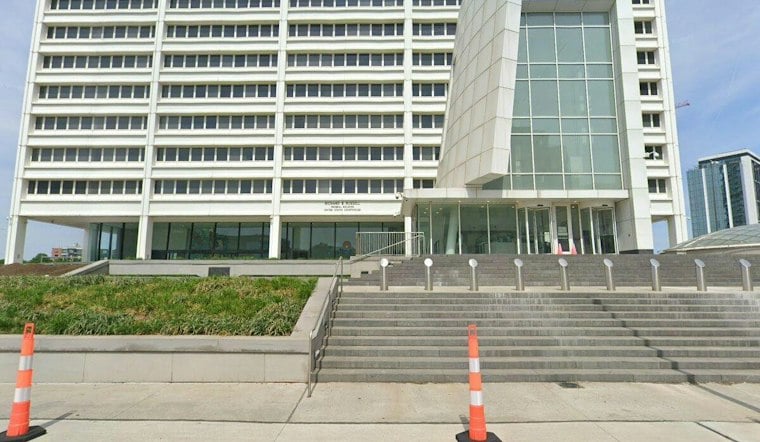
A federal judge has ordered Georgia's child welfare agency to stop charging parents foster care fees for children who are no longer in state custody, delivering a major win to a Kennesaw mother who says she was billed hundreds of dollars a month even after her children aged out of the system or were adopted. U.S. District Judge Tiffany Johnson ruled the state must end the unwarranted charges and set up a process for eligible parents to report erroneous fees.
The ruling stems from a proposed class action lawsuit filed by Annalinda Martinez, a mother who sought housing assistance from the state in 2018 after leaving an abusive domestic situation with her six children, according to reporting from The Atlanta Journal-Constitution. Georgia charged Martinez $472 a month in foster care fees, and the state kept billing her that same amount even after three of her children aged out of care and two were adopted, per the newspaper's reporting. The financial strain became so severe that Martinez ultimately gave up her parental rights, and by the time the nonprofit Together With Families stepped in to help her pay down the debt, it had climbed past $13,000.
Martinez has custody of two children, while one child remains in foster care. She told the AJC she feared jail because she could not keep up with the fees, and said she hoped the ruling would mark the start of broader improvements for Georgia parents punished simply for struggling financially.
A Damaging Admission in Court
The case took a sharp turn when the state reduced Martinez's monthly fees to $201 in December 2025 but did not disclose that change to her or the court until May 2026, according to the same AJC report.
In her preliminary injunction, Johnson rejected the state's argument that correcting improper billing would burden its child support system, writing that Georgia has no legitimate interest in maintaining a system that likely violates constitutional rights, as reported by Equal Justice Under Law, the civil rights legal nonprofit representing Martinez. The judge also ordered the state to cease debt enforcement measures such as driver's license and passport revocations tied to foster care arrears, and directed officials to correct past billing errors while the broader case is litigated.
A Lawsuit With Statewide Stakes
Martinez's complaint alleges that hundreds of Georgia parents were unconstitutionally forced to pay foster care fees under threat of punishment, including jail. Equal Justice Under Law attorney Phil Telfeyan estimated that multiple hundreds of parents would be affected by the case, and said the lawsuit is not seeking to eliminate foster care fee collection altogether but rather to carve out exceptions for parents who genuinely cannot pay. Telfeyan said fees should be reduced or waived when the state removes children from a home while already knowing the parents are too poor to afford them, calling the judge's ruling an enormous step forward toward a fairer system.
The lawsuit points to a broader pattern of poverty-driven removals in Georgia. Reporting by WABE and ProPublica cited in court filings found that state child welfare officials removed children from more than 700 families between fiscal years 2018 and 2022 primarily due to inadequate housing or homelessness, according to the Associated Press. Advocates argue that providing housing assistance instead of removing children would preserve families at far lower public cost than the current system.
Policy Changed, But Not for Everyone
Georgia DFCS amended its child support enforcement policy in August 2024, agreeing to stop pursuing child support in new foster care cases where the payments would delay family reunification. But the change was prospective only, leaving pre-existing parental debt like Martinez's untouched — a gap that Equal Justice Under Law says is precisely why judicial intervention became necessary. The shift followed 2022 federal guidance urging child-welfare agencies to limit how often they seek child support from parents.
Georgia's child welfare agency faced a projected $85.7 million budget shortfall, and lawmakers voted to backfill the gap, according to The Imprint.
What Happens Next
Georgia Department of Human Services Commissioner and DFCS Director Candice Broce, a named defendant in the case, had argued the lawsuit should be dismissed, though Judge Johnson narrowed the claims rather than tossing them entirely. The defendants must formally answer the remaining claims by October 7.





