

























































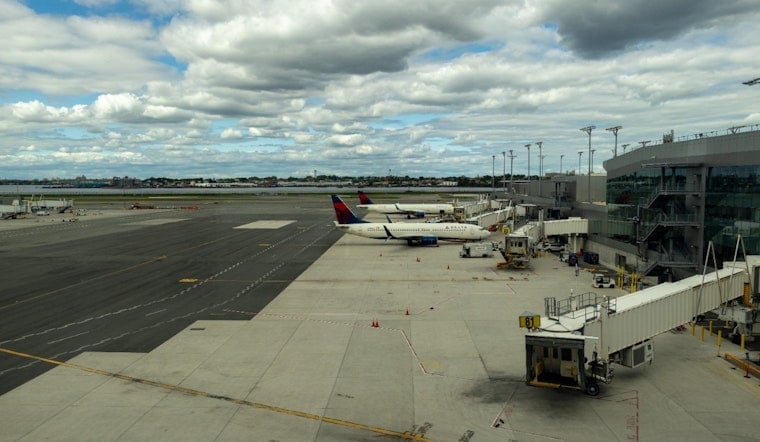
An American Airlines flight bound for Chicago O'Hare International Airport screeched to a stop on the runway at LaGuardia Airport Thursday morning after pilots reported a bird strike and rejected the takeoff at 8:20 a.m., with the Boeing 737-800 traveling nearly 140 mph before it braked to a halt and returned safely to the gate. No injuries were reported aboard Flight 392.
The Federal Aviation Administration identified the aircraft as a Boeing 737-800 and confirmed it will investigate the bird-strike incident, according to ABC7 Chicago. The FAA issued a brief ground stop at LaGuardia following the strike, and according to TheTravel, that stop ran from 8:18 a.m. to 9:30 a.m. Eastern before transitioning into a ground delay program that averaged 19-minute delays until 11:34 a.m.
While the rejected takeoff triggered the immediate airfield ground stop at 8:20 a.m., the bulk of the morning's broader flight delays at LaGuardia were actually driven by severe weather moving through the New York metropolitan region, according to a FAA statement carried by FOX 5 New York. Morning thunderstorms were already snarling flights at the airport before the bird strike added another layer of disruption.
Why Pilots Chose to Slam the Brakes
Aborting a takeoff at nearly 140 mph is not a routine maneuver. Aviation safety guidance from OpsGroup notes that in high-speed takeoff regimes above 80 knots, pilots are advised to reject a takeoff only for major safety threats — like engine fires or severe failures — because aborting near or after decision speed, known as V1, sharply raises the odds of a runway overrun, brake overheating, or tire failure. Rapid evaluation is required to make sure the aircraft can actually stop within the runway that remains.
Despite those risks, protocol prioritizes stopping the aircraft on the ground once a significant hazard emerges before V1 is reached. In this case, the flight crew made that call and got Flight 392 stopped and back to the gate without incident.
A Familiar Hazard at a Coastal Airport
LaGuardia's history with bird strikes looms large over any incident like Thursday's. The airport was the departure point for the 2009 “Miracle on the Hudson,” when US Airways Flight 1549 lost all engine power after striking a flock of Canada geese and pilot Chesley “Sully” Sullenberger glided the plane onto the Hudson River — all 155 people aboard survived, an event that reshaped wildlife hazard management at airports nationwide, per the FAA.
More recently, an American Airlines flight departing LaGuardia in December 2024 suffered a bird strike on an engine shortly after takeoff and diverted safely to John F. Kennedy International Airport with 190 passengers aboard, as Hoodline reported in a similar bird-strike diversion. That flight landed with no injuries.
The Port Authority of New York and New Jersey, which oversees LaGuardia along with JFK and Newark, runs an integrated wildlife hazard management program that includes habitat modification, pyrotechnics, falconry, and targeted population controls carried out with USDA Wildlife Services and certified wildlife biologists. Even so, research on wildlife strikes has found that rates for most large bird species decreased or remained constant, while overall reported strikes have nearly doubled since 2009 — a rise attributed largely to heightened awareness and expanded reporting of smaller, non-damaging strikes rather than a surge in dangerous encounters.
Bird Strikes Remain Rare But Costly Nationally
Nationally, the scale of the problem is significant even if individual incidents rarely turn dangerous. FAA database records show reported wildlife strikes at U.S. airports topped 19,000 in 2023, causing an estimated $385 million in direct damage and operational downtime across civil aviation. Yet an analysis from FODNews.com found that only 2% to 8% of recorded strikes actually cause physical damage to an aircraft, and just 6% to 7% produce any negative operational effect on the flight.
The FAA's national wildlife strike report also flagged a record 54 osprey strikes with civil aircraft in 2025, tied to expanding raptor populations and shifting nesting habits near coastal airfields — a reminder that as bird populations grow near busy runways like LaGuardia's, airports and pilots alike continue adapting to a hazard that, while rarely catastrophic, remains a persistent fact of life for coastal aviation.





