

























































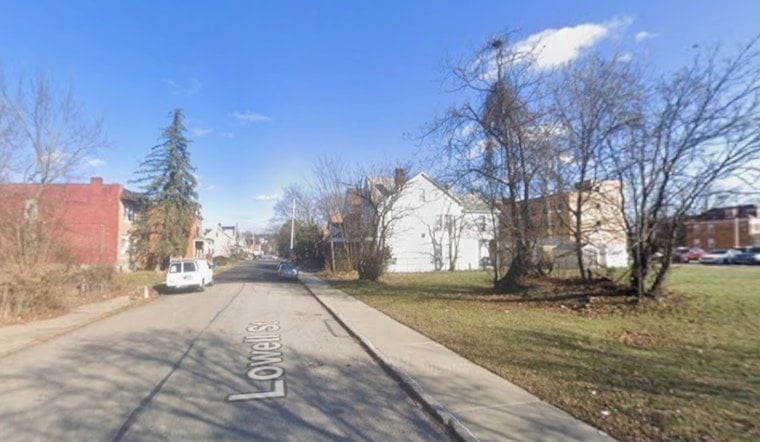
A judge sentenced 27-year-old Heirkiess Moore-Smith to 35 years to life in state prison for driving two masked gunmen to a Larimer home where they shot and killed Nathaniel Walker, a self-taught barber and father of six, in April 2024. Moore-Smith, of West Mifflin, declined to speak before Allegheny County Common Pleas Judge Edward Borkowski handed down the sentence, which also tacked on five to 10 years for conspiracy to run consecutively to the murder count.
A jury convicted Moore-Smith in June 2026 of second-degree murder, conspiracy, robbery and endangering the welfare of children, following about three-and-a-half hours of deliberation, according to TribLIVE. Pittsburgh police say Moore-Smith picked up two men and drove them to a home in the 500 block of Lowell Street in Larimer, then circled the block while the men went inside and shot Walker before Moore-Smith picked them up again and fled. Investigators traced Moore-Smith's vehicle through surveillance video, and a distinctive black-and-white checkered backpack recovered from his back seat, per investigators, helped tie him to the scene. Surveillance video showed a black Jeep Compass shortly before 2 p.m. dropping off two masked men and later picking them up near Zenia Way after the shooting, according to the Pittsburgh Post-Gazette.
Police stopped Moore-Smith's Jeep later that day. The child-endangerment charge was part of the case. Moore-Smith initially told homicide detectives that two armed men had approached his vehicle, held him at gunpoint, and forced him at gunpoint to drive them to Lowell Street and wait — a claim prosecutors disputed at trial, where evidence showed the SUV idling nearby while the men entered Walker's home.
A Father, Fiancé and Barber Remembered
Walker had four sons and two daughters, and his fiancée, Nikia Pitts, testified that she had been with him at a South Side restaurant just before 12:30 p.m. that day, the same afternoon as the shooting. She said she received Walker’s final text at the restaurant around 12:30 p.m., reading “good morning, sexy,” never imagining it would be their last exchange. Walker’s sister, Pamela Weatherspoon, told the court her brother was more than a victim in the case and described the loss as a “life sentence of grief,” per TribLIVE's account of the sentencing hearing.
The shooting happened around 2 p.m. near the Urban Academy of Greater Pittsburgh Charter School on Turrett Street, just as elementary students were returning from a field trip, according to CBS News. Walker's death was recorded as the 14th homicide in Pittsburgh that year on the city's Violent Crimes Dashboard, three fewer than had been logged by the same date in 2023, that station reported. To date, the two men who entered Walker's house and shot him have not been publicly identified or charged.
Defense Argued for a Lesser Sentence
Moore-Smith's attorney, Art Ettinger, argued his client's culpability was less than that of the shooter and said Moore-Smith, himself a father of three, did not know what the men planned to do once inside. Ettinger noted that a third-degree murder conviction involving the actual shooter would have carried a minimum sentence of just nine years, framing the comparison as evidence the felony-murder statute punished a getaway driver too harshly relative to the person who pulled the trigger.
Assistant District Attorney Nichole Ehrheart pushed back, telling the court Moore-Smith lied when confronted by police, claiming the men had carjacked him, and arguing he was part of the plan and helped facilitate the escape. Ehrheart argued Moore-Smith's sentence should be governed by the law in place at the time of the shooting, but asked the judge to impose a 35-year minimum in the alternative. Borkowski ultimately ordered 30 years to life on the murder count and called the case a classic application of the felony-murder rule, adding five to 10 years for conspiracy to run consecutively.
A Constitutional Ruling Upended Sentencing
Until March, Pennsylvania's second-degree murder statute carried a mandatory sentence of life without parole, with no consideration of an individual defendant's role. That changed when the Pennsylvania Supreme Court ruled in Commonwealth v. Lee that imposing life without parole without an individual determination of culpability is unconstitutional, a decision that stemmed from a 2014 Pittsburgh home invasion in which a co-defendant fired the fatal shot, according to Justia Law. At the time, 1,063 state prisoners were serving sentences for second-degree murder.
The court stayed its decision for 120 days to give lawmakers time to act, but the state legislature failed to pass a new felony-murder sentencing scheme by the July deadline. The Pennsylvania Senate passed a bill calling for a mandatory minimum of 35 years for second-degree murder, while the state House suggested no minimum prison term at all — leaving the two chambers deadlocked, and neither the Senate bill nor the House proposal became law, according to Spotlight PA. The Pennsylvania Supreme Court's ruling took effect after the July 24 deadline, leaving felony-murder resentencing to individual county judges, per the Abolitionist Law Center. TribLIVE reported that Pennsylvania lawmakers missed the deadline for replacing the mandatory life-without-parole sentencing scheme after the Supreme Court’s March ruling.
Local Ripples From the Ruling
Second-degree murder, also known as felony murder, refers to a killing committed during another felony, even by someone who did not pull the trigger. Allegheny County courts have already begun applying the Lee precedent to older cases: in June, a Common Pleas judge reduced a 1994 South Side sentence from life without parole to 30 years to life for a man convicted as a 17-year-old, a decision that triggered a wave of parole-eligibility reviews across Pennsylvania. Moore-Smith received a 35-years-to-life sentence after the Lee ruling, with no statewide statute to guide it, and with the identities of Walker's actual killers still unknown to the public.



