

























































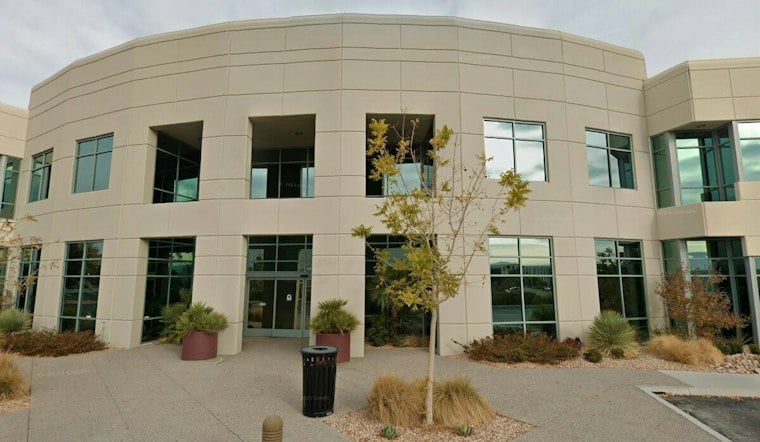
Officials gathered near Jones and Charleston boulevards on Wednesday to celebrate the completion of three new structures at the Desert Regional Center, a Las Vegas campus that houses Nevada Division of Aging and Disability Services facilities serving locals with intellectual and developmental disabilities. The roughly $30 million project, funded with state dollars, replaces buildings that first opened in the 1970s and had reached the end of their useful life.
The new construction includes an administration building, a therapy and nursing building, and a six-bed residential building for people with intellectual and developmental disabilities, together occupying more than 33,000 square feet, according to the Las Vegas Review-Journal. Gov. Joe Lombardo said the new facilities provide better care and a safe place for Nevadans relying on the services, per the same report. The project started in 2025 and was completed under budget, with construction handled by Burke Construction Group.
Kevin Burke, the company's CEO, said his crews worked for twelve months after staff moved into temporary quarters and delivered the expanded buildings on schedule and on budget, the newspaper reported. Matthew Lawhorne said he likes his new home and is eager to move into his new bedroom, according to the same account.
New Design Reflects a Shift From Institutional Care
The freshly built administration building alone spans 19,600 square feet across two stories, built with concrete masonry block construction designed to match the surrounding campus architecture. Design specifications published by IN2IT Architecture show it holds 18 office rooms, four conference rooms, two training rooms, and a 1,200-square-foot open workspace.
Jessica Adams, deputy administrator for developmental services within Nevada's Aging and Disability Services Division, said the new facilities reflect a shift away from medical-model institutional care, the station's report noted. Nevada developmental services programs support more than 9,000 people statewide, and more than one-third of participants now reside in their own homes rather than in group settings, per the same account. The intermediate care facility is intended to support learning, growth, stabilization and safety, helping residents develop the skills needed to move toward home and community-based service settings.
The approach is part of a broader emphasis on community-based services. The Nevada Department of Health and Human Services' March 2025 budget filings include an organizational chart listing Desert Regional Center, Sierra Regional Center and Rural Regional Center.
A Half-Century-Old Campus Gets New Life
Historical facility records compiled by the Residential Information Systems Project show the Desert Regional Center originally opened in 1975.
The 2025–2027 biennium included $1.128 billion in recommended capital-improvement funding. A separate plan called for demolishing several Desert Regional Center buildings to make land available for a 300-bed Southern Nevada Forensic Facility.
Projected Caseload Growth
Regional-center caseloads are projected to grow.
A report published Aug. 3, 2025, by The Nevada Independent highlighted fears of a backslide amid funding cuts in Nevada's disability community. Eligibility for Desert Regional Center services requires a documented diagnosis before age 22 of an intellectual disability or related condition — such as cerebral palsy, epilepsy, or autism — that substantially impairs adaptive functioning, according to Nevada Aging and Disability Services Division program guidelines.
A recent video about a mother's guardianship fight focused on her effort to keep care in place for her nonverbal son.





