

























































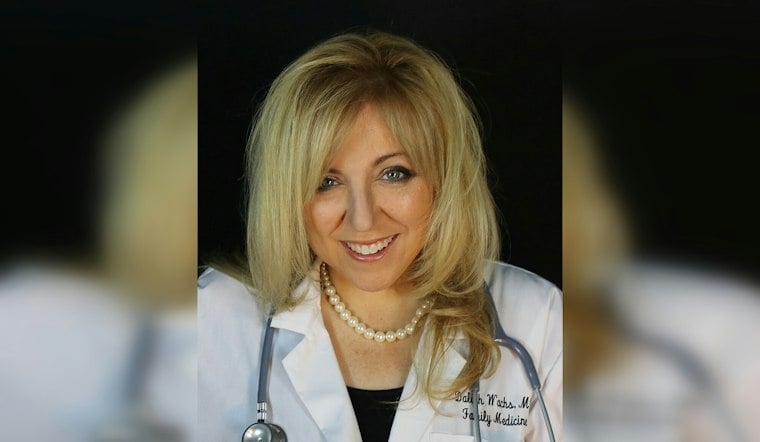
A Las Vegas doctor says she treated a man who would later be identified as one of the 9/11 hijackers, just weeks before he helped carry out the deadliest terrorist attack in American history. Dr. Daliah Wachs was working at a Las Vegas urgent care in August 2001 when she says she saw the patient for what she believed was a sore throat, prescribing what she recalled was a Z-Pak while noting he may have been allergic to penicillin.
Wachs, now a nationally syndicated radio health show host and an assistant professor at Touro University Nevada, told KSNV that nothing about the visit immediately raised alarm, though she described the patient as having a notably flat, emotionless demeanor. It was only after the September 11 attacks, when al-Qaida hijackers seized control of four commercial airplanes, that Wachs says she recognized her former patient on television coverage of the unfolding tragedy.
According to the station's report, Wachs returned to the Las Vegas urgent care after making the connection and sought the patient's medical chart, only to be told by a receptionist that federal agents had already taken it. She could not publicly discuss many details of the encounter because of patient privacy laws, but she said her boss at the time raised the theory that the hijacker may have needed to remain healthy enough to carry out the planned operation — a possibility Wachs herself echoed, wondering aloud why someone preparing to execute a deadly terrorist attack would bother seeking medical treatment beforehand.
A Summer of Mysterious Visits to Southern Nevada
Wachs's account fits into a broader, still-unexplained pattern. FBI investigators confirmed that at least five 9/11 hijackers — including all four pilot-hijackers, Mohamed Atta, Marwan al-Shehhi, Hani Hanjour, and Ziad Jarrah — made at least six separate trips to Las Vegas between May and August 2001, according to SFGATE. Atta himself held a final planning meeting in Las Vegas on August 13, 2001, alongside Hanjour and hijacker Nawaf al-Hazmi, less than a month before the attacks, as reported by the Las Vegas Sun.
During his visits that June and August, Atta logged extended hours at the Cyber Zone internet cafe on South Maryland Parkway near UNLV, prompting FBI agents to seize copies of ten computer hard drives shortly after the attacks, the Las Vegas Sun reported. Declassified FBI records released under a 2013 FOIA request showed that radical cleric Anwar al-Awlaki's credit card was used to purchase flight tickets for Atta and other hijackers traveling between Washington, D.C., Las Vegas, and Miami that August, according to the Investigative Project on Terrorism.
Why the Hijackers Kept Returning to Las Vegas Remains Unresolved
Despite the extensive travel and financial trail, the 9/11 Commission concluded in its 2004 final report that despite extensive tracing of phone, credit card, and travel records, no official evidence was ever found to establish why the hijackers repeatedly traveled to or met in Las Vegas — a mystery the Las Vegas Sun notes remains officially unsolved to this day.
The seizure of Wachs's patient chart wasn't an isolated act. Congress expanded federal authorities to subpoena business and medical records without showing probable cause in national security cases through Section 215 of the USA PATRIOT Act, enacted in October 2001, according to EPIC.org. That legal shift gave agencies the tools to pull records like the one taken from Wachs's clinic in the frantic weeks after the attacks.
Las Vegas Felt the Attacks Far Beyond the Hijackers' Visits
The connections between the hijackers and Southern Nevada represent only part of how 9/11 touched the region. Palo Verde High School teacher Barbara Edwards, a 58-year-old Las Vegas resident, was killed aboard American Airlines Flight 77 when hijackers crashed the plane into the Pentagon, according to the Las Vegas Review-Journal. The attacks killed nearly 3,000 people nationwide, with hijackers also flying two planes into the World Trade Center towers in New York City and a fourth crashing in Pennsylvania after passengers and crew fought back.
The economic fallout hit Las Vegas hard as well. The immediate post-9/11 shutdown of commercial aviation led to a severe economic downturn in the city, resulting in the loss of roughly 15,000 resort and casino jobs within two weeks of the attacks, the Review-Journal reported.
Twenty-five years later, Wachs says she still wonders whether she could have done something differently, though she has said she would never intentionally harm a patient and could not have prevented the attacks or helped those dying in the buildings or planes that day. She told KSNV that the anniversary continues to bring back difficult emotions each year. Her story echoes another recently reported encounter between an ordinary professional and a 9/11 plotter: an Orlando inspector's gut call that turned away an alleged 20th hijacker in August 2001, months before the attacks unfolded.





