

























































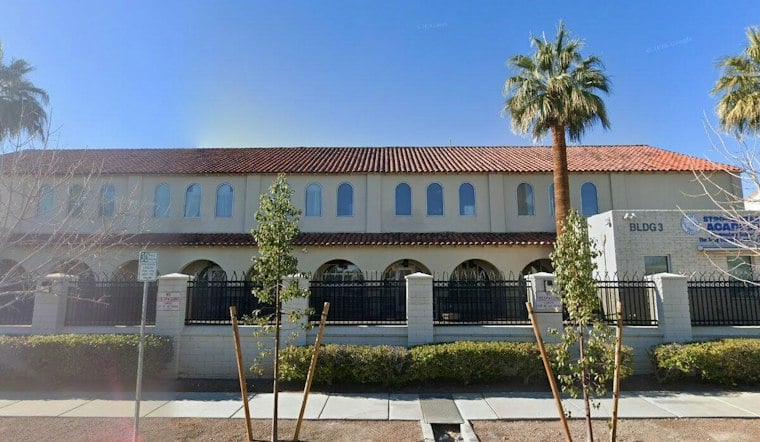
Las Vegas is bringing preschool classrooms to neighborhood hubs with Strong Start Go, a city-operated program using four buses for free, half-day pre-K for children ages 3 to 5. The program does not require an income check and prioritizes families in ZIP codes 89101, 89106 and 89107, FOX5 Vegas reported.
The sessions combine learning activities, group time, social-emotional development, snacks, outdoor play, and music and movement, according to the report. Families from other areas may be accepted when morning or afternoon places are available. The program’s bus-based format brings classes to community hubs rather than requiring families to reach a fixed preschool site; the available details do not establish how many children the four buses can serve.
A different eligibility model from state pre-K
Strong Start Go’s no-income-check policy differs from Nevada Ready! State Pre-K. The Nevada Department of Education says its program serves eligible 4-year-olds in full-day settings, with household income limited to 250% of the federal poverty level.
The scale of existing programs also shows why one mobile initiative is only part of the picture. FOX5, citing a 2024 report, said Nevada Ready! serves just over 3,600 children—about 9% of the state’s 4-year-olds and 1% of its 3-year-olds—while Clark County School District enrolls more than 10,000 children across its pre-K programs. Those figures cover different programs and age groups, so they should not be read as a single measure of statewide preschool coverage.
Child-care access figures have limits
A separate measure points to broader access challenges, though it does not count preschool enrollment specifically. A September analysis by UNLV’s Lincy Institute and Brookings Mountain West found that 57% to 75% of children under age 6 in Nevada’s four congressional districts live in child-care deserts, defined by more than three young children for each licensed child-care slot. Hoodline’s account gives a national benchmark of 46% and notes that the measure tracks licensed child-care capacity, not access to a particular pre-K program. The district-level figures also do not establish conditions in Strong Start Go’s priority ZIP codes.
For local capacity figures, Nevada’s Division of Social Services says Child Care Licensing publishes monthly reports broken down by county and city. Those reports track child-care capacity; they do not by themselves show how many children can enroll in Strong Start Go.





