

























































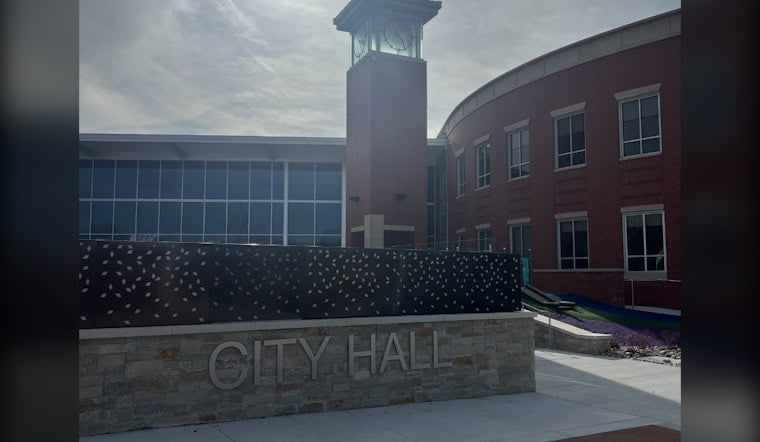
Lee's Summit's own housing data shows a city outgrowing its housing stock. A newly reviewed report presented to the Lee's Summit City Council finds that housing costs in the fast-growing Missouri suburb are climbing faster than residents' incomes, and that the city needs more affordable, entry-level, and small-format housing to keep pace with a population that has ballooned from about 101,000 residents in 2020 to roughly 112,800 today.
The findings, first reported by the Kansas City Star, come as Lee's Summit officials weigh zoning changes meant to diversify a housing market still dominated by large single-family lots. According to the report, owner-occupied housing accounts for about 75% of Lee's Summit's housing stock, while renter-occupied units make up only about 25%. Single-family houses represent roughly 64% of residential units citywide, and apartments just 17.3%, according to city data cited in the report.
Terry Trafton, addressing the council, said Lee's Summit needs affordable entry-level housing at varying price levels. Shannon McGuire told council members that aging populations, smaller households, workforce needs, affordability pressures, and changing preferences are all increasing demand for broader housing types, sizes, and price points. McGuire also said housing production has not kept pace with demand, and that rising household incomes do not necessarily improve affordability on their own.
The Math Behind the Squeeze
Lee's Summit's median household income exceeds both the Kansas City metro median and the statewide averages in Kansas and Missouri, and it has risen over the last two decades, according to the report. But that citywide figure masks a sharp divide: U.S. Census Bureau data shows a median household income of $102,531 for Lee's Summit overall for the 2020–2024 period, while renters citywide earned a median of roughly half that, per estimates reported by Point2Homes, which also found renters facing an average rent-to-income ratio of 36.4%.
The report itself found that about one-third of Lee's Summit households qualify as cost-burdened, meaning they spend at least 30% of their financial resources on rent and other housing costs. Renters, the report notes, are more likely than owners to struggle to pay their bills. Redfin data from June 2026 put the city's median home sale price at $409,777, with homes selling in an average of just 14 days — a pace that leaves little room for buyers priced out of ownership.
That local pressure sits inside a regional squeeze. A March 2026 analysis by the Mid-America Regional Council found that rental units priced under $1,000 a month have nearly halved across the Kansas City metro, even as regional home values have climbed as much as 72%. Metro-wide resale home prices stood at $330,000 in May 2026, but new-construction median prices surged past $549,000, according to data relayed by MoJo Real Estate — a gap that helps explain why private builders alone haven't produced entry-level homes in Lee's Summit without city intervention.
Zoning Rules Under Review
City staff have recommended approving and developing more smaller homes over the next several years, though they acknowledged they cannot control interest rates or construction costs — the forces that ultimately decide what gets built and at what price. About 800 residential units are currently awaiting city approval, and roughly 47,000 units are already under construction, according to the report.
One tool under consideration: an ordinance to make accessory dwelling units, such as backyard cottages or detached garages, easier to approve and build. Current city rules require detached ADUs to sit at least 6 feet behind the main residence's front line and 20 feet from rear lot lines, mandate dedicated off-street parking, and prohibit garage conversions, according to the City of Lee's Summit. Loosening those constraints is seen as one way to add backyard infill housing without major redevelopment. City of Lee’s Summit records say building permits are required for listed residential projects and that Development Services reviews plot plans for compliance with property-line setbacks.
City staff can woo developers, invest in projects, create permissive zoning policies, and make development processes more predictable, but their influence is otherwise limited over which new housing types actually get built. Roughly 41% of Lee's Summit's land is zoned for residential use, according to city data, and about half of the city's homes are designed as affordable single-family housing.
A Changing City, a Shifting Demand
Lee's Summit is also becoming more racially and ethnically diverse, and its average household size has slightly decreased even as demand from single people and childless couples has generated what the report calls unprecedented demand in recent years. Newer residents are increasingly seeking lower-maintenance living, and city officials say smaller homes could help meet that demand while minimizing the costs of building on larger lots.
Tracy Albers told the council that housing needs change as communities grow and change, and said the city wants to create a stronger housing continuum — a system in which residents can move among different housing styles throughout their lives without leaving Lee's Summit. Melanie Adkins said more apartments and smaller housing units could make downtown Lee's Summit more viable for residential construction, a shift that would complement ongoing commercial activity like the incoming Hometown Subs storefront downtown. Downtown Lee's Summit could eventually include mixed-use areas with apartments above retail, part of the same push that has drawn attention to nearby commercial anchors like the city's Costco-anchored East Village project.
Beto Lopez said he hopes to assemble a citizen-led task force to advise the council and planning commission on housing needs going forward. As the affordable housing share will need to rise as the city builds more small rental units, Hillary Shields said people should have choices and be able to stay in Lee's Summit as their needs change. Any future changes could align with Ignite!, the city's long-term comprehensive plan, which projects Lee's Summit will grow by 37,700 residents to reach 138,000 by 2040 and names “Strong Neighborhoods With Housing Choices” as a core priority; the city's population is separately projected to reach about 120,000 or more by 2030.
Regional Stakes Beyond City Limits
Lee's Summit's housing construction has not returned to its pre-2008-recession rate, a lag that mirrors patterns across the metro. According to the Mid-America Regional Council, housing production declined in 2023 as single- and multifamily permits across the region fell to their lowest levels in over a decade. The Mid-America Regional Council reported that between 2018-2022, median rent in the region increased by 25-30% while the number of units available for less than $750 continued to decline. A 2024 Mid-America Regional Council report drawing on National Low Income Housing Coalition data found that 76% of extremely low-income renters in the Kansas City region experience severe housing cost burden — spending more than half their income on housing — a rate that exceeds both Missouri's 70% and Kansas's 73% statewide figures.
The regional council also launched its first Housing and Transportation Coordination Plan in 2026, aiming to align land-use, transit, and affordable housing strategies across 14 Kansas City-area counties to reduce combined living costs for working families. Federal benchmarks illustrate the stakes locally: HUD's 2026 Fair Market Rent figures for Jackson County set studio units at $985 a month, one-bedrooms at $1,098, and two-bedrooms at $1,258 — thresholds that shape what counts as affordable in any new housing Lee's Summit approves.





