

























































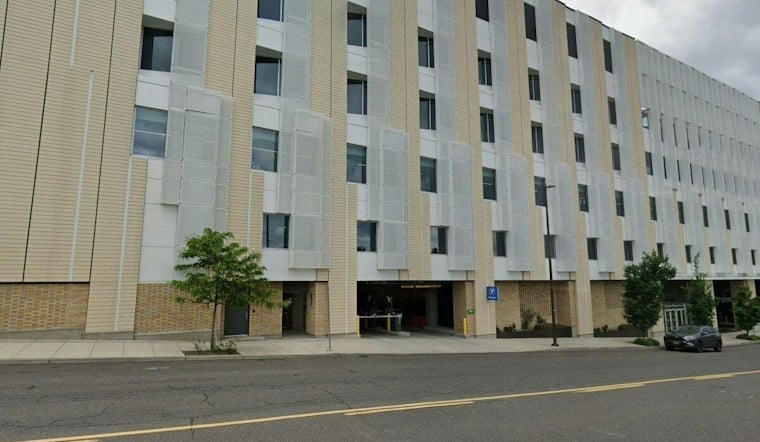
Legacy Health has warned it will cut ties with UnitedHealthcare on September 30 unless the two sides agree on higher payment rates, a split that could push thousands of Portland-area patients out of network for care at some of the region's busiest hospitals. The dispute centers on reimbursement rates for Legacy's hospitals, clinics and providers across Portland and southwest Washington, and it comes just months after Legacy weathered a similar standoff with a different insurer.
UnitedHealthcare is Legacy Health's second-largest payer, according to The Oregonian/OregonLive, and the insurer covers people with employer coverage, individual plans and Medicare Advantage throughout Oregon and the Vancouver area, along with Medicaid members in southwest Washington. Legacy says it served roughly 66,000 UnitedHealthcare-covered patients in Oregon and southwest Washington over the past year. If the contract lapses, most Legacy hospitals, clinics and providers in the Portland metro would leave UnitedHealthcare's network, though Legacy Silverton Medical Center and several Mid-Willamette Valley clinics have separate UnitedHealthcare contracts and would remain in-network.
Legacy formally issued its notice of contract termination to UnitedHealthcare on August 17, according to Legacy Health, a move the health system says was necessary to avoid an automatic contract renewal at current rates while negotiations continue. Legacy has not disclosed the size of the payment increase it is requesting, but the system says it is seeking a fair, reasonable increase over the next two years. UnitedHealthcare has increased its payments to Legacy significantly in 2024 and 2025, per Legacy officials, though the health system maintains those increases have not kept pace with rising costs.
Legacy Points to Rising Costs, UnitedHealthcare Points to Consumers
Legacy has reported that its overall expenses climbed 50% since 2021 because of inflation and higher labor and supply costs, per Legacy officials. Hospitals broadly argue that higher payments are needed to cover those growing expenses, while insurers counter that higher hospital payments translate into higher premiums and out-of-pocket costs for consumers and employers. UnitedHealthcare has said it prioritizes reaching an agreement that stays affordable for consumers and employers while preserving uninterrupted network access to Legacy's hospitals and providers, and the insurer says contract talks are continuing in good faith ahead of the deadline, according to The Oregonian/OregonLive.
The financial pressure on Legacy has played out against a very different backdrop at UnitedHealthcare's parent company. UnitedHealth Group reported second-quarter 2026 consolidated revenues of $112.0 billion and operating earnings of $8.0 billion while raising its full-year earnings outlook, according to UnitedHealth Group. That contrast, between a hospital system citing years of rising costs and a payer parent still reporting billions of dollars in quarterly operating earnings, has become a recurring feature of Oregon's provider-insurer negotiations.
A Familiar Playbook, and a Rebuilding Health System
This is not the first time Legacy has gone to the brink with a major commercial payer this year. Legacy went out of network with Regence BlueCross BlueShield of Oregon, its largest payer, earlier in 2026, ending a monthlong standoff that involved roughly 150,000 Regence members before the two sides reached a deal, and Oregon Health & Science University patients faced losing in-network access for more than 74,000 patients last year before UnitedHealthcare and OHSU nearly split over a contract and then reached a last-minute deal, as reported by The Oregonian/OregonLive and as noted by The Oregonian/OregonLive.
Legacy is navigating these standoffs as a newly independent system under new leadership. Dr. Susan Huang assumed office as Legacy Health's president and chief executive officer in June 2026, arriving from Providence Clinical Network, where she oversaw ambulatory operations and physician strategy, according to Becker's Hospital Review. Huang stepped in after Legacy and OHSU mutually terminated a planned $8 billion, 10-hospital merger in May 2025, following a state community review board recommendation against the deal because of likely increases to the cost of care, as reported by Fierce Healthcare. The aborted acquisition would have created the Portland metro area's largest employer, with more than 32,000 staff members.
Legacy has since posted a narrow quarterly operating profit after an operating loss in fiscal 2023, though rating agencies noted its cash reserves remain diminished, per The Lund Report. That financial backdrop helps explain why the health system has taken a firmer stance in rate talks with commercial carriers this year, even as it works to stabilize independently outside a merger.
What Happens to Patients Mid-Treatment
For patients already receiving care at Legacy facilities, the network split would not necessarily mean an immediate switch to out-of-network billing. Patients receiving cancer treatment or pregnancy-related care may continue seeing Legacy providers at in-network rates with UnitedHealthcare's approval, per Merrin Permut. Patients receiving other forms of ongoing treatment may also receive temporary in-network rates at Legacy with UnitedHealthcare's approval. UnitedHealthcare members would still be able to receive emergency care at Legacy facilities regardless of network status.
Even so, a contract split could cause some patients to find new doctors or travel farther for care, particularly for services concentrated at specific Legacy campuses. Legacy's network includes Legacy Good Samaritan Medical Center in Northwest Portland, Legacy Emanuel Medical Center in North Portland, Legacy Meridian Park Medical Center in Tualatin, Legacy Mount Hood Medical Center in Gresham, and Randall Children's Hospital in North Portland. Legacy Emanuel houses the Oregon Burn Center.
Oregon law offers a partial safety net for patients caught in the middle of these standoffs. Under ORS 743B.225, insured enrollees undergoing active treatment for serious or complex conditions can request continuity-of-care exceptions to retain in-network reimbursement rates with out-of-network providers during contract terminations, according to OregonLaws. Those protections include pregnancy and medically necessary active treatment. How smoothly enrollees can actually navigate that process if the September 30 deadline passes without a deal, particularly for patients tied to specialized programs like the Oregon Burn Center or Randall Children's Hospital, remains an open question.
The standoff also lands amid a broader statewide pattern of hospital market concentration that can strengthen providers' hand in these negotiations. A March 2026 report by Yale University's Health Care Affordability Lab found that roughly 72% of Oregon's hospitals operate in highly concentrated markets or as local monopolies, according to Axios Portland's reporting, which Hoodline covered in its piece on Oregon's hospital consolidation wave. That dynamic, paired with Legacy Emanuel's status as a Level I trauma center, adds pressure to talks that are unfolding amid 50 Oregon measles cases and exposure warnings at Legacy Mount Hood Medical Center and Randall Children's Hospital.





