

























































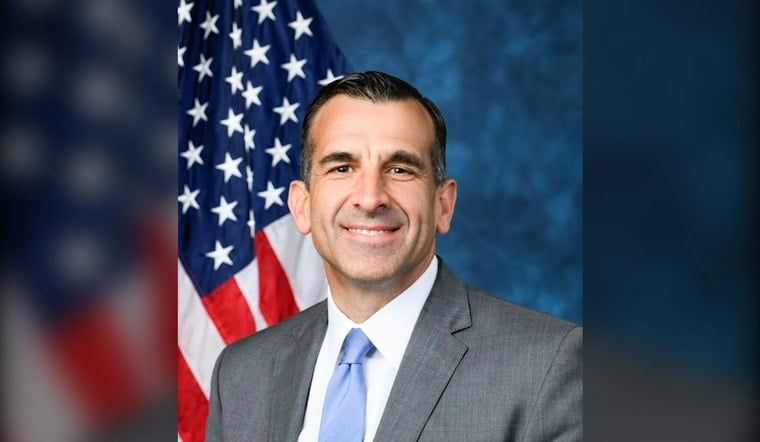
Representative Sam Liccardo is warning that a proposed fee on foreign graduates seeking post-study work permits could drive away the very engineers and entrepreneurs who help power Silicon Valley's economy. The San Jose Democrat says his response, the bipartisan Keep Innovators in America Act, is meant to lock the underlying work program into federal law before regulators can gut it.
In a post on X, Liccardo wrote that Donald Trump wants to eliminate Optional Practical Training, cautioning that doing so would send some of the world's best and brightest young people born abroad — and the companies and jobs they create — to U.S. competitors, according to Sam Liccardo
. Liccardo is a U.S. Representative for California's 16th District and the former mayor of San José. He introduced H.R. 8013, the Keep Innovators in America Act, on March 19 alongside Republican Rep. Jay Obernolte and Democratic Rep. Raja Krishnamoorthi of Illinois, according to
NAFSA
. The bill would amend the Immigration and Nationality Act to formally write Optional Practical Training into statute for the first time.
Why OPT Is Vulnerable Right Now
Optional Practical Training, known as OPT, lets international students on F-1 visas work in the U.S. for a period after graduation, typically in their field of study. Because the program was created through Department of Homeland Security regulation rather than explicit congressional statute, its work authorizations remain exposed to unilateral changes or elimination by executive action, as detailed by ClinchLaw Immigration News. The regulations rest on statutory and regulatory authority related to F-1 student training.
That vulnerability moved from theoretical to concrete on September 11, when the White House Office of Information and Regulatory Affairs completed its review of a proposed DHS rule titled Optional Practical Training Fees — a step that clears a key executive hurdle toward a potential fee whose amount DHS has not officially disclosed on foreign graduates seeking post-study work permits. The rule cleared review after ICE submitted the fee proposal to OIRA in August, according to The Economic Times.
Legal History Offers Little Protection
Courts have already weighed in on whether OPT can exist without explicit congressional authorization. The U.S. Supreme Court declined in October 2023 to review a D.C. Circuit Court of Appeals ruling in Washington Alliance of Technology Workers v. DHS, preserving lower court decisions upholding executive authority to grant OPT work authorization, per the Presidents' Alliance on Higher Education and Immigration. WashTech had argued that allowing graduates to work after their studies violated the terms of the F-1 student visa itself. The ruling's practical effect cuts both ways now: the program's regulatory basis leaves it vulnerable to future changes.
The Scale of the Program at Stake
The numbers behind OPT have been climbing. A record 294,253 international graduates participated in Optional Practical Training during the 2024–2025 academic year, a 21 percent jump from the year before, according to the Institute of International Education's Open Doors report. International students made up 6 percent of total U.S. higher education enrollment that year, per the same report from the Institute of International Education.
More than half of all international students in the U.S. pursue STEM degrees, highlighting the program's connection to technical fields.
Economists have also pushed back on the notion that foreign graduates crowd out American workers. Research published in 2023 by the Niskanen Center found that increased OPT participation expanded domestic innovation without depressing average wages for U.S. workers, corroborating earlier 2019 findings from the National Foundation for American Policy. Separately, post-study work options are a consideration in debates over where international students choose to study.
Billions in Local Economic Impact
The stakes extend beyond individual visa holders. International students contributed $54.8 billion to the U.S. economy in 2024 and supported more than 355,000 American jobs, according to figures released by NAFSA and the U.S. Department of Commerce — tuition and living expenses that flow directly into campus and community employment, the Institute of International Education noted in its report.
Part of a Broader Local Push
Liccardo's defense of OPT lands amid a string of immigration-related actions touching Silicon Valley. Just a day before his post, the San Jose City Council voted unanimously to pass a 45-day moratorium on new private immigration detention centers, a measure Liccardo championed, with city leaders citing municipal infrastructure and emergency response demands, as Hoodline reported. The move followed a separate Boston court battle over visa caps and comes weeks after UC Berkeley's internship program halt left international students scrambling over work authorization limits.
Whether the Keep Innovators in America Act can move fast enough to outpace the proposed fee rule remains an open question. The DHS proposal would still need to proceed through Federal Register notice-and-comment procedures, and it is not yet clear whether bipartisan support in Congress will be enough to push statutory protections into law before further executive rules take effect.





