

























































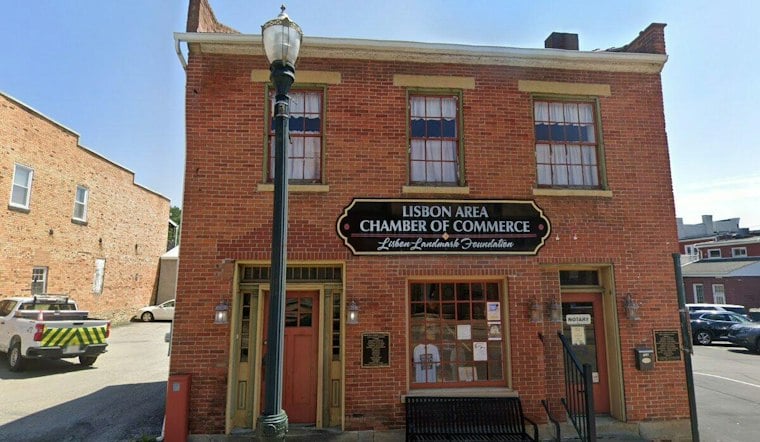
Lisbon's Johnny Appleseed Festival is underway for its 58th year, kicking off its first full day of festivities with a pancake breakfast at the Lisbon fire department before a parade rolled down Lincoln Way despite a mix of rain and sunshine. The event, which traces back to 1968, runs through Sunday at 6 p.m., filling the small Columbiana County village with visitors for one of its biggest weekends of the year.
According to WKBN, Lisbon was the first location in the country to host a Johnny Appleseed Festival, a distinction the village has held onto since that first celebration nearly six decades ago. Parade-goers turned out despite the unsettled weather, and the station reports the festival will wrap up with the crowning of the festival queen. Lisbon Area Chamber of Commerce President Carly Brock told WKBN that Johnny Appleseed was an actual living person named John Chapman, who walked through Lisbon and planted trees there — a piece of local lore that gives the festival its name and its enduring appeal.
A Tradition Rooted in Frontier Law, Not Folklore
The festival's origins reach back further than most visitors realize. Chapman's nursery business wasn't a hobby — it answered a legal requirement. Under 1792 land deals from the Ohio Company of Associates in the Northwest Territory, settlers claiming 100-acre grants had to plant 50 apple trees and 20 peach trees within three years to prove permanent homesteading, according to Smithsonian Magazine. That rule created steady demand for Chapman's saplings across the frontier, turning his mobile seed nurseries into an essential survival tool for settlers rather than a charitable errand.
The apples those seeds produced were nothing like the ones sold at grocery stores today. Smithsonian's reporting notes the fruit was predominantly sour and genetically erratic, unfit for eating but well suited to brewing hard cider, which served as America's primary daily beverage before Prohibition. Chapman also refused to graft his trees, a technique that would have produced more consistent, edible fruit. Per Ohio Magazine, that choice stemmed from his Swedenborgian religious beliefs, which held that grafting caused living plants to suffer, leading him to grow trees strictly from seed even though the fruit stayed tart and uncultivated.
This Year's Schedule Adds a Friday Preview
The 2026 festival expanded its lineup with a Friday night vendor preview alongside longtime staples, according to the Morning Journal. Beyond the pancake breakfast and parade, this year's events include an Apple Bud and Apple Blossom crowning, a classic car show at the Fairway lot, a rubber duck race down Eagles Hill, and an apple pie baking contest. The festival queen court for 2026 features Aubree Burris and Olivia Fennema.
Lisbon Area Chamber of Commerce Director Amanda Lewis, a 2009 David Anderson High School graduate who grew up attending the festival, oversaw planning for this year's event alongside local resident Jerry Tyson, who portrays Johnny Appleseed and sets up a historical cabin exhibit, the Morning Journal reports. The festival's roots go back to local volunteers like Cheryl Mills, who helped organize the very first Johnny Appleseed Festival in 1968 and stayed involved for more than 25 years — a legacy that earned her the title of parade Grand Marshal for the festival's 57th edition last year, according to the Salem News.
Lisbon's Small-Town Footprint, Big Historical Weight
Lisbon carries an outsized amount of history for a village its size. Founded in 1803 along Little Beaver Creek, it serves as the county seat of Columbiana County and has a 2026 estimated population of roughly 2,477 residents with a median age of 43.2 years, per World Population Review. Originally platted as New Lisbon, the village was also home to Ohio's first newspaper, The Ohio Patriot, founded in 1808, and it sits near the site where Confederate General John Hunt Morgan surrendered in 1863, ending the northernmost armed raid of the Civil War, according to Kiddle.
The apple legacy Chapman left behind still echoes across the state today. Ohio consistently ranks among the top 10 apple-producing states in the country, growing roughly 50 commercial and native varieties, according to the Agricultural Marketing Resource Center. And in Ashtabula County, a single apple tree tended by eight generations of the Harvey Algeo family is recognized as the last known living descendant of Chapman's original 19th-century frontier plantings, with bud-grafted saplings now propagated for conservation, Ohio Magazine reports.
Lisbon's celebration continues this fall in Columbiana County, with events continuing through Sunday evening as the festival closes out its 58th year with the crowning of the festival queen.



