

























































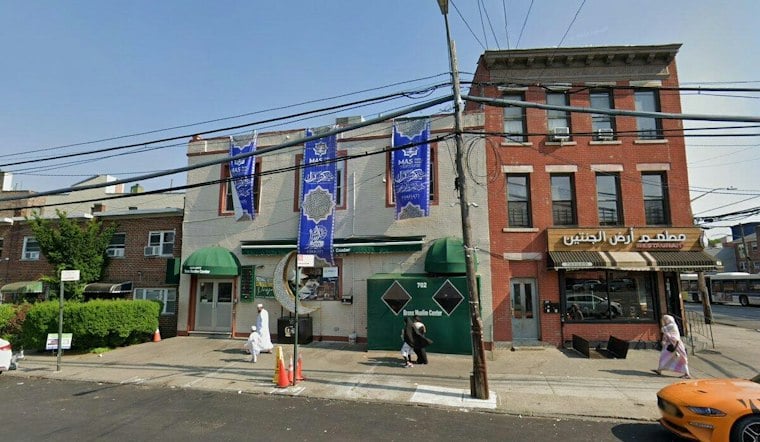
A bill designating Little Yemen as a New York State cultural district has passed both houses of the state legislature and awaits Gov. Kathy Hochul’s signature. The proposal has also raised a dispute in Van Nest over how the district was developed: two sponsoring lawmakers say they engaged with residents, while a longtime civic group says it was not properly consulted.
State Sen. Nathalia Fernandez and Assemblymember John Zaccaro defended the legislation at a packed Bronx Community Board 11 meeting, according to Bronx Times. The bill would designate portions of Little Yemen — the East Bronx area where Yemeni-owned businesses have clustered — as an official cultural district, a status that could open the door to New York State Council on the Arts grants. The name was informally established around White Plains Road and Rhinelander Avenue after 2014, when local liaison Yahya Obeid worked with journalists and Google Maps to chart the growing immigrant community following the outbreak of Yemen’s civil war, according to Wikipedia.
A Community Board Split Down the Middle
Community Board 11 drafted a letter supporting the bills but tabled discussion rather than voting on it, according to the Bronx Times. The board’s Education, Culture, and Youth Services Committee had reviewed the draft on September 3 but did not recommend it after residents raised concerns about outreach and boundary lines, according to Citizen Portal.
The Van Nest Neighborhood Alliance has circulated a petition opposing the legislation, citing what it calls a lack of community engagement before the bills passed both chambers. The group has also argued that the Yemeni community in Van Nest has not contributed enough culturally to warrant the designation. Alliance president Bernadette Ferrara opposed the proposal and said she believed it was intended to help Yemeni leaders secure funding for the Bronx Muslim Center’s mosque, according to the Bronx Times.
Lawmakers Push Back on Outreach Claims
Fernandez, who sponsored the Senate version of the bill, said the legislation was intended to bring support and opportunity, citing the contributions of Yemeni families, small businesses, faith leaders, and community organizations to the Bronx. She said the bill was not intended to cause anger, hate, or division, according to the Bronx Times account of the meeting.
Zaccaro said he met with alliance members for an hour during the summer and held a separate 30-minute meeting with senior members of the group. He said his office had already tried to meet with the alliance and did not see a need for another formal meeting at that stage. Zaccaro also said the legislative process lasted more than a year and a half and involved four iterations of the bill. The alliance maintains it was sidelined; the two sides have not resolved the disagreement.
The Mosque at the Center of the Dispute
Ferrara’s concern centers on the Bronx Muslim Center, a planned mosque, community center, and weekend school in Van Nest that has received congressional funding through Rep. Ritchie Torres’s office. The center’s project was described by the Washington Post.
Fernandez said the state arts council grants associated with the district would not be restricted to Yemeni organizations; any organization within the district could apply, according to the Bronx Times. Resident Azhak Alhudis said grant funding could support improvements such as better sidewalks that would benefit people living and working in Van Nest, not only Yemeni residents or institutions.
Where the Boundaries Would Fall
The proposed district would be bounded by White Plains Road, Rhinelander Avenue, Van Nest Avenue, and Bronxdale Avenue. It includes Yemeni-owned restaurants, cafes, dessert shops, clothing stores, and a perfumery, along with the Bronx Muslim Center and the Yemeni American Community Center. Wikipedia reports more than 500 Yemeni-owned small businesses within a one-mile radius of White Plains Road, a wider area than the proposed district.
A Business History, Not a Current Count
Grub Street reported that the area’s first Yemeni restaurant, Arth Aljanatain, opened in 2008, when owners Aziz Albaydani and Younis Alnaqeeb took over a former pizzeria space. That documents an early business presence, but it is not a current census; the more-than-500 figure cited above covers a one-mile radius, not just the proposed district.
Little Yemen has existed as a mapped, named place for several years already, well before this legislative push began. Senator Gustavo Rivera issued a statement ahead of Yemeni American Day this past Saturday, saying the Yemeni community had enriched the Bronx through culture, entrepreneurship, faith, and civic commitment, while condemning racist attacks, targeting, and Islamophobia against Yemeni neighbors, per the Bronx Times.
Support Letter Remains Tabled
The board’s discussion of the draft support letter remains tabled for a future meeting, leaving its advisory position unresolved as the bill awaits the governor’s decision.
The proposed designation would give formal state recognition to the Little Yemen name already used for the Bronx’s Yemeni community. The bill’s passage has not resolved the separate disagreement over outreach or produced a Community Board 11 vote on its support letter.
A Neighborhood Already in Transition
The debate is unfolding against the backdrop of a neighborhood already reshaped by growth and change. Hoodline previously reported that a fatal shooting on Sagamore Street in August left a 50-year-old man dead in Van Nest, even as NYPD updates showed major crime across the Bronx was down 12% year over year. Meanwhile, the MTA's $2.9 billion Penn Station Access project is building a new Metro-North station at Parkchester/Van Nest, projected to open by 2030, bringing significant infrastructure investment to the surrounding blocks. Whether Governor Hochul signs the cultural district bill, and how Community Board 11 ultimately resolves its tabled letter, remain open questions as both sides continue to stake out their positions.




