

























































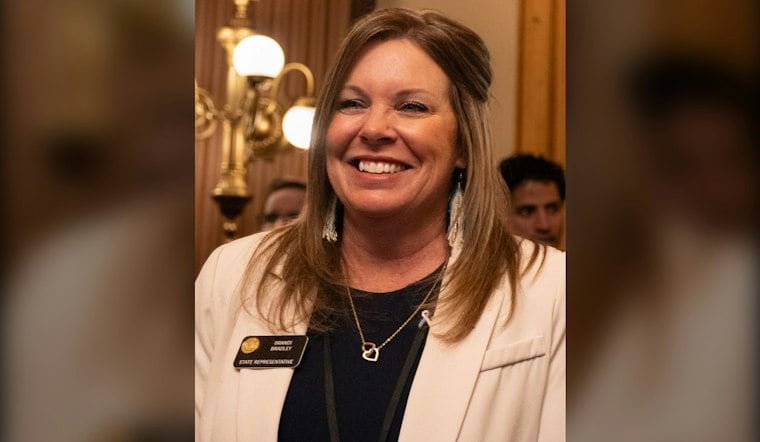
Colorado state Rep. Brandi Bradley filed a lawsuit in Denver District Court on Thursday, asking a judge to throw out both a set of disciplinary recommendations issued against her and the underlying findings that she violated the legislature's workplace harassment policy. The Littleton Republican argues the process that produced those findings was conducted improperly and in secret, and she wants the court to wipe the slate clean before lawmakers act on any of it.
Bradley's suit targets the Colorado House Workplace Harassment Committee, which unanimously recommended that an unnamed representative face a string of punishments for what it described as a pattern of harassment and retaliation, according to The Denver Post. The committee had already determined that six complaints it received were substantiated and warranted a response, the newspaper reported, with the alleged violations tied to gender harassment, sexual harassment, retaliation and confidentiality. Bradley alleges those complaints were unfounded and that the committee violated her due process rights by handling deliberations and evidence-gathering out of public view.
What the Committee Recommended
Per the Post's reporting, the six-member bipartisan panel recommended that the lawmaker lose all but one committee assignment, write and publish a full apology, and face a censure vote when the full House reconvenes. The committee also recommended stripping state funding for legislative aides and ordering harassment training, and it determined that if the alleged behavior continues, the lawmaker could eventually face a vote to expel her from the legislature altogether.
Those recommendations, along with the committee's August findings, are what Bradley is now asking a judge to invalidate. She was informed in August that the committee had determined she violated the workplace harassment policy, and she has said publicly that the recommendations were made against her. The panel's deliberations took place in executive sessions closed to the public, and the committee has not disclosed further details about its investigation.
Attorney Alleges a Broken Process
Bradley's attorney, identified in the Post's report only by the surname Owen, alleged that the executive sessions were improperly used and that Bradley never had a chance to defend herself or present her own evidence. Owen also said she did not know what evidence had been presented to the committee in the first place. The committee's chairwoman, Democratic Rep. Jennifer Bacon, declined to identify the lawmaker at the heart of the investigation, as did Vice Chair Matt Soper, a Delta Republican, though Soper described the allegations as pretty egregious and said the alleged behavior amounted to a chronic pattern and practice.
House Democratic leadership declined to comment on the lawsuit, and a message seeking comment from Republican leadership was not returned, the Post reported. The committee's summaries of its findings were expected to be sent to legislative leadership as soon as the week of Sept. 21, according to the same account, after which they would become available to the public. House Speaker Julie McCluskie, Majority Leader Monica Duran and Minority Leader Jarvis Caldwell will determine whether to proceed once they receive those summaries.
A Yearlong Clash Inside the House
The lawsuit lands as the latest chapter in what the Post's reporting characterizes as an escalating, yearlong conflict inside the Capitol involving Bradley. Last summer she filed her own harassment complaint against fellow Republican Rep. Ron Weinberg, accusing him of making inappropriate comments and stealing a master key for the state capitol; Weinberg was ultimately admonished and ordered to receive harassment training. That complaint had prompted the House to convene an ethics review of Weinberg, a notable step given that, per the Denver Gazette, the House had not convened an ethics committee since 2012 while the Senate had run two such investigations, in 2024 and 2025.
Bradley also launched a lengthy filibuster in the spring, which Caldwell publicly criticized, accusing her of unhinged behavior. He had separately reprimanded her in June for cursing at the House's nonpartisan chief clerk. The Colorado Legislature rarely takes such disciplinary steps at all: the House last expelled a member in 2018 and last censured a lawmaker in 2008, according to the Post's reporting.
A First-of-Its-Kind Test for the Panel
The stakes extend beyond Bradley's own case. It is the first time the House committee has ever made recommendations regarding a lawmaker's behavior, according to Colorado Politics. The House and Senate workplace harassment committees were both formed in 2019, a year after sexual harassment complaints against then-Rep. Steve Lebsock exposed gaps in the legislature's policies, as reported by The Colorado Sun; Lebsock was expelled from the House in 2018 for sexual harassment. The Senate's parallel committee did not convene for the first time until this past June, per Colorado Newsline, underscoring how rarely these bodies have been tested since their creation.
Bradley's lawsuit now puts that untested process itself on trial, with a Denver judge left to decide whether the committee's closed-door approach can stand or whether its findings and recommendations must be scrapped entirely.




