

























































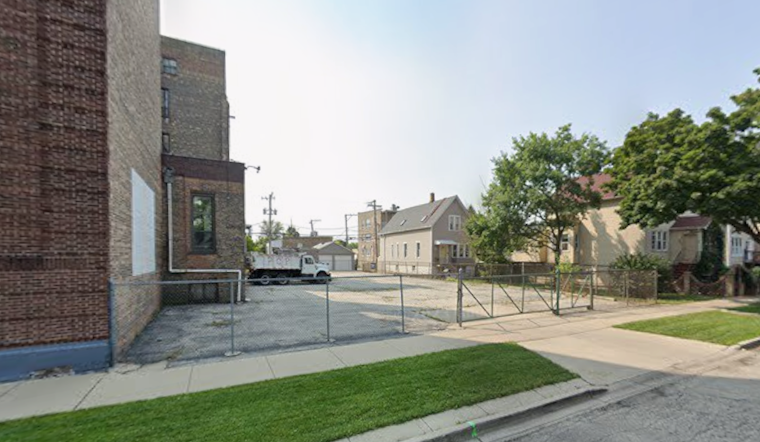
A long-vacant building at 3601 W. Cortland St. in Logan Square that once housed a faith-based addiction recovery program is finally moving toward becoming 42 apartments, after developer Chris Sotos restarted a zoning process that stalled when his earlier approvals expired. The five-story building, built in 1918 for Illinois Bell Telephone Co., has sat empty since 2020 and has seen fly dumping and vandalism in recent months while the project languished.
The redevelopment has been in the making since 2018, according to Block Club Chicago, which reports that Sotos bought the building in November 2020 after Adult & Teen Challenge, which had occupied the property for 25 years running a long-term residential treatment program for men, moved out. Brian Wood of the organization said in 2018 that Adult & Teen Challenge planned to expand into a larger facility in a less expensive neighborhood, and an earlier 2018 conversion proposal from a different developer fell through before Sotos eventually bought out his business partner to become sole owner of the project.
Zoning Variances Had to Restart From Scratch
Sotos, a representative of Key Development Partners LLC, has pursued the overhaul since 2022, and the Chicago Zoning Board of Appeals approved a package of variances for the site under applicant KDP Chicago Cortland LLC at its October 20, 2023 meeting. Those approvals, which reduced front and rear setbacks, eliminated a required loading berth, and lowered off-street parking from 38 to 34 spaces, later expired in 2024 without construction moving forward, forcing the zoning variance process to restart entirely. The Chicago City Council formally received a new reclassification application from KDP Chicago Cortland LLC in March 2026, seeking to designate the Cortland Street site as an RM-5 Residential Multi-Unit District.
The project now needs approval of six zoning variances, including the parking reduction, a green-space modification, landscaping requirements, and a building setback allowing upper-floor additions. Notably, the building is not located in a city-designated transit-served area, even though it sits relatively close to the Armitage and Pulaski bus lines and near The 606 trail — meaning it doesn't benefit from the parking reductions the city's 2022 Connected Communities Ordinance allows for projects within a half-mile of CTA rail stations or a quarter-mile of major bus corridors.
Fewer Two-Bedrooms, More Studios in Latest Plan
The unit mix has shifted considerably since the project's earlier iterations. The latest proposal adds four units compared with the 2022 plan and now includes nine studio apartments and 33 one-bedroom units, after two-bedroom apartments were removed to make the project financially feasible amid rising construction and lending costs since 2022. That's a marked change from the 2018 proposal, which had called for 44 one-bedroom apartments, and from the previous plan's mix of studios and one- and two-bedroom units.
Studio rents are expected to range from $1,600 to $1,700 a month, while one-bedrooms would run $2,000 to $2,100, per Block Club Chicago's reporting. Zumper data shows average Logan Square rents reached $2,245 in August 2026, an 11% jump from the year before, underscoring the affordability pressure shaping both the market-rate and restricted units in the building. The apartments are being marketed toward young professionals, with amenities including a basement fitness area and bike room, a top-floor community room for parties, and a top-floor terrace.
Six Units Priced Below Market Rate
Fifteen percent of the building's units — six apartments total — will be priced below market rate for people earning 60% of Area Median Income, which the Chicago Department of Housing sets at $50,400 to $64,800 annually depending on household size. The project satisfies Chicago's 2015 Affordable Requirements Ordinance, which requires at least 10% of units in qualifying developments to be priced below market; a separate 2021 update to the ordinance raised inclusionary requirements in some gentrifying areas citywide. Parking at the building would cost $150 per month per space, and the project also includes 42 storage spaces.
Neighbors Voiced Concerns Over Parking and Trash
Chris Sotos and zoning attorney Rolando Acosta presented the updated plans to neighbors at a community meeting hosted by 26th Ward Alderperson Jessie Fuentes. Neighbors raised concerns about parking, trash and lighting, though Block Club Chicago reports most neighbors supported the project overall. Monika Lozinska spoke in favor of preserving the building's facade and exterior, while Karl Ostroski welcomed the addition of more housing to the area.
Fuentes said action on the zoning variances had been deferred until a community meeting could be scheduled, and the alderperson indicated she is leaning toward renewing the zoning classification amendment at the zoning committee, since no one expressed outright opposition at the meeting. If approved, the roughly $9 million to $10 million project could begin construction as early as spring 2027, with construction expected to last a little over a year, according to the same Block Club Chicago report.
A Citywide Pattern in Gentrifying Neighborhoods
The Cortland Street proposal reflects a familiar tension playing out across gentrifying Logan Square, Humboldt Park and Avondale: the push for greater housing density running up against neighbors' worries about street parking, trash and building scale. Research from the Center for Neighborhood Technology has found that mandatory off-street parking rules in Chicago add more than $4,000 per space for outdoor lots and over $37,000 per space for structured indoor parking, a cost typically passed on to tenants through higher rent — one reason developers like Key Development Partners, which has completed 108 projects nationwide totaling 4.5 million square feet, according to the Pittsburgh Business Times, push for parking reductions wherever zoning allows it.
The Cortland Street plan follows a broader wave of Logan Square conversions working through the city's zoning pipeline, including the Milshire Hotel's 30-unit rebirth nearby, which similarly avoided adding parking under the city's transit-oriented rules. For now, the Cortland Street building remains vacant, but with the zoning process restarted and financing being finalized, neighbors could see the century-old former telephone company building filled with residents for the first time in years.





