

























































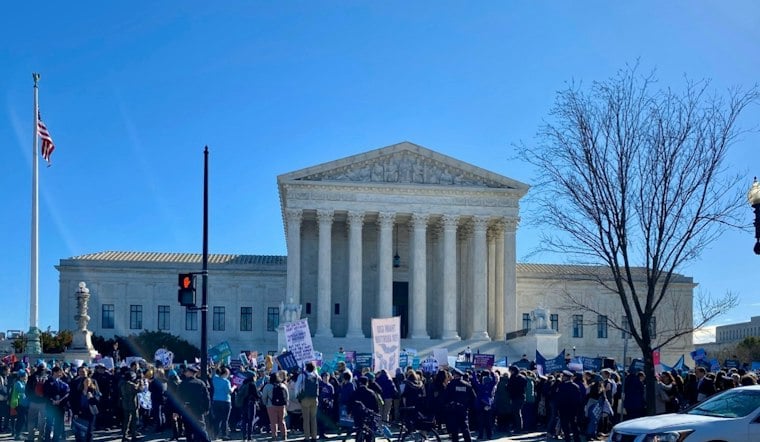
Louisiana, Alabama and Arkansas filed a lawsuit directly with the U.S. Supreme Court on Wednesday, challenging abortion shield laws in New York, California and Massachusetts that protect doctors and telehealth providers who mail abortion pills into states with bans. The three red states argue those shield laws unconstitutionally block their ability to investigate, prosecute or extradite people accused of sending abortion medication across state lines.
The filing, led by Louisiana Attorney General Liz Murrill, contends the shield laws violate the Full Faith and Credit Clause, the Equal Sovereignty Doctrine, the Dormant Commerce Clause and federal public nuisance law, according to WBRZ. As reported by WWL-TV, the three states estimate roughly 2,000 medication abortions happen each month through protected mail-order services reaching their residents, and they characterize the shield statutes as a policy of hostility toward states that ban abortion. Shield laws emerged after the Supreme Court overturned Roe v. Wade, and they generally bar clerks, police and governors from cooperating with out-of-state subpoenas, warrants or extradition requests tied to abortion care.
A Parallel Federal Lawsuit Targets 30 Providers
Alongside the Supreme Court filing, the three states filed a separate civil lawsuit Wednesday in the U.S. District Court for the Western District of Louisiana in Lake Charles, according to THV11. That case names 30 doctors, telehealth companies and nonprofit groups, including JBN Operations, Abuzz and Choice Reproductive Health, per WWL-TV's reporting. State officials accuse the named groups of sending mifepristone and misoprostol to patients without in-person medical care or required state licenses, and they claim some providers made misleading claims about the safety of taking the medication at home, with some shipments allegedly leading to medical complications and hospitalizations. The states are asking a judge to immediately stop the deliveries and to award damages and other penalties.
Two doctors named in the lawsuits illustrate the stakes for providers. Dr. Remy Coeytaux, who works in California, previously faced a wrongful-death lawsuit in federal court in Texas alleging he mailed abortion pills across state lines, and Louisiana Attorney General Murrill had already indicted him on felony charges of trafficking abortion pills into St. Tammany Parish in January, according to KSLA News 12. California Governor Gavin Newsom formally refused to extradite Coeytaux, citing the state's shield law.
A New York Extradition Standoff Set the Stage
Dr. Angel Foster, who works in Massachusetts, is named in connection with a separate case involving a Louisiana grand jury's indictment of New York doctor Margaret Carpenter for prescribing abortion medication to a Louisiana resident. Louisiana Governor Jeff Landry issued an extradition order for Carpenter, but New York Governor Kathy Hochul refused to honor it, citing New York's shield law — the same standoff that pushed Louisiana toward Supreme Court intervention.
The pattern is not confined to Louisiana. At least 22 states and the District of Columbia had passed abortion shield laws by March, with eight explicitly protecting clinicians who prescribe and mail abortion pills into states where abortion is illegal, Mother Jones reported. Broader research indicates telehealth overall accounts for roughly one in three U.S. abortions, while shield-state providers make up only a portion of telehealth abortions. The Center for Reproductive Rights also points to an average of nearly 15,000 medication abortions delivered monthly into ban states as of December — a figure far larger than the 2,000-per-month estimate the red states cited in their own filing. In a Texas case, a civil default judgment against a New York doctor for mailing abortion pills went unenforced after a New York court clerk refused to honor it under the state's shield law.
Louisiana's Own Drug Classification Adds Local Friction
Louisiana's fight over abortion pills is layered on top of its own controversial drug scheduling. The state became the first to classify mifepristone and misoprostol as Schedule IV controlled dangerous substances under Act 246, which took effect in October 2024 and made unauthorized possession punishable by up to five years in prison, according to the Louisiana Board of Pharmacy. A City of New Orleans Health Department evaluation later found that reclassifying misoprostol under Act 246 caused documented delays in maternal emergency care, including treatment of postpartum hemorrhages and miscarriages, because hospitals had to store the drug in locked cabinets outside labor wards. More than 200 Louisiana physicians had opposed the Schedule IV classification before it was enacted.
Murrill testified before the U.S. Senate HELP Committee in January that Louisiana law protects unborn life from conception and limits abortion exceptions strictly to fatal fetal anomalies or cases preventing death or permanent organ damage. She continues to challenge the U.S. Food and Drug Administration's approval of mifepristone in a separate federal case, according to WWL-TV.
What Happens Next at the Supreme Court
What Happens Next at the Supreme Court The Supreme Court will first decide whether to take up the dispute. In the meantime, the federal court in Lake Charles will consider the states' request to immediately halt shipments from the 30 named telehealth groups and facilitators, giving Louisiana, Alabama and Arkansas a potential avenue to act against private providers even if the Supreme Court declines to intervene.
The legal fight is part of a broader wave of red-state litigation aimed at the shield-law networks that have kept mail-order abortion pills flowing across state lines since Roe fell.





