

























































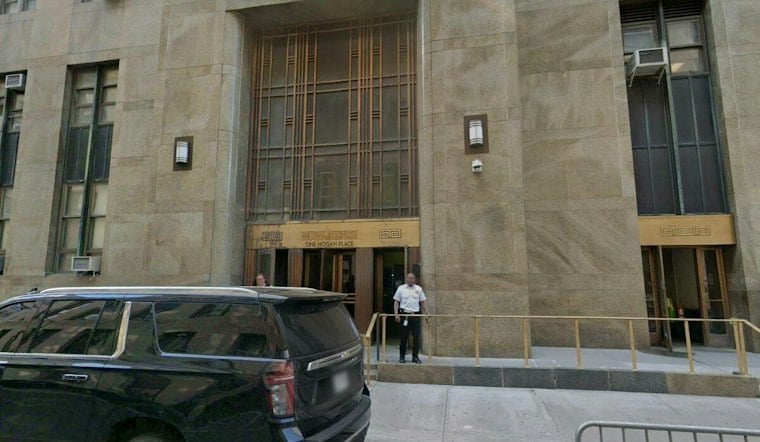
Manhattan District Attorney Alvin Bragg previewed an announcement Monday afternoon about his office's planned disclosure of website seizures involving sites allegedly selling AI-generated sexually explicit deepfake images of celebrities. Bragg promoted the upcoming announcement in a social media post about a 1 p.m. briefing, saying his office would detail seizures involving websites selling AI-generated celebrity deepfakes.
The announcement was first previewed in a post from Alvin Bragg
on the social platform X. The office maintains broader cybercrime capabilities. The Manhattan District Attorney's Office established its Cyber Crime Bureau in September 2024, following a longstanding cyber-crime practice and focusing on complex digital offenses including cryptocurrency theft, dark web vendors, and AI-enabled criminal activity, according to the
Manhattan District Attorney's Office
. That bureau evolved from the office's former Cybercrime and Identity Theft Bureau and relies on specialized mobile and blockchain analytics.
This is not the first time Bragg's office has moved to seize illicit web infrastructure rather than simply pursue individual defendants. The office previously obtained a court-authorized warrant to seize a domain and replaced the site with an official seizure notice to alert victims and block further fraud.
A Legal Arsenal Built Over Several Years
Prosecutors targeting nonconsensual sexual deepfakes now operate amid a changing legal landscape.
At the federal level, President Donald Trump signed the TAKE IT DOWN Act into law in May 2025, criminalizing the publication of nonconsensual intimate imagery, including AI-generated digital forgeries, and requiring covered online platforms to remove reported material within 48 hours. That law has already produced regional consequences: federal prosecutors in the Eastern District of New York unsealed criminal charges in May 2026 against two men accused of publishing thousands of AI-generated deepfake pornographic images depicting celebrities, singers, and political figures, with the men identified as residents of New Jersey and Texas.
Domain Seizures Becoming a National Pattern
Bragg's move follows a broader shift among law enforcement agencies toward dismantling deepfake websites directly rather than pursuing only their operators. Federal agents seized the web domains for major commercial deepfake pornography hubs CFAKE.com and SOCFAKE.com in June 2026 after Homeland Security Investigations found the platforms hosting hundreds of thousands of AI-generated explicit images of famous women, as Hoodline reported at the time.
The scale of the underlying problem has drawn increasing attention. By August 2026, 48 U.S. states had enacted statutes criminalizing or regulating sexually explicit deepfakes, up from 46 at the start of the year, with 58 deepfake-related bills passed nationwide in 2026 alone, per STACK Cybersecurity.
New York's Broader Push on Synthetic Media
The article also examines whether commercial advertisers should disclose whenever an ad features an AI-generated synthetic performer rather than a real human actor.
Bragg's office has its own firsthand history with malicious synthetic media. In March 2023, Bragg himself was the target of a high-profile deepfake video that used fabricated audio added to 2022 footage to falsely announce he was resigning and dropping charges against former President Donald Trump. The manipulated clip circulated across social media before being debunked, according to AP News.
Monday's website seizure announcement adds Manhattan to a growing list of jurisdictions using newly expanded legal authority to target commercial deepfake operations rather than waiting for individual complaints to surface. Similar cases have emerged elsewhere in recent months.



