

























































A Manhattan man says a temp agency ended his first day at a new corporate job after about 2.5 hours, citing alleged hygiene concerns. He also says he has not been paid. The account was reported by the New York Post; the employer, the staffing firm and the worker’s pay rate are not identified in the available account.
The 35-year-old, who had reportedly been out of steady work for nine months, said he had been hired for a people-operations role at an AI technology company through a temp agency. After a short onboarding period, he said he was told he was being let go before he left for lunch. He has not publicly established why the agency made that decision, and the available reporting does not independently verify the alleged hygiene complaint.
The immediate issue may be pay, not the reason for the firing
New York’s reporting-pay rule could be relevant if he was a non-exempt worker at a covered private workplace and was required or permitted to report for the shift. The New York Attorney General says employees in most private workplaces who report as required may be entitled to four hours of pay at the applicable minimum-wage rate when they are sent home early, even if they perform little or no work: New York Attorney General guidance.
That rule does not, by itself, resolve this worker’s claim. The facts needed to determine eligibility include the type of workplace, whether he was covered by an exemption, the terms of the assignment and which entity scheduled him. The account also does not establish whether he has already been paid through a normal payroll cycle or whether either company has refused payment.
The worker’s dismissal and his pay claim are separate questions. New York generally permits at-will employment, but an employer’s ability to end an assignment does not eliminate any wages that may be legally owed for time worked or qualifying reporting time. Nor does the reported dispute establish discrimination, retaliation or any other unlawful motive.
A complaint would require records the account does not provide
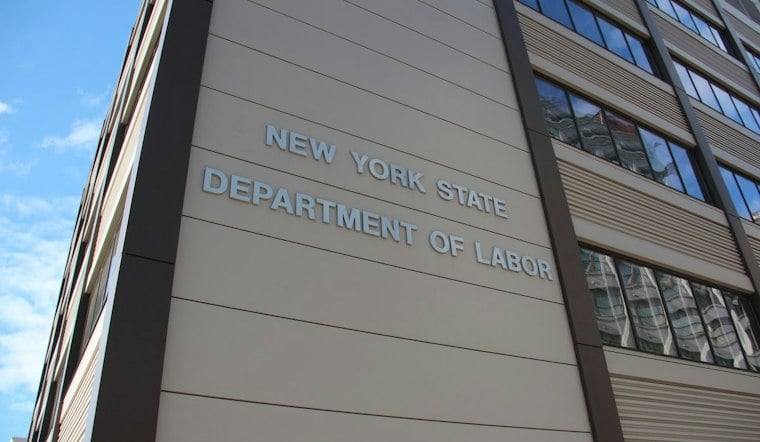
A worker pursuing the issue would likely need documentation such as the assignment agreement, scheduled hours, time records, pay rate, messages from the agency and payroll information. New York City’s Department of Consumer and Worker Protection directs workers with minimum-wage, overtime or wage-theft complaints to the New York State Department of Labor, which enforces those protections: NYC Department of Consumer and Worker Protection.
The broader enforcement landscape shows that wage-and-hour disputes are documented in New York City, but it does not show that cases like this are becoming more common. The New York City comptroller maintains charts of major wage-and-hour cases involving city employers, including agency investigations and private settlements, and notes that its state Labor Department data covers investigations opened in 2024 and 2025 in which violations were found: New York City Comptroller wage-theft dashboard.
For now, the central unresolved question is whether the worker was paid what New York law requires for reporting to the shift. The available reporting explains why the assignment ended only through the worker’s account; it does not establish whether the hygiene complaint was accurate, pretextual or connected to any unlawful conduct.





