

























































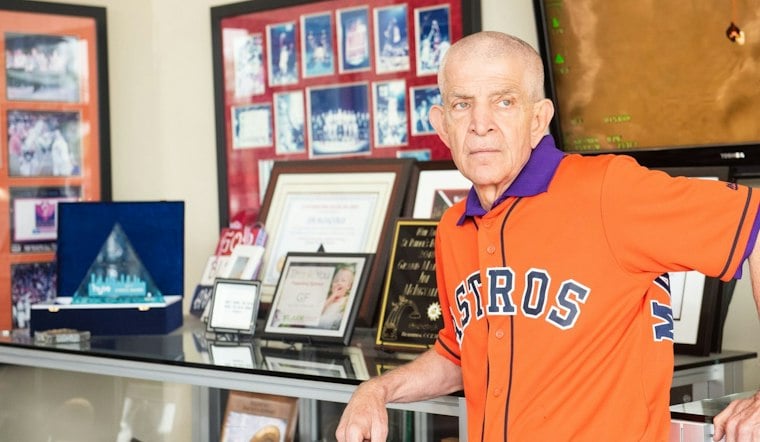
Jim “Mattress Mack” McIngvale has laid down $516,000 on the Houston Astros to win the World Series, this time routing the wager through the prediction market Kalshi rather than a traditional sportsbook. If Houston takes the title, McIngvale stands to win $13 million, according to McIngvale himself.
The bet is the latest version of a strategy McIngvale has run for years, using wagers to offset the risk of Gallery Furniture promotions tied to Houston sports. As ESPN has reported, McIngvale uses the betting market to mitigate risk on promotions at his furniture store, and this year's Astros push is no exception. Per McIngvale, Gallery Furniture is offering refunds to customers who spend $4,000 or more if the Astros win the World Series, and he has been marketing that promotion for roughly two months.
McIngvale said the promotion has already created built-up liability, with Gallery Furniture carrying about $4 million in exposure on the deal so far, per McIngvale. If the Astros keep winning, he projects that figure could climb to roughly $12 million, an amount that would nearly match the $13 million he stands to collect from the Kalshi position if Houston goes all the way. The Astros are hosting the Chicago White Sox in Game 1 of the Wild Card series today.
How the Kalshi Wager Stacks Up
McIngvale said Kalshi market makers gave him a 24/1 price on the Astros, notably longer odds than the roughly 18/1 that traditional sportsbooks were offering on Houston after the team clinched its playoff spot, according to McIngvale. Kalshi is a prediction market rather than a traditional sportsbook, a distinction relevant to McIngvale's wager.
Prediction markets have marketed sports-related contracts, drawing scrutiny over how those products should be regulated.
That gray zone drew fresh legal scrutiny just a day before McIngvale's bet became public. The U.S. Court of Appeals for the 6th Circuit ruled that Kalshi's sports-event contracts are subject to Tennessee's sports-wagering laws, reversing a lower court, as Tennessee Lookout reported. Kalshi had started offering sports-event contracts in Tennessee in 2025 without registering with the state's sports wagering council, according to the outlet's reporting.
A Betting Habit With a Track Record
McIngvale's hedging strategy is not new, and it has paid off spectacularly before. When the Astros won the World Series in 2022, McIngvale collected an estimated $75 million payout on roughly $10 million in bets placed at average odds of 7.5-to-1, according to the Houston Chronicle. That payout was described at the time as the largest legal sports-betting payout in U.S. history.
McIngvale said Gallery Furniture refunded $74 million to customers when the Astros last won it all, with some individual refunds reaching $70,000, per McIngvale. He has said those refunds are processed mostly by check or credit card, and that he personally absorbs the credit-card fees. The Kalshi position is another part of his effort to hedge this year's promotion.
His betting history stretches back further still. In 2019, McIngvale placed a $3.5 million wager on the Astros at a Mississippi casino, a bet that would have paid $7.7 million and was designed as a hedge against potentially refunding $15 million or more in mattress purchases, according to the Houston Chronicle's earlier reporting. McIngvale has continued to use wagers to hedge Gallery Furniture promotions.
Betting on More Than Baseball
McIngvale's wagers have often been tied to Gallery Furniture promotions, linking his sports bets to the store's business strategy.
The Kalshi bet also lands amid a broader surge in prediction-market activity nationally. Combined monthly trading volume on Kalshi and Polymarket more than doubled from $26 billion in May to $53 billion in July 2026, according to Pew Research Center. Sports became the most-traded topic on both platforms during that stretch, with sports trading topping $58 billion on Kalshi and nearing $22 billion on Polymarket in June and July alone.
Volume dipped slightly in August to a combined $47 billion before climbing again in early September alongside the start of football season, the same report notes. For comparison, Americans wagered around $40 billion through legal sportsbooks in the first quarter of 2026, a figure Pew found roughly comparable to prediction-market sports trading over the same stretch. Some regulators, per Pew's reporting, have argued that these sports contracts effectively amount to offering sports betting nationwide, in violation of state and local gambling regulations, a tension the Tennessee appeals ruling underscores just as McIngvale's own Astros wager plays out through the same kind of platform.





