

























































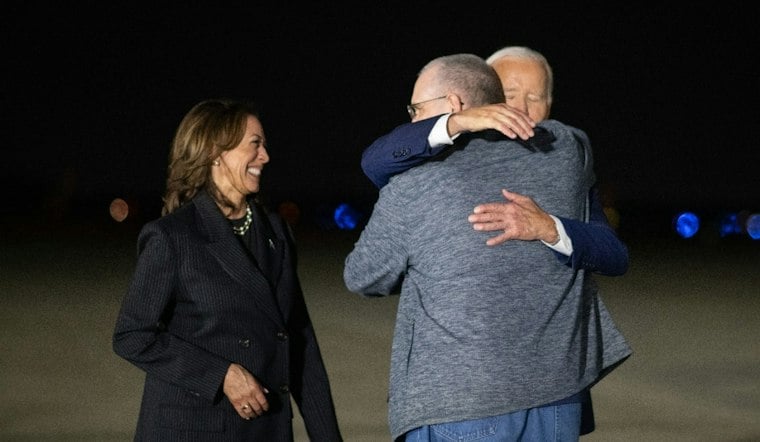
Paul Whelan spent more than five years locked in a Russian prison on espionage charges he always denied, and after his release, he found his job, his house, his car, his savings and his health insurance were all gone. Now the former Marine is thanking his congresswoman for introducing a bill designed to make sure the next American who comes home from wrongful detention does not face that same financial wreckage alone.
A Bill Named for a Michigan Native
U.S. Representative Haley Stevens, who represents Michigan's 11th Congressional District where Whelan lived before his 2018 arrest, introduced the Paul Whelan Hostage Compensation and Reintegration Act on Thursday, according to a press release from Rep. Stevens' office. The bill would create a formal State Department program to deliver a one-time lump-sum payment to Americans designated as wrongfully detained abroad, or to their surviving family members. Whelan publicly thanked Stevens for bringing the legislation forward, as CBS News Detroit reports.
Under the proposed formula, returning detainees would receive roughly $69,000 for every year they spent in unlawful foreign custody, a figure tied to the Social Security average wage index, per Glance. For Whelan, who was held for more than five years, that formula would translate into a substantial payout meant to offset years of lost income and a derailed career.
Funded by Seized Assets, Not Taxpayers
Rather than drawing on taxpayer dollars, the bill proposes funding the payments through the Department of Justice's Assets Forfeiture Fund, which holds over $3 billion seized from foreign adversaries, according to Deadline Detroit. The legislation would also require the IRS to classify the lump-sum payments as non-taxable damages for human suffering, since current tax law does not automatically exempt returning captives from tax obligations that piled up during their imprisonment.
The bill also sets eligibility rules. Whelan worked as a global security executive for automotive supplier BorgWarner before he was arrested in Moscow on December 28, 2018, and he spent more than 2,000 days in Russian custody before his release on August 1, 2024, as part of a 24-person Ankara prisoner exchange that was potentially one of the largest U.S.-Russia swaps since the end of the Cold War, per Wikipedia.
Part of a Broader Push in Congress
The Whelan-linked bill is not the only effort in Congress aimed at easing the financial fallout of wrongful detention. In February 2025, Senators Chris Coons and Mike Rounds reintroduced the Stop Tax Penalties on American Hostages Act, legislation meant to stop the IRS from tacking on late fees, fines and interest against Americans who were held hostage or wrongfully detained abroad, according to a press release from Sen. Coons' office. Journalist Jason Rezaian previously faced thousands of dollars in IRS fines for taxes that went unfiled while he was imprisoned, the release notes.
Alongside that tax relief measure, Senators Chris Coons and Mike Rounds also reintroduced the Fair Credit for American Hostages Act and the Retirement Security for American Hostages Act, aimed at repairing credit scores damaged during captivity and protecting Social Security benefit calculations for returning detainees. Unpaid bills that pile up during involuntary foreign detention often leave former captives with defaulted loans and ruined credit, according to the same release.
A Growing National Problem
The scale of the issue extends well beyond Whelan's case. The James W. Foley Legacy Foundation supports the bill.
Hoodline covered Whelan's case as it unfolded, including his anticipated release during the epic global prisoner swap in August 2024. More recently, Robert Gilman, a former Marine, was freed. Whelan's push for the new legislation reflects a broader shift in how Washington views hostage recovery — treating a former captive's return home not as the end of the ordeal, but as the start of a difficult second chapter that reintegration policy is only now beginning to address.





