

























































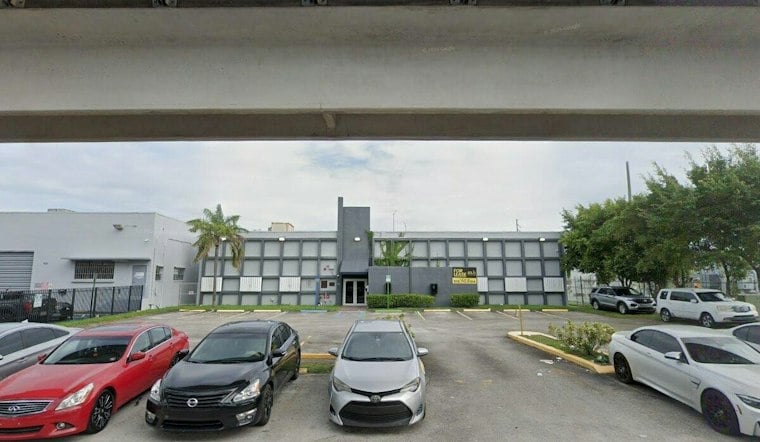
A Miami attorney who built her practice on a decade of insider experience at the Food and Drug Administration has been suspended for 90 days by the Florida Supreme Court, capping years of client complaints over unpaid refunds, unreturned calls, and legal work that clients say never got done. Christine Humphrey, who joined the Florida Bar in 2004, drew the suspension after a $20,000 legal-fee dispute collided with allegations of cyberhacking, a bout of COVID-19, and claims that she kept practicing law after being told to stop.
The case traces back to Julie Lalonde and Brenda Sanchez, who hired Humphrey's firm, C. Humphrey & Associates P.A., seeking FDA approval for a medical device, according to the Miami Herald. Per Humphrey's guilty plea, she quoted the pair a $25,000 non-refundable retainer plus $47,000 for all legal services and promised that obtaining FDA approval for the device was a slam dunk, the paper reports. When the relationship deteriorated amid overbilling and a lack of communication, Lalonde requested a $20,000 refund, and Humphrey agreed by email on January 21, 2021 to refund $20,000 within 30 days.
A Refund Promise That Took Years
That refund did not arrive on schedule. Lalonde and Sanchez filed a Florida Bar complaint citing the lack of communication and illegal or excessive fees, and turned to the Florida Bar's Statewide Fee Arbitration Program to resolve the billing dispute outside of court. The program provides a process for resolving fee disputes through arbitration, according to LegalFuel. Lalonde and Sanchez won that arbitration in June 2022, securing a $20,000 award, but the Herald's report notes Humphrey did not actually pay it until August 20, 2024.
Florida Bar guidance says nonrefundable fees must be confirmed in writing and remain subject to reasonableness requirements, according to LegalFuel. Humphrey has said the delay stemmed from significant financial difficulties beginning in 2020 following a year of cyberhacking, compounded by a prolonged bout of COVID-19 in December 2020, according to the Herald's account.
Practicing While Ineligible
While the fee dispute wound through arbitration, Humphrey was separately classified as a delinquent Florida Bar member and ineligible to practice law, the Herald reports. Despite that status, the Herald's reporting states Humphrey continued maintaining an active social media presence and law-firm website seeking Florida clients while ineligible to practice.
The Lalonde and Sanchez matter was not an isolated incident. The Herald's account describes several other client grievances that fed into Humphrey's disciplinary record, including a 2020 public reprimand tied to three separate grievances and an earlier 2017 admonishment. In one, Humphrey charged Edurdo Tawil a $7,500 non-refundable retainer to review 75 food-product packaging labels but reviewed only one of his first six labels within a week, the paper reports; she later refunded $5,000 to Tawil. In another, she charged Anthony Ginter a $5,000 retainer for research and billed his time without notifying him that 75% of the retainer had been used, despite being required to flag that threshold — she ultimately absorbed his additional bill.
Missed Consultations and a Lost Shipment
Other clients described similar patterns. Sioban Ellison made a $5,000 credit-card payment to Humphrey but, per the Herald, endured several missed scheduled initial consultations before Humphrey ended the representation and promised a refund; Ellison eventually filed a credit-card dispute to recover the $5,000. In a separate case cited by the Herald, Munir Alshujaeih hired Humphrey to address an FDA detention of imported food after the agency detained the shipment for improper labeling or inadmissibility. Humphrey said she sent a 50-page memo to the FDA on the deadline date, but the FDA reported it never received that memo, and Alshujaeih lost most of the detained food, with the retrieved portion sold at a loss. The 11th Circuit grievance committee, which issued a report of minor misconduct on October 26, 2017, found Humphrey had not regularly communicated with Alshujaeih and concluded her reliance on compromised technical systems was not excusable, according to the Herald's report.
Why 90 Days Matters Under Florida Bar Rules
The length of Humphrey's suspension carries specific procedural weight. Under Rule 3-5.1(e) of the Rules Regulating The Florida Bar, a suspension of 90 days or less is automatically lifted once it expires, with no requirement to prove rehabilitation or retake the bar exam — a threshold that suspensions exceeding 90 days do not enjoy, according to FindLaw. Because Humphrey's suspension lands exactly at that 90-day mark, she can resume practicing once the term ends without filing a formal rehabilitation petition.
Florida Bar Rule 3-5.1(h) also requires suspended attorneys to wind down active practice within 30 days of the court's order, withdraw from pending litigation, and prove that clients, opposing counsel, and courts were formally notified of the suspension, per Anidjar & Levine. Those restrictions bar suspended attorneys from continuing to practice during the suspension.
An FDA Insider Turned Regulatory Attorney
Humphrey is identified as a Florida Bar member. Her firm handled matters involving regulatory clearance or food-import assistance, positioning it as a niche player in a demanding federal process. Getting a medical device through the FDA's 510(k) premarket notification pathway is not cheap: standard federal user fees for FY2026 run $26,067, or $6,517 for qualified small businesses, on top of testing and legal preparation costs, according to the U.S. Food and Drug Administration. That financial burden underscores what was at stake for clients like Lalonde and Sanchez when their device clearance stalled.
Allegations about Humphrey's practice include overbilling, non-communication, and unperformed medical-device work, as described above. Those grievances closely mirror the allegations later detailed in the Florida Bar's discipline case. Humphrey's case is part of the Florida Supreme Court's enforcement record.





