

























































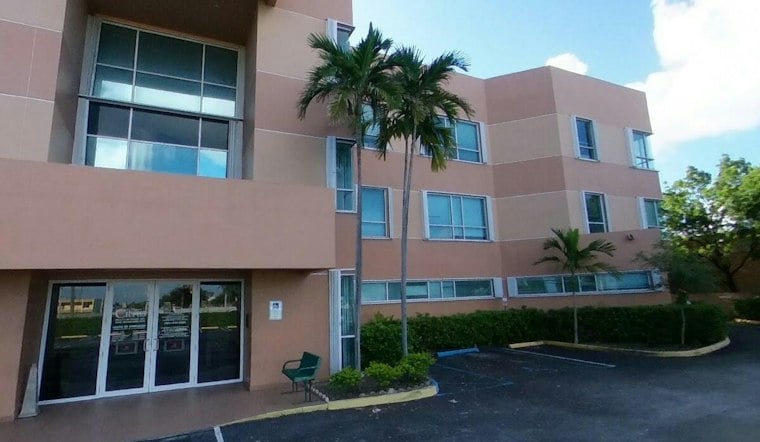
A former housing director at Citrus Health Network is facing felony charges after Miami-Dade prosecutors say he siphoned more than $1.2 million from the county's Homeless Trust through a pair of fraudulent schemes, then spent the money on designer clothes, artwork and multiple vehicles. Thomas Jardon, 42, was booked into jail and held on a bond of just under $700,000.
Miami-Dade State Attorney Katherine Fernandez Rundle said Jardon faces charges including organized scheme to defraud, grand theft, identity theft and engaging in a pattern of racketeering activity, according to NBC 6 South Florida. Jardon served as director of housing for Citrus Health Network, a nonprofit community mental health center founded in 1979 by Mario Jardon that now serves tens of thousands of patients annually. Citrus Health works with the Homeless Trust to find housing for community members referred to it by the county, and the Trust reimburses the nonprofit for those housing-related services.
Amazon Purchase Unraveled the Scheme
The case broke open after Citrus Health employees complained last year that Jardon was derelict in his duties and not responding to emails, prompting an internal audit. A Citrus Health senior accountant discovered a purchase of more than $30,000 in Apple products made using the organization's Amazon account, according to a warrant cited by NBC 6. When executives asked Jardon to produce the Apple products, the ensuing scrutiny led to his firing in December 2025 and to Citrus Health reporting the discovered thefts to authorities.
Fernandez Rundle said Jardon operated two separate schemes that together defrauded the Homeless Trust of more than $1.2 million. In the first, he allegedly located properties for a rental reimbursement scheme, creating bogus companies that claimed to own or represent the properties while hiding his own ownership through multiple shell companies. He allegedly created fake leases and moved money through multiple accounts as Citrus Health sought reimbursement from the Homeless Trust for the fake rentals.
A Second Scheme Involving Fake Furniture Sales
In the second alleged scheme, Jardon created a fake company purportedly selling furniture, generated invoices and authorized payments for furniture sales that never happened, while Citrus Health sought reimbursement from the Homeless Trust for those purchases. Prosecutors say that scheme alone netted Jardon just under $600,000. Providing furniture to community members transitioning into housing is a service Citrus Health normally offers as part of its work with the Trust.
Investigators say Jardon used the stolen money on two $19,000 Rolex watches, an 18-karat gold Cuban chain, and 12 lithographs purchased from an art dealer in Switzerland. He also allegedly spent the proceeds on designer clothes, plane tickets, hotel stays and four new vehicles — a Jeep, a BMW and two Chevy Silverados.
Jardon's Role on the County's Homeless Trust Board
Beyond his job at Citrus Health, Jardon held a seat on the Miami-Dade County Homeless Trust's 27-member Board of Trustees, serving as the representative for Citrus Health Network alongside local elected officials and religious leaders. The Trust relies on a unique 1% local food and beverage tax enacted in 1993 that directs 85% of its revenues to homeless services. Attorney and lobbyist Ron Book, who has been involved with the Trust for 30 years and served as chair for 21 years, worked with lawmakers to secure the tax, as reported by Florida Politics.
The Trust houses and cares for more than 8,000 people. Its January 2025 Point-in-Time census recorded 858 unsheltered individuals countywide, a 17% year-over-year drop and the lowest unsheltered headcount in over a decade, as Hoodline has reported. Florida House Bill 1365, in effect since 2024, bans local governments from permitting public camping or sleeping on public property.
Citrus Health Repaid the Full Loss
Citrus Health has already reimbursed Miami-Dade County the entire $1.2 million loss from the scheme. Fernandez Rundle described the theft as the work of a rogue employee, and authorities say Mario Jardon and other Citrus Health leadership had no knowledge of or involvement in the alleged thefts. Founded in 1979, Citrus Health later achieved Federally Qualified Health Center status.
Under Florida Statute § 817.034, an organized scheme to defraud involving $50,000 or more is a first-degree felony carrying up to 30 years in state prison and fines up to $10,000, according to Demmery Law. Grand theft of $100,000 or more under Florida Statute § 812.014 carries the same maximum prison term.





