

























































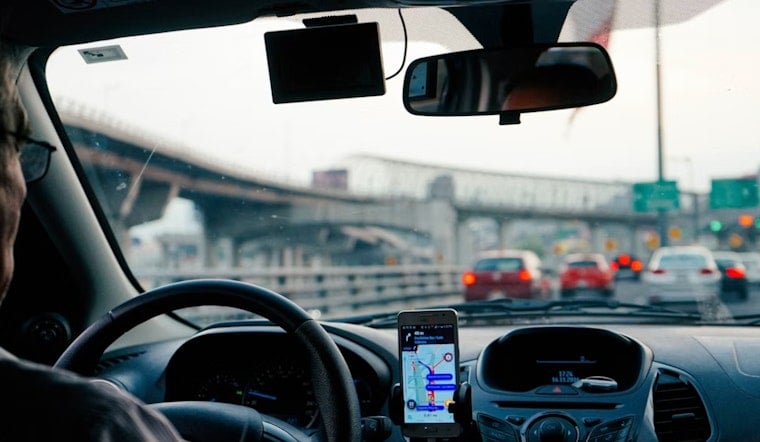
Michigan drivers could soon be asked to volunteer for a very different kind of road tax experiment: paying by the mile instead of at the pump. The Michigan Department of Transportation is preparing to launch a six-month voluntary pilot program in February 2027 involving roughly 1,000 driver volunteers to test how a per-mile fee system might actually work in practice.
State Senator Veronica Klinefelt discussed the pay-per-mile pilot program during an appearance on Detroit Talk City, according to FOX 2 Detroit. The concept, known as a road user charge, is being explored as a system that could eventually fund Michigan roads in place of the state's fuel tax. The pilot itself, detailed by WTOL, is backed by $7.65 million authorized under Public Act 22 of 2025, with more than $6.3 million of that awarded to engineering firm CDM Smith to manage technical development and pilot operations.
Why Michigan Is Rethinking the Gas Tax
The pressure behind the pilot comes down to math. As fuel efficiency improves and electric vehicles multiply on Michigan roads, the state's traditional gas tax revenue is expected to shrink even as road wear continues. State officials project that EV adoption could cut Michigan's roughly $1.5 billion in annual fuel tax revenue by a third, creating a $500 million annual deficit by 2030, according to Bridge Michigan.
Independent research backs up that concern. A study by Anderson Economic Group for the Coalition on Electric Vehicles and Transportation Revenue found that EVs already cost Michigan $50 million in uncollected state fuel tax between 2019 and 2021, and it warned of a cumulative $500 million shortfall by 2030 without a new funding model, per the Michigan Townships Association's summary of the research.
Michigan already overhauled its fuel tax structure once this year. Under Public Act 20 of 2025, the state eliminated its 6% sales tax on motor fuel effective January 1, 2026, while raising the fuel excise tax from 31 cents to 52.4 cents per gallon, according to the Michigan Department of Treasury. That change simplified collection into the Michigan Transportation Fund, but it doesn't solve the deeper problem of declining fuel volume as more drivers go electric.
Four Ways MDOT Could Track Your Miles
The pilot is designed to test technical feasibility, not to roll out a mandatory system right away. MDOT's approach will evaluate four distinct mileage-tracking methods: manual monthly odometer photo submissions, vehicle-integrated telematics, plug-in diagnostic devices, and smartphone application tracking, the station reports. Concerns about government GPS tracking have made non-location options, like the odometer photo submissions, a central part of the study's design.
Public appetite for the idea appears mixed but movable. An MDOT survey of more than 19,000 verified Michigan residents conducted in 2024 found 57% were unsatisfied or very unsatisfied with the state's road quality, and support for a road usage charge increased after participants watched an educational video explaining the concept, per the same account.
What a Per-Mile Rate Might Actually Cost
Lawmakers already have a rough benchmark for what a future rate could look like. House Bill 5765, introduced in 2026, proposes tying a road user charge formula to the state fuel tax; at the current 52.4-cent rate, that works out to roughly 2.1 cents per mile, or about $210 a year for a vehicle driven 10,000 miles, according to the Michigan House of Representatives. The bill has not passed, but it offers the clearest legislative marker so far for what pay-per-mile driving might cost the average Michigander.
Commercial vehicles are getting separate treatment. In March, the Michigan House Transportation and Infrastructure Committee advanced a bill package establishing a per-mile tax formula specifically for commercial electric vehicles weighing over 26,000 pounds, according to Michigan Public. The move addresses road maintenance revenue currently going uncollected from heavy freight trucks, including out-of-state commercial EVs that avoid Michigan's fuel excise taxes and personal EV registration surcharges.
Michigan Joins a Growing National Experiment
Michigan isn't alone in exploring this shift. The state joins at least 14 others, including Oregon, Utah, Virginia, and California, that have launched or evaluated road usage charge programs to offset declining fuel tax revenues, according to Talking Michigan Transportation. Oregon established the first voluntary operational road charge program in the country, and it has served as something of a model for the wave of state pilots that followed.
Even so, Michigan's program remains firmly in the testing phase. Key tensions around driver privacy, equity for high-mileage rural commuters, and the risk of double taxation during any transition period remain unresolved, per WTOL's reporting. The pilot is exploratory, and any permanent pay-per-mile fee replacing Michigan's gas tax would require additional legislation before it could take effect.
Hoodline has followed the road user charge debate since MDOT's first Lansing public meeting earlier this year, as well as the broader fight over how Michigan pays for its roads amid recent gas price swings hitting drivers statewide, per Hoodline.


