

























































Virginia environmental regulators have proposed that Microsoft pay roughly $2.5 million after backup generators at its Leesburg data center blew past state air pollution limits during a five-day power outage in the summer of 2025. The proposed consent order, described by state officials as the largest civil penalty in the Virginia Department of Environmental Quality's history, is now open for public comment before it can be finalized.
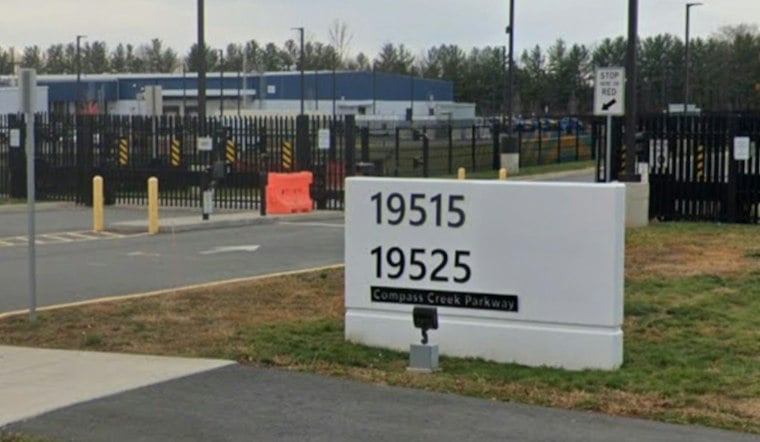
According to WJLA, the violations trace back to a power outage at the Cochran Mill Electrical Substation that knocked out grid power from June 27 through July 1, 2025, forcing Microsoft's data center at 19515 Compass Creek Parkway in Leesburg to run on backup generators for days. The station's report notes that DEQ told Microsoft in August 2025 that the facility had exceeded both its fuel throughput and its emissions limitations during that stretch.
The numbers, as calculated by DEQ for the year running from October 4, 2024 through October 3, 2025, are stark. The facility's permit allows up to 94.67 tons of nitrogen oxides, 3.34 tons of particulate matter and 6.86 tons of volatile organic compounds on a rolling 365-day basis, per the same account, but DEQ calculated actual emissions of approximately 102 tons of nitrogen oxides, 5.158 tons of particulate matter and 11.599 tons of volatile organic compounds — all above the permitted thresholds.
Fuel Use Nearly Double the Permit Limit
Fuel throughput told a similar story. The data center used approximately 1,190,000 gallons of fuel during the relevant period, compared with a permit limit of 665,850 gallons, the article notes. Microsoft has disputed how DEQ arrived at those figures, telling the outlet the emissions calculation was not as accurate.
DEQ and Microsoft continued discussions to pin down the facility's actual emissions between December 1, 2025 and July 28, 2026, and DEQ said its newer calculations still showed pollution above state limits during that period, per WJLA's reporting. A Microsoft spokesperson said the company worked with the state toward a resolution, and Microsoft has said it invested roughly $31 million to install a system meant to prevent another extended outage. The company also said it provided regular updates to DEQ during its response to the outage, and that it will support the department's efforts to expand air-quality monitoring in Northern Virginia. Microsoft has framed the episode as consistent with its broader commitment to responsible data-center development in Virginia and worldwide.
A Growing Fight Over Diesel Generators
The Leesburg case lands amid a much larger reckoning over data-center generators across Virginia, which hosts a large share of the data centers operating in the United States, and where the facilities have become a flashpoint over environmental and noise pollution. Northern Virginia alone has more than 4,000 diesel generators at data centers with a combined capacity exceeding 11 gigawatts, according to Virginia Mercury, which also reports that data-center pollution still makes up a small but growing share of the region's harmful air emissions, including carbon monoxide, nitrogen oxides and fine particulates.
Statewide, there are roughly 9,000 backup generators, with about 4,700 of them concentrated in Loudoun County, according to VPM. A Virginia legislative research report cited by that station estimated that, under a worst-case scenario, data-center backup generators could release 9,000 tons of nitrogen oxides across the region — a concern amplified by the fact that the Northern Virginia area just east of Loudoun remains under an ozone non-attainment designation for failing to meet air-quality standards. VPM also reported that most data-center operators in the state experienced zero to two minor outages per site over the prior two years, with nearly all lasting between one and five hours, making the five-day Leesburg outage a notable outlier.
New Rules and Legal Fights Loom
Lawmakers are expected to revisit legislation limiting or banning diesel generators at data centers when the 2026 General Assembly session convenes, per Virginia Mercury's reporting. Separately, starting July 1, 2026, new air permit applications for diesel generators at Virginia data centers will generally be expected to meet Tier 4-equivalent emissions controls or justify an alternative to DEQ, according to Encino Environmental. The same source reports that DEQ is weighing guidance that would let certain planned utility outages qualify as emergencies permitting older Tier II generators to run, even as the agency maintains that facilities must comply with their permitted emissions limits regardless of when or how long an outage lasts.
Research has already begun quantifying the stakes. A VCU project using DEQ data found significant impacts on neighborhoods around data centers in Loudoun and Prince William counties based on 2023 figures, Virginia Mercury reported, while researchers from VCU and the University of Washington estimated that Virginia's data-center generators create the same public-health impact as five large gas-fired power plants even when operated for less than an hour per week on average, according to the North Carolina League of Conservation Voters. That same group points to Memphis, Tennessee, where 27 gas turbines were installed to power Elon Musk's xAI Colossus 2 data center — a project now facing a lawsuit from the NAACP, represented by Earthjustice and the Southern Environmental Law Center, over the alleged unlawful operation of unpermitted methane-gas turbines the plaintiffs say could emit thousands of tons of pollutants annually.
Closer to home, opposition to new data-center buildout has already produced at least one major rejection: Hanover County supervisors recently turned down a controversial 430-acre data-center proposal known as the Mountain Road Technology Park, according to 12 On Your Side. For now, Microsoft's proposed penalty over the Leesburg outage remains in limbo, with the public-comment period on DEQ's consent order set to run until October 14 before the agency decides whether to finalize it.



