

























































Breyon Winters slipped on ice during the first snowfall of the season and figured he'd just tweaked his left ankle. Instead, the 26-year-old Milwaukee father was staring down a rare spinal tumor that had almost completely filled his spinal canal, a discovery that led to emergency surgery he says saved his life.
Doctors initially diagnosed Winters with a Grade 3 ankle sprain, according to the Milwaukee Business Journal. But as his ankle pain faded, he lost feeling in his leg, then lost the ability to lift his legs at all. Soon he could no longer climb stairs, drive to work, or control his bladder — a rapid decline in mobility that the outlet reports was ultimately caused by severe spinal cord compression.
An Ankle Injury That Masked a Bigger Problem
Clinical research in orthopedics and neurology has found that progressive lower-extremity mobility loss and foot drop can be misattributed to peripheral joint trauma like severe ankle sprains, which can delay the spinal MRI imaging needed to catch spinal cord compression, according to research published on PubMed. That pattern appears to describe what happened to Winters, whose true diagnosis emerged only after his symptoms escalated well beyond his ankle.
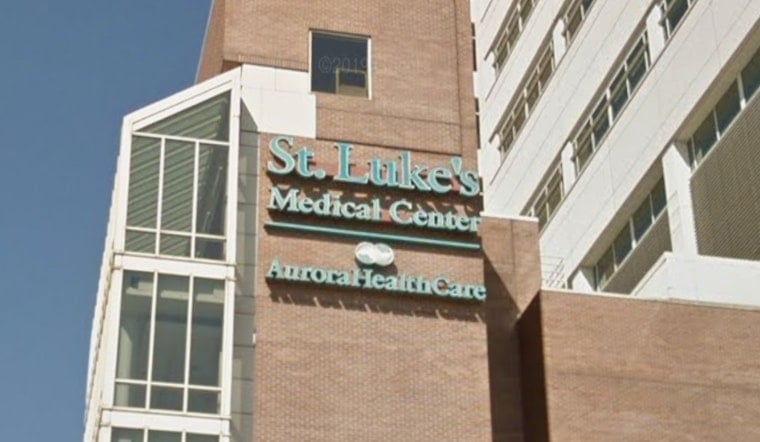
Winters was eventually taken by ambulance to Aurora St. Luke's Medical Center in Milwaukee, per the same account from the Milwaukee Business Journal. There, imaging revealed a spinal meningioma that had severely compressed his spinal cord. The tumor measured approximately 3.3 centimeters long by 1.7 centimeters wide, and his spinal canal had very little extra space left to spare.
According to the Wisconsin Department of Health Services, a searchable interactive map shows designated trauma-care facilities by county across the state. The Wisconsin Department of Health Services also maintains a dataset listing the locations and attributes of trauma centers licensed by the state for planning and management purposes.
A Rare Case for a Young Man
Spinal meningiomas are generally benign tumors that appear in older adults, especially women, the outlet reports, and researchers believe hormones are a likely factor, though the exact cause remains unknown. That makes Winters, a 26-year-old father, an unusual patient for this kind of tumor. National data underscores just how atypical his case is: while non-malignant meningiomas overall predominate in older women, higher-grade World Health Organization Grade 2 and Grade 3 meningiomas occur more frequently in men and tend to present at younger ages, according to the National Cancer Institute.
Spinal meningiomas account for roughly 25% of all intradural spinal cord tumors and between 1.2% and 12.7% of all meningiomas diagnosed across the central nervous system, according to research indexed on PubMed Central. Meningiomas overall are the most common primary central nervous system tumor nationwide, with an average annual age-adjusted incidence of 8.6 per 100,000 people, per surveillance data cited by the American Association of Neurological Surgeons.
Emergency Surgery to Relieve the Pressure
Dr. Kartik Kesavabhotla, a neurosurgeon and spine specialist, performed a thoracic laminectomy on Winters to remove the tumor, which doctors determined was benign. A thoracic laminectomy involves removing the lamina bone from the rear of the thoracic vertebrae to enlarge the spinal canal, relieving cord compression and giving surgeons access to resect intradural masses, according to the American Association of Neurological Surgeons. In Winters's case, the procedure created an opening in the spinal canal that allowed his spinal cord room to recover.
Before surgery, Winters used his great-grandfather's cane and sometimes a wheelchair to get around, fearing he would never walk again, per the Milwaukee Business Journal's report. After the procedure, Dr. Kesavabhotla said Winters made an excellent neurological recovery once the pressure on his spinal cord was relieved. Primary surgical resection of intradural extramedullary spinal meningiomas carries a highly favorable long-term prognosis, and early spinal cord decompression significantly increases the odds of full functional and mobility recovery, according to the same PubMed Central research.
Back on His Feet, Back With His Kids
Winters underwent physical therapy at Aurora Health Care and, two weeks after surgery, said he felt like himself again. He returned to full-time work and now walks with confidence. He also attended his son's kindergarten graduation after the surgery, keeping up with the other children there — a milestone he wasn't sure he'd get to see.
Winters said the surgery saved his life, and he now spends more time with his children. Dr. Kesavabhotla is part of Aurora Health Care, which is part of Advocate Health, according to Urban Milwaukee. Aurora St. Luke's Medical Center was ranked the No. 1 hospital in the Milwaukee metro area and No. 2 in Wisconsin for the 2026–2027 evaluation cycle, per the same report, cementing its role as a major referral center for complex spine and neurological cases in the region.





