

























































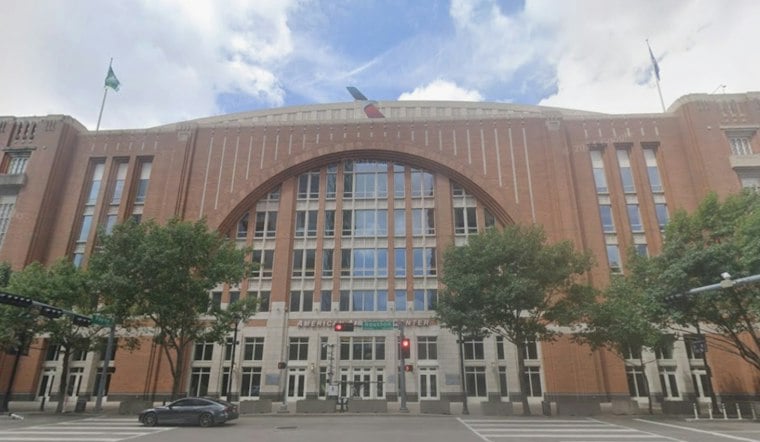
While President Donald Trump headlined a two-day midterm convention in Dallas this week, Massachusetts' two statewide Republican nominees were nowhere near the American Airlines Center. Gubernatorial candidate Mike Minogue and Senate candidate John Deaton both stayed in Massachusetts rather than join the national gathering, choosing instead to keep courting the state's famously independent electorate.
The Dallas event, held on Tuesday through 10, was the first of its kind created by Trump and the Republican National Committee to energize voters ahead of the midterms, according to PBS News, which reported the gathering was informally branded “Trumpapalooza” by party organizers aiming to mobilize base voters and raise midterm cash. As NBC Boston reported, the convention carried no party nominating weight but was intended to help GOP candidates in their campaigns, and roughly 40 individuals from Massachusetts still made the trip to Dallas.
The financial stakes of attending were steep. CNN reported that VIP packages for the convention ran as high as $250,000 per person for a roundtable with Trump, with $65,000 photo opportunities also on offer, while even incumbent Republican lawmakers were asked to pay $25,000 just to attend.
Two Fresh Nominees, Two Different Paths
Minogue, a former medical device CEO and U.S. Army Ranger veteran, won the Massachusetts Republican primary for governor on September 1, defeating former MBTA administrator Brian Shortsleeve to set up a November matchup against Democratic Governor Maura Healey, according to Axios. Minogue previously served as CEO of Abiomed and earned a Bronze Star during Operation Desert Storm. He had already built strong standing within his own party months earlier, securing the MassGOP endorsement in April with 70.4% of delegate votes at the state party convention — making him the first Massachusetts Republican gubernatorial candidate in 80 years to clear 70% on a first ballot against multiple opponents, per the Swampscott Tides.
Deaton, a trial attorney and Marine Corps veteran, ran unopposed in the September 1 GOP primary and will face incumbent Democratic Senator Ed Markey in the November 3 general election, PBS News reported, noting that Markey secured the Democratic nomination after defeating Representative Seth Moulton. It is not Deaton's first run at the seat: he was the GOP nominee for U.S. Senate in Massachusetts in 2024, losing to incumbent Senator Elizabeth Warren by a vote of 59.8% to 40.0%, according to the Secretary of the Commonwealth of Massachusetts' PD43+ election data, which recorded Deaton pulling 1,365,440 votes statewide.
Why Massachusetts Republicans Are Wary of the Trump Brand
The calculation behind staying home traces back to hard electoral math. Trump received just 36.0% of the vote in Massachusetts in the 2024 presidential election, compared to Kamala Harris's 61.2%, according to data compiled by Ballotpedia — even though that outcome represented an eight-point shift toward Republicans compared to 2020. Complicating things further for down-ballot candidates, a University of Massachusetts Amherst poll released August 31 found Trump's national job approval at just 32%, with disapproval reaching 64%, with pollsters pointing to voter dissatisfaction over economic conditions and foreign policy.
Massachusetts' voter registration rolls add another layer to the strategy. Unenrolled independent voters make up the largest registration bloc in the state, outnumbering enrolled Democrats and Republicans combined, according to WBUR. Because unenrolled voters can participate in either party's primary, statewide GOP candidates in Massachusetts often lean on local issues rather than national party spectacles to win them over.
Local Voices Split on Whether the Snub Helps
NBC Boston, whose reporting anchors much of this account, quoted MassGOP Chair Amy Carnevale saying there is a lot of excitement about the Dallas convention, even as she confirmed both Minogue and Deaton remained in Massachusetts to keep working to communicate their messages and platforms directly to voters. Carnevale also pushed back on Democratic criticism of the convention, arguing that Democrats do not have their message together because they are not holding a midterm convention of their own.
Not everyone in Massachusetts GOP circles framed the absence as strategy. Political analyst Janet Fogarty said the convention will benefit Republican candidates and argued it highlights the administration's successes, per the same NBC Boston report. But Democratic strategist Steve Kerrigan took the opposite view, saying Massachusetts voters will reject Minogue and Deaton on November 3 and openly asking why the two candidates were not at the convention in the first place.
Political analyst Scott Spradling offered a more skeptical read of Trump's value to the ticket, saying the president's presence is not an asset for the midterm elections and warning that his speeches could overwhelm the broader Republican message down the ballot. That skepticism echoes a pattern playing out well beyond Massachusetts: several vulnerable and down-ballot Republican candidates across the country also skipped the Dallas convention, choosing localized campaigning in their home districts instead, according to reporting cited by The New York Times.
For now, the split-screen is stark — a Dallas arena built around six-figure fundraising packages and presidential star power, and two Massachusetts nominees betting that door-knocking and local messaging will matter more to unenrolled voters than a night on stage with Trump.





