

























































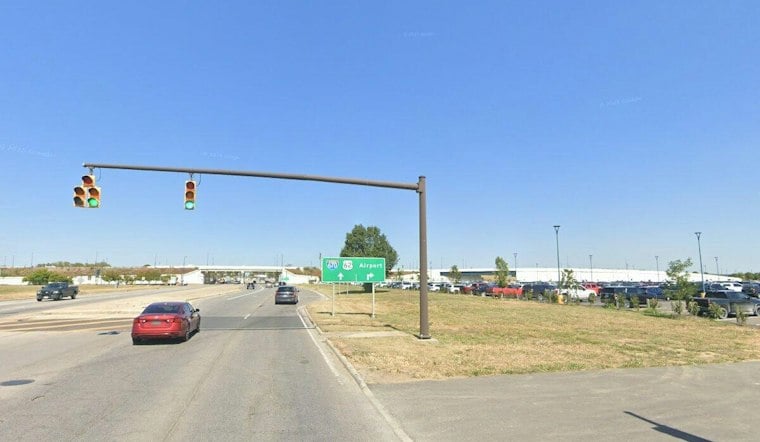
Theodore Alexander, a 94-year-old Columbus man, left his North Columbus neighborhood to run errands and never made it home. He became disoriented trying to find his way back, and his family reported him missing before police tracked him down about two hours later near Stelzer Road and 17th Avenue, close to the airport.
Columbus police pinged Alexander's cellphone location and contacted surrounding law-enforcement agencies for help, according to abc6onyourside.com. Whitehall police and the Ohio State Highway Patrol both used Flock license-plate readers to help locate him and relayed his location back to Columbus. Brian Toth, executive vice president of the Fraternal Order of Police, said license-plate readers can be critical tools in missing-person searches and credited them with helping locate Alexander and pass along his whereabouts.
A Grateful Man, Confused by the Stop
Alexander told officers he thought he was being pulled over for a traffic ticket, and said the officers wanted to know who he was. He said he was grateful police found him and brought him home safely. With his 94th birthday celebration planned for Friday, Alexander said he planned to celebrate with his family and eat a piece of cake at home.
Columbus's Own Cameras Sat Idle
The irony of the rescue is that Columbus police could not use the city's own license-plate readers in the search. Two weeks before the article published, the city had covered its Flock cameras, and the mayor ordered a third-party investigation into potential misuse of the system. The city has not provided a timeline for when that investigation will wrap up.
The allegation at the center of the probe involves an officer who is accused of looking up a single license plate hundreds of times for reasons unrelated to police work. Columbus police said they are reviewing all department data to identify any other potential misuse, per the city's own statement.
How Flock Searches Actually Work
Flock's system is built to make plate lookups fast — within seconds it can search more than 1,600 license-plate readers across a single county, according to cleveland.com. Officers are required to select a reason before running a search, but the system has no way to verify whether that stated reason is genuine. The same reporting found that Cleveland officers were running about 12,000 Flock searches a month, while supervisors reviewed only around 5% of them — a gap that critics say makes misuse hard to catch.
The technology isn't limited to plate numbers, either. Users can filter searches by vehicle body style, make, color, or distinctive features like bumper stickers, roof racks or bike racks, cleveland.com reported.
Not an Isolated Ohio Problem
Columbus is far from the only Ohio city grappling with Flock oversight questions. Two Reynoldsburg police officers resigned amid an internal investigation into possible misuse of that city's Flock system, according to wowktv.com. One of those officers allegedly searched the same license plate 53 times between January 2 and June 26.
Dayton has faced its own reckoning. The city suspended use of its fixed-point automatic license-plate readers after disclosing that outside agencies had accessed camera data for immigration-related searches, as reported by daytondailynews.com. That outlet described the case as part of a growing number of incidents nationwide in which police have been accused of using automated license-plate readers to stalk or track community members rather than investigate crimes.
A later accounting found more than 7,000 cases in Dayton where outside entities ran searches tied to immigration enforcement, according to fortune.com. The same report noted that Oxnard, California, suspended its Flock technology after an audit found the vendor had enabled a nationwide query letting outside agencies access police data without local approval or knowledge, and that Renton, Washington, paused its own Flock use over similar privacy concerns.
The Case for the Cameras
Despite the scrutiny, the technology's boosters point to its track record in finding vulnerable people. Flock's own 2025 Impact Census estimates that its technology helps law enforcement locate roughly 10,000 missing persons across the U.S. every year, a figure the company says is based on responses from nearly 700 agencies across 43 states. The National Center for Missing & Exploited Children partnered with Flock Safety in 2024 to fold license-plate recognition into AMBER Alerts and other high-priority searches for endangered children, according to missingkids.org.
For Alexander's family, the outcome landed on the right side of that statistic. But the same week he was found safe, Columbus still had no timeline for completing its investigation into potential misuse, leaving the matter unresolved.





