

























































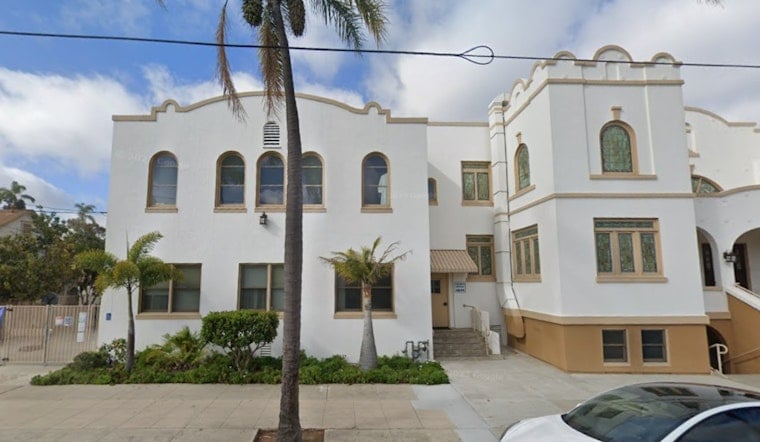
A Lloyd Ruocco-designed home perched above a Mission Hills canyon is opening its doors to the public for the very first time on September 26, part of a 19th annual Historic Home Tour that for the first time in its history is dedicated entirely to midcentury-modern architecture. Visitors will wander through homes terraced into the neighborhood's steep hillsides, tour a residence built around a lush interior courtyard, and browse a furniture exhibit featuring pieces by Eames and John Lloyd Wright set up inside the Ruocco house itself.
The self-guided tour runs from 10 a.m. to 4 p.m. and registration begins at Mission Hills United Methodist Church, located at 4044 Lark St., with coffee and vendor displays kicking things off, according to the San Diego Union-Tribune. Staggered entry times let ticket holders explore at their own pace, and docents stationed at every property share each home's history and architectural significance. Guests receive wristbands granting access to each stop on the route, though the newspaper notes some time slots have already sold out ahead of the event.
Mission Hills Heritage advisory director and co-founder Barry Hager said design buffs shouldn't miss it, per the same account, while event chair Sharon Lieder called the chance to tour these modernist homes rare. Tour tickets benefit the nonprofit's mission to preserve the neighborhood's historical assets. Membership pricing is $50, while nonmembers pay $60.
A Ruocco Landmark Opens for the First Time
The star of the lineup is the Robertson House, a home designed by Lloyd Ruocco and now owned by a local school, which is opening to the public for the first time as part of the tour. Inside, visitors will find paintings by San Diego modernist Richard Marks alongside the midcentury furniture exhibit, plus refreshments offered on-site. Ruocco graduated from UC Berkeley in 1933 and went on to co-found San Diego's Design Center on Fifth Avenue in 1949 as well as the civic organization Citizens Coordinate for Century 3, according to Modern San Diego archive records, cementing his reputation as a founding figure of the city's regional modernism.
Other showcased architects include Homer Delawie, who apprenticed under Ruocco before opening his own San Diego firm in 1962 and later designed civic landmarks including Balboa Park's Bea Evenson Fountain and SeaWorld's Penguin Exhibit, per Wikipedia. Delawie also spent 13 years on the San Diego Planning Commission and eight years on the City Historical Resources Board. Frederick Liebhardt's residential work also appears on the tour.
Why Canyon Homes Came Later Than the Craftsman Bungalows
Mission Hills began taking shape after land was purchased for subdivision in 1908 by a company together with George Marston, and an electric streetcar connection arrived in 1910, according to Save Our Heritage Organisation. The area's natural canyon terrain later became home to modernist residences along the canyon rims in the 1950s. That history helps explain why Mission Hills now holds one of the region's largest concentrations of midcentury-modern residences, marked by clean lines, open spaces, innovative materials, and a seamless connection between indoor and outdoor living.
The neighborhood's preservation credentials run deeper than the midcentury era. The City of San Diego designated two adjacent historic districts here in 2007 — the Mission Hills Historic District and the Fort Stockton Line Historic District — covering 174 homes representing early twentieth-century architecture, following a grassroots nomination process led by community members, per The Cultural Landscape Foundation. Mission Hills Heritage itself traces back to 2004, when residents organized in response to a contested infill development known as the Paseo Project, giving neighbors a stronger voice at City Hall on development matters.
A Vintage Car Show and a Growing Focus on Postwar Design
Alongside the homes, Classic Thunderbirds of San Diego, Chapter 24 will display several Thunderbird automobiles dating from the 1950s, adding a period touch to the day's programming. The car show fits a broader pattern this year: Mission Hills Heritage kicked off 2026 with a two-day Mid-Century Modern Weekend in May that included a Modernism Mixer reception and lectures from SoCal architectural historians Keith York and Dave Hampton, according to the Presidio Sentinel.
The renewed attention also reflects continuing interest in San Diego's midcentury architecture. The City of San Diego Historical Resources Board designated the Cliff May House on 10 Apr 2014, providing an earlier example of official recognition for a midcentury-modern property.
Preserving the Homes Comes With a Cost — and a Tax Break
Keeping these private homes intact can involve historic-preservation incentives such as California's Mills Act. According to the City of San Diego, the Mills Act provides a historic-preservation tool through a revolving 10-year contract between the city and the property owner. Such incentives have become part of an ongoing citywide policy debate, as preservation advocates and urban redevelopment interests continue to spar over housing density and historic designation rules in San Diego. The California Department of Housing and Community Development says adaptive reuse projects are deemed a use by-right in all zones, subject to specified exceptions, and may qualify for ministerial approval when they meet specified requirements. A 2018 California Department of Housing and Community Development report said California's housing production had averaged less than 80,000 new homes annually over the last 10 years.
Home tours like this one remain a staple of San Diego County's autumn calendar and a key fundraising tool for preservation nonprofits. This year's shift to midcentury modernism reflects a broader effort to formally recognize the neighborhood's postwar architects alongside its streetcar-era builders — and, organizers say, to keep supporting the long-term preservation work that tickets to the tour help fund.





